Smart, Real-Time Protection for Your Digital Life. Because your digital life is different from ordinary people.

Google Blocks 8.3B Policy-Violating Ads in 2025, Launches Android 17 Privacy Overhaul
Google this week announced a new set of Play policy updates to strengthen user privacy and protect businesses against fraud, even as it revealed it… Read MoreThe Hacker News

NIST Limits CVE Enrichment After 263% Surge in Vulnerability Submissions
The National Institute of Standards and Technology (NIST) has announced changes to the way it handles cybersecurity vulnerabilities and exposures (CVEs) listed in its National… Read MoreThe Hacker News
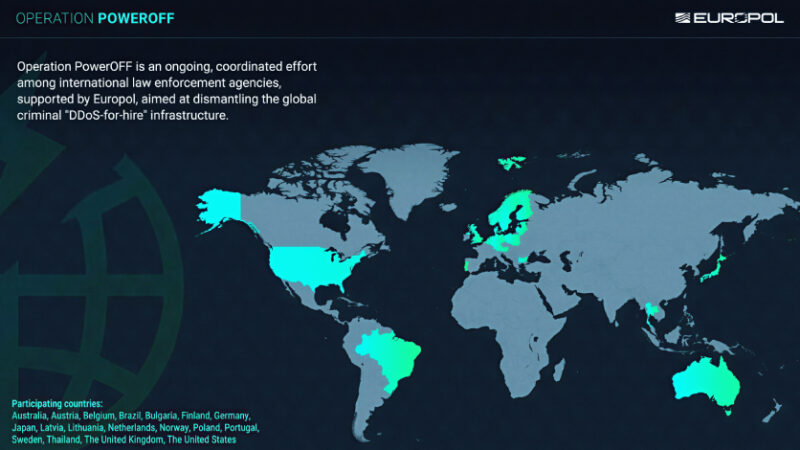
Operation PowerOFF Seizes 53 DDoS Domains, Exposes 3 Million Criminal Accounts
An international law enforcement operation has taken down 53 domains and arrested four people in connection with commercial distributed denial-of-service (DDoS) operations that were used… Read MoreThe Hacker News

Apache ActiveMQ CVE-2026-34197 Added to CISA KEV Amid Active Exploitation
A recently disclosed high-severity security flaw in Apache ActiveMQ Classic has come under active exploitation in the wild, per the U.S. Cybersecurity and Infrastructure Security Agency (CISA).… Read MoreThe Hacker News

ThreatsDay Bulletin: Defender 0-Day, SonicWall Brute-Force, 17-Year-Old Excel RCE and 15 More Stories
You know that feeling when you open your feed on a Thursday morning and it’s just… a lot? Yeah. This week delivered. We’ve got hackers getting creative in… Read MoreThe Hacker News

[Webinar] Find and Eliminate Orphaned Non-Human Identities in Your Environment
In 2024, compromised service accounts and forgotten API keys were behind 68% of cloud breaches. Not phishing. Not weak passwords. Unmanaged non-human identities that nobody was watching. For… Read MoreThe Hacker News

Cisco Patches Four Critical Identity Services, Webex Flaws Enabling Code Execution
Cisco has announced patches to address four critical security flaws impacting Identity Services and Webex Services that could result in arbitrary code execution and allow… Read MoreThe Hacker News
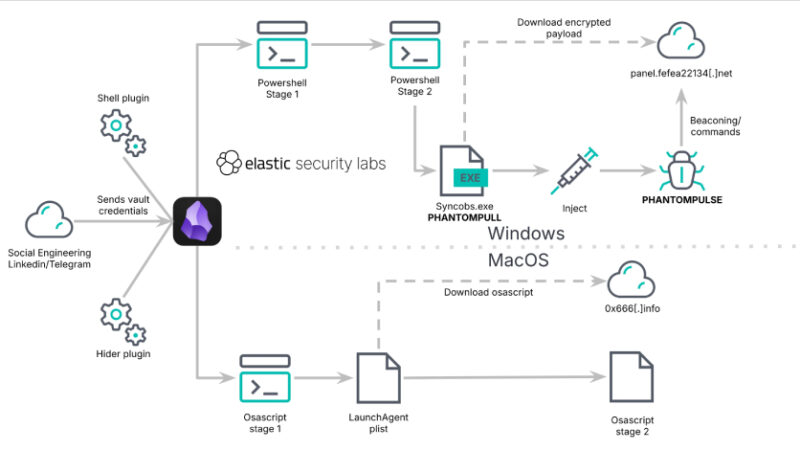
Obsidian Plugin Abuse Delivers PHANTOMPULSE RAT in Targeted Finance, Crypto Attacks
A “novel” social engineering campaign has been observed abusing Obsidian, a cross-platform note-taking application, as an initial access vector to distribute a previously undocumented Windows… Read MoreThe Hacker News
Actively Exploited nginx-ui Flaw (CVE-2026-33032) Enables Full Nginx Server Takeover
A recently disclosed critical security flaw impacting nginx-ui, an open-source, web-based Nginx management tool, has come under active exploitation in the wild. The vulnerability in question… Read MoreThe Hacker News
April Patch Tuesday Fixes Critical Flaws Across SAP, Adobe, Microsoft, Fortinet, and More
A number of critical vulnerabilities impacting products from Adobe, Fortinet, Microsoft, and SAP have taken center stage in April’s Patch Tuesday releases. Topping the list is an… Read MoreThe Hacker News