Smart, Real-Time Protection for Your Digital Life. Because your digital life is different from ordinary people.

⚡ Weekly Recap: Linux Rootkit, macOS Crypto Stealer, WebSocket Skimmers and More
Rough Monday. Somebody poisoned a trusted download again, somebody else turned cloud servers into public housing, and a few crews are still getting into boxes… Read MoreThe Hacker News

Your Purple Team Isn’t Purple — It’s Just Red and Blue in the Same Room
Defending a network at 2 am looks a lot like this: an analyst copy-pasting a hash from a PDF into a SIEM query. A red… Read MoreThe Hacker News
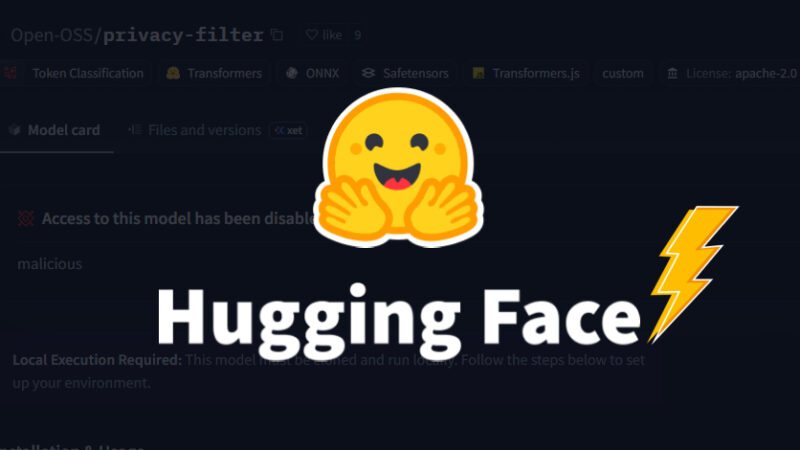
Fake OpenAI Privacy Filter Repo Hits #1 on Hugging Face, Draws 244K Downloads
A malicious Hugging Face repository managed to take a spot in the platform’s trending list by impersonating OpenAI’s Privacy Filter open-weight model to deliver a… Read MoreThe Hacker News

Ollama Out-of-Bounds Read Vulnerability Allows Remote Process Memory Leak
Cybersecurity researchers have disclosed a critical security vulnerability in Ollama that, if successfully exploited, could allow a remote, unauthenticated attacker to leak its entire process… Read MoreThe Hacker News

cPanel, WHM Release Fixes for Three New Vulnerabilities — Patch Now
cPanel has released updates to address three vulnerabilities in cPanel and Web Host Manager (WHM) that could be exploited to achieve privilege escalation, code execution,… Read MoreThe Hacker News
TCLBANKER Banking Trojan Targets Financial Platforms via WhatsApp and Outlook Worms
Threat hunters have flagged a previously undocumented Brazilian banking trojan dubbed TCLBANKER that’s capable of targeting 59 banking, fintech, and cryptocurrency platforms. The activity is… Read MoreThe Hacker News

Fake Call History Apps Stole Payments From Users After 7.3 Million Play Store Downloads
Cybersecurity researchers have discovered fraudulent apps on the official Google Play Store for Android that falsely claimed to offer access to call histories for any… Read MoreThe Hacker News

Quasar Linux RAT Steals Developer Credentials for Software Supply Chain Compromise
A previously undocumented Linux implant codenamed Quasar Linux RAT (QLNX) is targeting developers’ systems to establish a silent foothold as well as facilitate a broad… Read MoreThe Hacker News

One Missed Threat Per Week: What 25M Alerts Reveal About Low-Severity Risk
The dark secret of enterprise security operations is that defenders have quietly institutionalized the practice of not looking. This is not just anecdotal, but rather… Read MoreThe Hacker News

New Linux PamDOORa Backdoor Uses PAM Modules to Steal SSH Credentials
Cybersecurity researchers have disclosed details of a new Linux backdoor named PamDOORa that’s being advertised on the Rehub Russian cybercrime forum for $1,600 by a… Read MoreThe Hacker News