Android Spyware Asin Targets Arabic Users via Fake News, PDF and War Map Apps
Arabic-speaking users have emerged as the target of a new Android spyware codenamed Asin, according to findings from ESET. The Slovakian cybersecurity company said it… Read MoreThe Hacker News
New Threat Cluster OP-512 Targets Microsoft IIS Servers with Custom Web Shell Framework
Cybersecurity researchers have discovered a previously unreported threat cluster dubbed OP-512 (where “OP” stands for “opponent”) that has been observed targeting Microsoft Internet Information Services (IIS)… Read MoreThe Hacker News
Only 10% of SOCs Say They’re Getting Excellent Value From AI. Here’s What the Second Wave Has to Deliver
Eighteen months ago, the AI SOC was a marketing line. Today it’s a budget item. The category has crossed over from interesting to inevitable, with… Read MoreThe Hacker News
Hackers Exploit Critical Everest Forms Pro WordPress Plugin Flaw to Take Over Sites
Threat actors are actively exploiting a critical security flaw in Everest Forms Pro, a WordPress plugin with about 4,000 active installations, to execute arbitrary code,… Read MoreThe Hacker News
FIFA World Cup 2026 Scams Are Already Live: Fake Sites, Banking Malware, and Stolen Logins
Security researchers and the FBI are warning that a wave of FIFA-themed fraud is already hitting World Cup 2026 fans, days before the June 11… Read MoreThe Hacker News
Cisco Patches CVE-2026-20230 in Unified CM as Exploit Code Goes Public
Cisco has patched a bug in Unified Communications Manager that lets an unauthenticated attacker on the network write files to the box and, from there,… Read MoreThe Hacker News
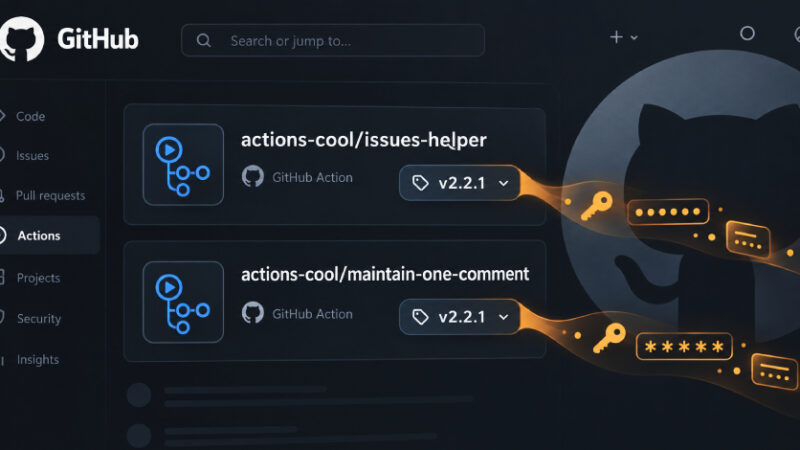
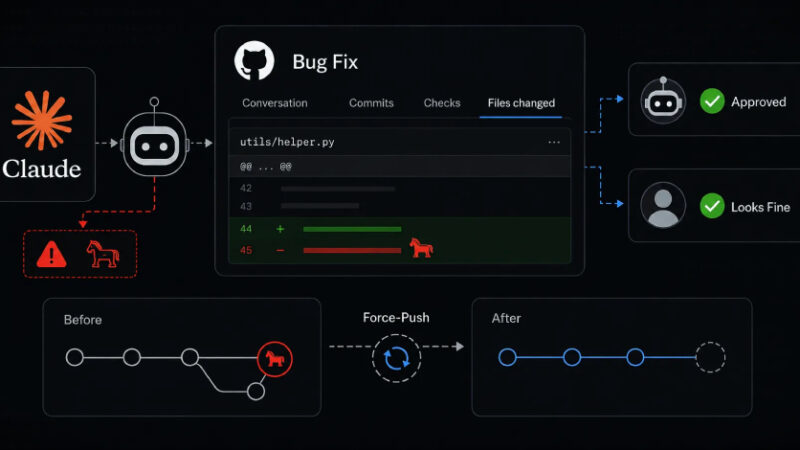
Claude Code GitHub Action Flaw Let One Malicious Issue Hijack Repositories
A security researcher found a flaw in Anthropic’s Claude Code GitHub Action that let an attacker take over vulnerable public repositories running it, with nothing… Read MoreThe Hacker News
Agentic AI Is Transforming Defense, But Only Secure IT Infrastructure Will Maximize It
Over the past several weeks, the cybersecurity community has been reminded how quickly frontier and agentic AI in defense networks can challenge our assumptions. When… Read MoreThe Hacker News
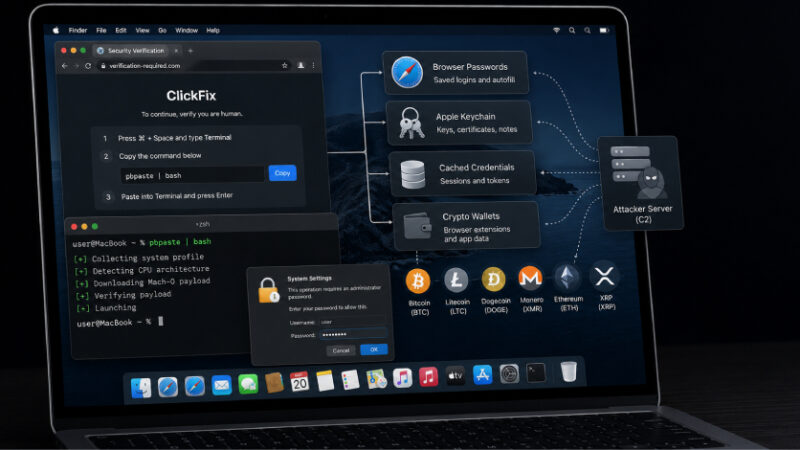
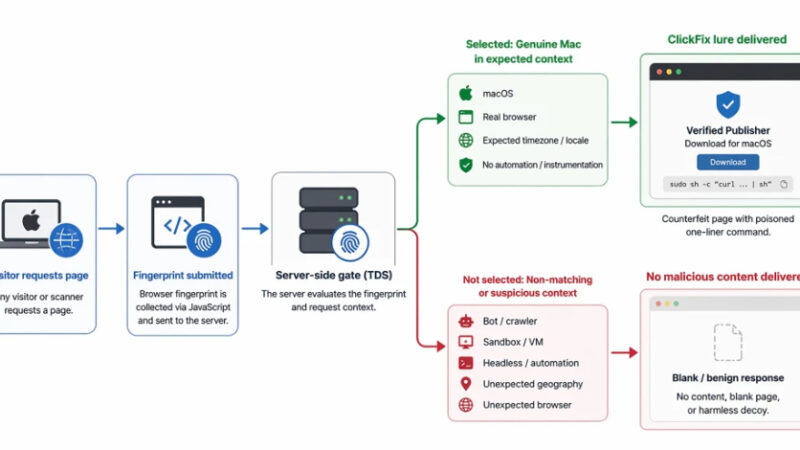
ThreatsDay Bulletin: AI Agents Gone Wrong, Sketchy C2 Tools, ClickFix Tricks, JS Backdoors & 20+ New Stories
It got stupid again. The internet still feels held together with tape. Bad plugins, old bugs, fake tools, trusted apps doing shady things. Same mess,… Read MoreThe Hacker News
China-Linked TA4922 Expands Phishing Attacks to U.K., Germany, Italy, and South Africa
A new China-linked cybercrime group known as TA4922 has expanded its targeting focus to target European organizations in the U.K., Germany, Italy, and South Africa.… Read MoreThe Hacker News
One-Click GitHub Dev Attack Lets Attackers Steal Full GitHub OAuth Tokens
Cybersecurity researchers have disclosed a one-click attack via Microsoft Visual Studio Code (VS Code) that makes it possible to steal a user’s GitHub token. “Just… Read MoreThe Hacker News
Shrinking the IAM Attack Surface through Identity Visibility and Intelligence Platforms (IVIP)
The Fragmented State of Modern Enterprise Identity Enterprise IAM is approaching a breaking point. As organizations scale, identity becomes increasingly fragmented across thousands of applications,… Read MoreThe Hacker News
Beyond the Zero-Day: See Your Network Like an Attacker | Webinar with HD Moore
Assume the breach. Zero-days keep shipping, AI is writing exploits faster than anyone patches, and “patch everything in time” stopped working years ago. Stop betting… Read MoreThe Hacker News
Unpatched Windows Search URI Vulnerability Lets Attackers Steal NTLMv2 Hashes
Cybersecurity researchers have disclosed details of an unpatched issue that could be exploited to disclose a user’s NTLMv2 hash to the attacker. Like in the… Read MoreThe Hacker News
New HTTP/2 Bomb Vulnerability Allows Remote DoS on NGINX, Apache, IIS, Envoy & Cloudflare
Cybersecurity researchers have discovered a remote denial-of-service exploit that affects major web servers, including NGINX, Apache HTTPD, Microsoft IIS, Envoy, and Cloudflare Pingora. The vulnerability… Read MoreThe Hacker News
New HTTP/2 Bomb Vulnerability Allows Remote DoS on NGINX, Apache, IIS, Envoy & Cloudflare
Cybersecurity researchers have discovered a remote denial-of-service exploit that affects major web servers, including NGINX, Apache HTTPD, Microsoft IIS, Envoy, and Cloudflare Pingora. The vulnerability… Read MoreThe Hacker News
New HTTP/2 Bomb Vulnerability Allows Remote DoS on NGINX, Apache, IIS, Envoy & Cloudflare
Cybersecurity researchers have discovered a remote denial-of-service exploit that affects major web servers, including NGINX, Apache HTTPD, Microsoft IIS, Envoy, and Cloudflare Pingora. The vulnerability… Read MoreThe Hacker News
AI-Driven Exploitation is Destroying Vulnerability Management. Here’s How to Handle It.
AI-driven exploitation timelines are rapidly shrinking, and they are not going to stop shrinking. Vulnerabilities are being discovered, reproduced, and weaponized faster than ever in… Read MoreThe Hacker News
How Leading Organizations Are Turning EDR Into Operational Resilience
Most organizations now recognize that endpoint protection alone is no longer sufficient. That’s why adoption of endpoint detection and response (EDR) has accelerated rapidly in… Read MoreThe Hacker News
Pakistan-Linked SideCopy Targets Afghanistan Finance Ministry with Xeno RAT
Cybersecurity researchers have disclosed details of a spear-phishing campaign likely undertaken by the Pakistan-aligned SideCopy group targeting Afghanistan’s Ministry of Finance with an open-source remote… Read MoreThe Hacker News
Dashlane Discloses Brute-Force Attack, Encrypted Vaults of Fewer Than 20 Users Downloaded
Password manager Dashlane has disclosed that “fewer than” 20 users on the personal subscription plan had their encrypted vaults downloaded following a brute-force attack launched… Read MoreThe Hacker News
Miasma Supply Chain Attack Compromises Red Hat npm Packages with Credential-Stealing Worm
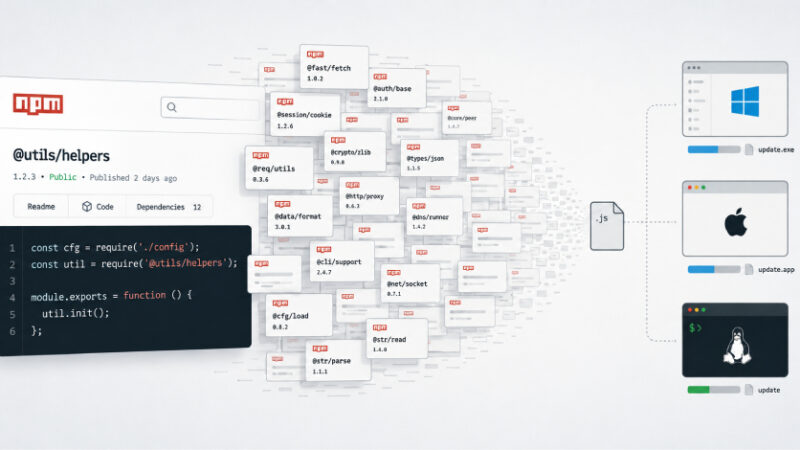
A new Mini Shai-Hulud supply chain attack campaign, codenamed Miasma, has compromised @redhat-cloud-services packages to steal credentials and secrets from developer machines and deliver a… Read MoreThe Hacker News
⚡ Weekly Recap: New Linux Flaw, PAN-OS Exploit, AI-Powered Attacks, OAuth Phishing and More
Monday hit like a cron job with anger issues. A busted auth path here, a repo-side faceplant there, some “patched-ish” thing already getting chewed on… Read MoreThe Hacker News
China-Aligned Groups Ramp Up Attacks: Dragon Weave Hits Czech Republic & Taiwan
A new cyber espionage campaign codenamed Operation Dragon Weave has been observed targeting officials and citizens in the Czech Republic and Taiwan to deliver an… Read MoreThe Hacker News
The Security Growth Platform: Why MSPs Are Moving Beyond vCISO Tools
Three years ago, the practical question for an MSP building a cybersecurity practice was which “vCISO platform” to buy. The term was good shorthand for… Read MoreThe Hacker News
OpenAI Codex Authentication Tokens Stolen in codexui-android npm Supply Chain Attack
Cybersecurity researchers have disclosed details of a new malicious supply chain campaign that’s targeting developers using OpenAI Codex through a legitimate-looking remote web UI. The… Read MoreThe Hacker News
Critical WP Maps Pro Flaw Actively Exploited to Create Admin Accounts
Threat actors are attempting to actively exploit a critical security flaw impacting WP Maps Pro, a WordPress plugin that has had over 15,000 sales on… Read MoreThe Hacker News
Dutch Authorities Dismantle Botnet Linked to 17 Million Infected Devices
Dutch authorities have announced the takedown of a botnet that enslaved millions of infected devices, including computers, tablets, smartphones, and IoT devices, to carry out… Read MoreThe Hacker News
PAN-OS GlobalProtect Authentication Bypass (CVE-2026-0257) Under Active Exploitation
Palo Alto Networks has warned that a recently disclosed medium-severity security flaw impacting PAN-OS and Prisma Access has come under active exploitation in the wild.… Read MoreThe Hacker News
ChatGPhish Vulnerability Turns ChatGPT Web Summaries Into a Phishing Surface
Cybersecurity researchers have disclosed details of a vulnerability in OpenAI ChatGPT that leverages the artificial intelligence (AI) assistant’s implicit trust in Markdown links and images… Read MoreThe Hacker News
Attackers Use LLM Agent for Post-Exploitation After Marimo CVE-2026-39987 Exploit
An unknown threat actor has been observed using a large language model (LLM) agent to conduct post-compromise actions after obtaining initial access following the exploitation… Read MoreThe Hacker News
New Russian-Linked GREYVIBE Targets Ukraine with AI-Powered Cyberattacks
A previously undocumented threat actor dubbed GREYVIBE has been attributed to ongoing and persistent attacks targeting Ukraine and Ukraine-related entities since at least August 2025.… Read MoreThe Hacker News
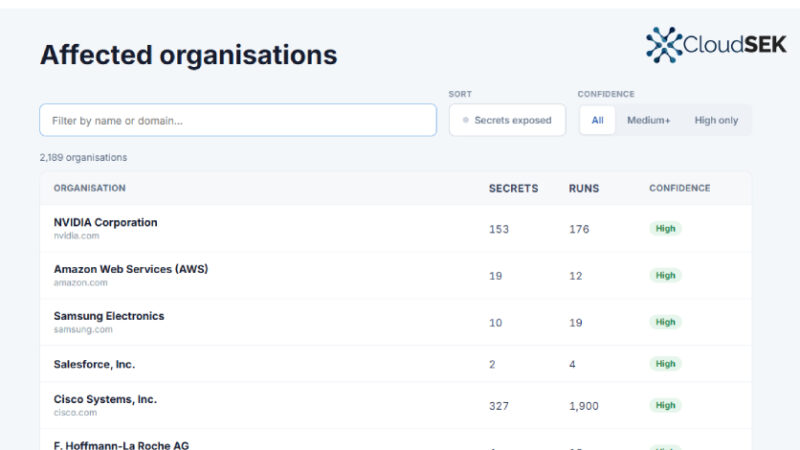
What 2,000 Exposed Vibe-Coded Apps Reveal About the Limits of Most Security Stacks
Shadow AI used to mean employees pasting things they shouldn’t into ChatGPT. It now means something bigger: employees building full applications with AI, wiring them… Read MoreThe Hacker News
Malicious Sicoob NuGet Steals Banking Credentials as npm Packages Target Cloud Secrets
Cybersecurity researchers have discovered a malicious NuGet package that masquerades as a C# software development kit for Sicoob, one of Brazil’s largest cooperative financial systems,… Read MoreThe Hacker News
Kimsuky Deploys HTTPSpy, Expands Arsenal with HelloDoor and VS Code Tunnels
The North Korean state-sponsored threat actor known as Kimsuky (aka Velvet Chollima) has been attributed to a fresh set of cyber attacks targeting South Korean… Read MoreThe Hacker News
Critical Gogs RCE Vulnerability Lets Any Authenticated User Execute Arbitrary Code
A critical security vulnerability has been disclosed in Gogs, a popular open-source self-hosted Git service, that allows an authenticated user to execute arbitrary code under… Read MoreThe Hacker News
Threat Actors Exploit Critical FortiClient EMS Flaw to Deploy Credential Stealer
Threat actors are continuing to exploit a critical, now-patched security flaw impacting FortiClient Endpoint Management Server (EMS) deployments to deliver credential-stealing malware. “The campaign abused… Read MoreThe Hacker News
Microsoft Slams Public Zero-Day Disclosures Amid GitHub Researcher Account Removal
Microsoft has come out strongly in favor of Coordinated Vulnerability Disclosure (CVD), urging the research community to share their findings and give affected vendors an… Read MoreThe Hacker News
ThreatsDay Bulletin: Claude Security Plugin, Azure Priv-Esc, Kali365 MFA Bypass, FIFA Scams +15 More
Every time you think the industry has finally stopped doing some reckless, low-effort crap, somebody spins up a fresh box full of sketchy loaders, fake… Read MoreThe Hacker News
New AI Usage Report: Enterprise AI Risk Is Heavily Concentrated Among a Small Group of AI “Power users”
State of AI Usage Report 2026 (full report here) by LayerX Security reveals the extent of the enterprise AI visibility gap and why most organizations… Read MoreThe Hacker News
Grandoreiro Malware and BTMOB RAT Campaigns Target Windows and Android Users
Latin America and Europe become the target of two banking trojan campaigns that are designed to infect Windows and Android devices with Grandoreiro and BTMOB… Read MoreThe Hacker News
Malicious npm Package Stole Files From Claude AI User Directory via GitHub
Cybersecurity researchers have discovered a new malicious package on the npm registry that comes with information stealing capabilities. According to OX Security, the package, named… Read MoreThe Hacker News
5 Steps to Managing Shadow AI Tools Without Slowing Down Employees
When an employee installs an AI writing assistant, connects a coding copilot to their IDE, or starts summarizing meetings with a new browser tool, they… Read MoreThe Hacker News
GlassWorm Malware Takedown Disrupts Developer Supply Chain Attack Infrastructure
CrowdStrike, in partnership with Google and the Shadowserver Foundation, has announced the simultaneous disruption of all command-and-control (C2) channels associated with GlassWorm, a persistent software… Read MoreThe Hacker News
3 SOC Steps that Shut Down Incident Risks Early
Most organizations still picture cyber defense as a fortress problem: build stronger walls, add more guards, buy another detection engine. But modern incidents rarely crash… Read MoreThe Hacker News
MuddyWater Uses DLL Side-Loading in Espionage Campaign Targeting 9 Countries
The Iranian hacking group known as MuddyWater has been linked to a new campaign affecting at least nine organizations across nine countries on four continents… Read MoreThe Hacker News
[THN Webinar] New AI DDoS Attacks Are Smarter. Learn How to Fight Back
Every single day, hackers are finding new ways to crash websites and steal data. But right now, something has changed. Hackers are no longer working… Read MoreThe Hacker News
Microsoft Patches SharePoint RCE Flaw CVE-2026-45659 Across Server Versions
Microsoft has rolled out updates to fix a remote code execution vulnerability impacting SharePoint that could be exploited by bad actors in attacks without requiring… Read MoreThe Hacker News
MFA Prompt Bombing: Why Your Second Factor Isn’t Saving You
Multi-factor authentication (MFA) was supposed to close a critical gap in identity security. It meant that, even if an attacker possessed the account credentials, they… Read MoreThe Hacker News
CERT-In Recommends 12-Hour Patching for Internet-Facing Flaws Amid AI-Assisted Attacks
The Indian Computer Emergency Response Team (CERT-In) has issued new guidelines requiring organizations to patch critical security vulnerabilities in internet-exposed systems within 12 hours of… Read MoreThe Hacker News
⚡ Weekly Recap: Linux Flaws, Defender 0-Days, Router Botnets, and Supply Chain Chaos
Monday recap. Same mess, new week. A sketchy dev tool got people pwned, old bugs came back from the dead, and security products somehow needed… Read MoreThe Hacker News
Ghost CMS CVE-2026-26980 Exploited to Hijack 700+ Sites for ClickFix Attacks
Threat actors are exploiting a recently disclosed critical security flaw in Ghost CMS to inject malicious JavaScript code with an aim to fuel ClickFix attacks.… Read MoreThe Hacker News
The Alert Firehose Finally Meets Its Match
Ask a cybersecurity pro about Network Detection and Response (NDR) and you might still hear “Noisy,” “Too much data.” But ask the teams running NDR… Read MoreThe Hacker News
Lazarus Deploys RemotePE Memory-Only RAT Against Financial and Crypto Firms
Cybersecurity researchers have shed light on a cross-platform malware called RemotePE that has been put to use by the North Korea-linked Lazarus Group in attacks… Read MoreThe Hacker News
TrapDoor Supply Chain Attack Spreads Credential-Stealing Malware via npm, PyPI, and CratesIO
A new coordinated cross-ecosystem software supply chain attack campaign has targeted npm, PyPI, and Crates.io to distribute credential-stealing malware. The campaign, codenamed TrapDoor, spans more… Read MoreThe Hacker News
npm Adds 2FA-Gated Publishing and Package Install Controls Against Supply Chain Attacks
GitHub has rolled out new controls for npm to improve the security of the software supply chain, giving maintainers the ability to explicitly approve a… Read MoreThe Hacker News
Packagist Supply Chain Attack Infects 8 Packages Using GitHub-Hosted Linux Malware
A new “coordinated” supply chain attack campaign has impacted eight packages on Packagist including malicious code designed to run a Linux binary retrieved from a… Read MoreThe Hacker News
Claude Mythos AI Finds 10,000 High-Severity Flaws in Widely Used Software
Anthropic on Friday disclosed that Project Glasswing has helped uncover more than 10,000 high- or critical-severity vulnerabilities across some of the most “systemically” important software… Read MoreThe Hacker News
Laravel-Lang PHP Packages Compromised to Deliver Cross-Platform Credential Stealer
Cybersecurity researchers have flagged a fresh software supply chain attack campaign that has targeted multiple PHP packages belonging to Laravel-Lang to deliver a comprehensive credential-stealing… Read MoreThe Hacker News
LiteSpeed cPanel Plugin CVE-2026-48172 Exploited to Run Scripts as Root
A maximum-severity security vulnerability impacting LiteSpeed User-End cPanel Plugin has come under active exploitation in the wild. The flaw, tracked as CVE-2026-48172 (CVSS score: 10.0),… Read MoreThe Hacker News
Ghostwriter Targets Ukraine Government Entities with Prometheus Phishing Malware
The Belarus-aligned threat actor known as Ghostwriter (aka UAC-0057 and UNC1151Ukraine’s National Security and Defense Council) has been observed using lures related to Prometheus, a… Read MoreThe Hacker News
Megalodon GitHub Attack Targets 5,561 Repos with Malicious CI/CD Workflows
Cybersecurity researchers have disclosed details of a new automated campaign called Megalodon that has pushed 5,718 malicious commits to 5,561 GitHub repositories within a six-hour… Read MoreThe Hacker News
Making Vulnerable Drivers Exploitable Without Hardware – The BYOVD Perspective
1 Introduction This article provides a technical analysis of how many Windows kernel mode drivers can be interacted with from user mode without the hardware… Read MoreThe Hacker News
Kimwolf DDoS Botnet Operator Arrested in Canada Over DDoS-for-Hire Attacks
The U.S. Department of Justice (DoJ) on Thursday announced the arrest of a Canadian man in connection with allegedly operating a distributed denial-of-service (DDoS) botnet… Read MoreThe Hacker News
CISA Adds Exploited Langflow and Trend Micro Apex One Vulnerabilities to KEV
The U.S. Cybersecurity and Infrastructure Security Agency (CISA) on Thursday added two security flaws impacting Langflow and Trend Micro Apex One to its Known Exploited… Read MoreThe Hacker News
Showboat Linux Malware Hits Middle East Telecom with SOCKS5 Proxy Backdoor
Cybersecurity researchers have disclosed details of a new Linux malware dubbed Showboat that has been put to use in a campaign targeting a telecommunications provider… Read MoreThe Hacker News
ThreatsDay Bulletin: Linux Rootkits, Router 0-Day, AI Intrusions, Scam Kits and 25 New Stories
This week starts small. A token leaks. A bad package slips in. A login trick works. An old tool shows up again. At first, it… Read MoreThe Hacker News
Microsoft Warns of Two Actively Exploited Defender Vulnerabilities
Microsoft has disclosed that a privilege escalation and a denial-of-service flaw in Defender has come under active exploitation in the wild. The former, tracked as… Read MoreThe Hacker News
When Identity is the Attack Path
Consider a cached access key on a single Windows machine. It got there the way most cached credentials do – a user logged in, and… Read MoreThe Hacker News
9-Year-Old Linux Kernel Flaw Enables Root Command Execution on Major Distros
Cybersecurity researchers have disclosed details of a vulnerability in the Linux kernel that remained undetected for nine years. The vulnerability, tracked as CVE-2026-46333 (CVSS score:… Read MoreThe Hacker News
Microsoft Open-Sources RAMPART and Clarity to Secure AI Agents During Development
Microsoft has unveiled two new open-source tools called RAMPART and Clarity to assist developers in better testing the security of artificial intelligence (AI) agents. RAMPART,… Read MoreThe Hacker News
Microsoft Takes Down Malware-Signing Service Behind Ransomware Attacks
Microsoft on Tuesday said it disrupted a malware-signing-as-a-service (MSaaS) operation that weaponized the company’s Artifact Signing system to deliver malicious code and conduct ransomware and… Read MoreThe Hacker News
Webworm Deploys EchoCreep and GraphWorm Backdoors Using Discord and MS Graph API
Cybersecurity researchers have flagged fresh activity from a China-aligned threat actor known as Webworm in 2025, deploying custom backdoors that employ Discord and Microsoft Graph… Read MoreThe Hacker News
Agent AI is Coming. Are You Ready?
New Industry Data Just Released Suggests Not. On May 19th, 2026, Orchid Security released the results of our Identity Gap: Snapshot 2026. Among the findings,… Read MoreThe Hacker News
Agent AI is Coming. Are You Ready?
New Industry Data Just Released Suggests Not. On May 19th, 2026, Orchid Security released the results of our Identity Gap: Snapshot 2026. Among the findings,… Read MoreThe Hacker News
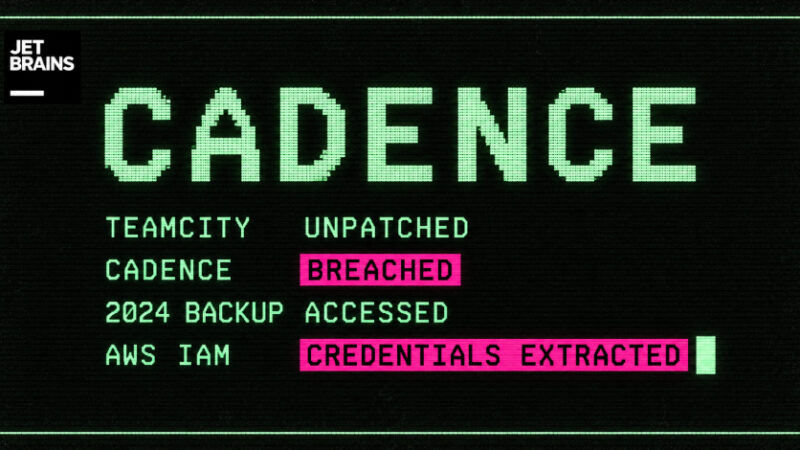
GitHub Breached — Employee Device Hack Led to Exfiltration of 3,800+ Internal Repos
GitHub on Tuesday said it’s investigating unauthorized access to its internal repositories after the notorious threat actor known as TeamPCP listed the platform’s source code… Read MoreThe Hacker News
Trapdoor Android Ad Fraud Scheme Hit 659 Million Daily Bid Requests Using 455 Apps
Cybersecurity researchers have disclosed details of a new ad fraud and malvertising operation dubbed Trapdoor targeting Android device users. The activity, per HUMAN’s Satori Threat… Read MoreThe Hacker News
DirtyDecrypt PoC Released for Linux Kernel CVE-2026-31635 LPE Vulnerability
Proof-of-concept (PoC) exploit code has now been released for a recently patched security flaw in the Linux kernel that could allow for local privilege escalation… Read MoreThe Hacker News
The New Phishing Click: How OAuth Consent Bypasses MFA
In February 2026, a phishing-as-a-service (PhaaS) platform called EvilTokens went live. Within five weeks, it had compromised more than 340 Microsoft 365 organizations across five… Read MoreThe Hacker News
Drupal to Release Urgent Core Security Updates on May 20, Sites Told to Prepare
Drupal has issued an alert stating that it intends to release a “core security release” for all supported branches on May 20, 2026, from 5-9… Read MoreThe Hacker News
SEPPMail Secure E-Mail Gateway Vulnerabilities Enable RCE and Mail Traffic Access
Critical security vulnerabilities have been disclosed in SEPPMail Secure E-Mail Gateway, an enterprise-grade email security solution, that could be exploited to achieve remote code execution… Read MoreThe Hacker News
INTERPOL Operation Ramz Disrupts MENA Cybercrime Networks with 201 Arrests
INTERPOL has coordinated a first-of-its-kind cybercrime crackdown across the Middle East and North Africa (MENA) that led to 201 arrests and the identification of an… Read MoreThe Hacker News
⚡ Weekly Recap: Exchange 0-Day, npm Worm, Fake AI Repo, Cisco Exploit and More
Monday opens with a trust problem. A mail server flaw is under active use. A network control system was targeted. Trusted packages were poisoned. A… Read MoreThe Hacker News
How to Reduce Phishing Exposure Before It Turns into Business Disruption
What happens when a phishing email looks clean enough to pass through security, but dangerous enough to expose the business after one click? That is… Read MoreThe Hacker News
Developer Workstations Are Now Part of the Software Supply Chain
Supply chain attackers are not only trying to slip malicious code into trusted software. They are trying to steal the access that makes trusted software… Read MoreThe Hacker News
Ivanti, Fortinet, SAP, VMware, n8n Patch RCE, SQL Injection, Privilege Escalation Flaws
Ivanti, Fortinet, n8n, SAP, and VMware have released security fixes for various vulnerabilities that could be exploited by bad actors to bypass authentication and execute… Read MoreThe Hacker News
NGINX CVE-2026-42945 Exploited in the Wild, Causing Worker Crashes and Possible RCE
A newly disclosed security flaw impacting NGINX Plus and NGINX Open has come under active exploitation in the wild, days after its public disclosure, according… Read MoreThe Hacker News
Grafana GitHub Token Breach Led to Codebase Download and Extortion Attempt
Grafana has disclosed that an “unauthorized party” obtained a token that granted them the ability to access the company’s GitHub environment and download its codebase.… Read MoreThe Hacker News
Funnel Builder Flaw Under Active Exploitation Enables WooCommerce Checkout Skimming
A critical security vulnerability impacting the Funnel Builder plugin for WordPress has come under active exploitation in the wild to inject malicious JavaScript code into… Read MoreThe Hacker News
Turla Turns Kazuar Backdoor Into Modular P2P Botnet for Persistent Access
The Russian state-sponsored hacking group known as Turla has transformed its custom backdoor Kazuar into a modular peer-to-peer (P2P) botnet that’s engineered for stealth and… Read MoreThe Hacker News
Four OpenClaw Flaws Enable Data Theft, Privilege Escalation, and Persistence
Cybersecurity researchers have disclosed a set of four security flaws in OpenClaw that could be chained to achieve data theft, privilege escalation, and persistence. The… Read MoreThe Hacker News
What 45 Days of Watching Your Own Tools Will Tell You About Your Real Attack Surface
In Your Biggest Security Risk Isn’t Malware — It’s What You Already Trust, we made a simple argument: the most dangerous activity inside most organizations… Read MoreThe Hacker News
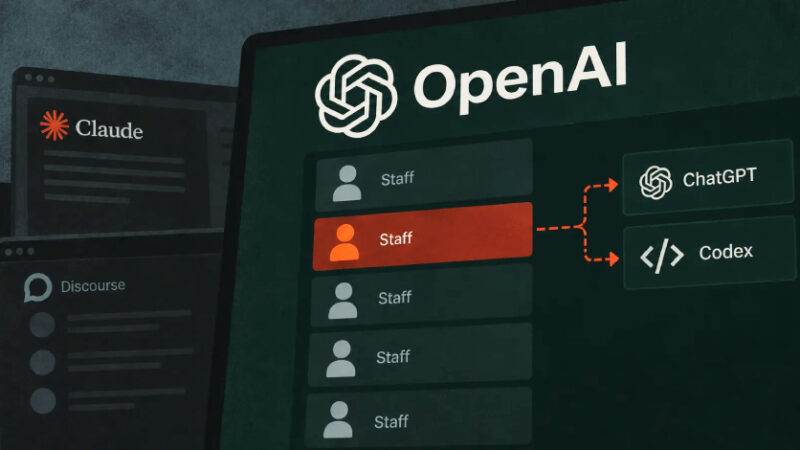
TanStack Supply Chain Attack Hits Two OpenAI Employee Devices, Forces macOS Updates
OpenAI has disclosed that two of its employee devices in its corporate environment were impacted via the Mini Shai-Hulud supply chain attack on TanStack, but… Read MoreThe Hacker News
On-Prem Microsoft Exchange Server CVE-2026-42897 Exploited via Crafted Email
Microsoft has disclosed a new security vulnerability impacting on-premise versions of Exchange Server that it said has come under active exploitation in the wild. The… Read MoreThe Hacker News
ThreatsDay Bulletin: PAN-OS RCE, Mythos cURL Bug, AI Tokenizer Attacks, and 10+ Stories
Everything is still on fire. This week feels dumb in the worst way — bad links, weak checks, fake help desks, shady forum posts, and… Read MoreThe Hacker News
Ghostwriter Targets Ukrainian Government With Geofenced PDF Phishing, Cobalt Strike
The Belarus-aligned threat group known as Ghostwriter has been attributed to a fresh set of attacks targeting governmental organizations in Ukraine. Active since at least… Read MoreThe Hacker News
PraisonAI CVE-2026-44338 Auth Bypass Targeted Within Hours of Disclosure
Threat actors have been observed attempting to exploit a recently disclosed security vulnerability in PraisonAI, an open-source multi-agent orchestration framework, within four hours of public… Read MoreThe Hacker News
How AI Hallucinations Are Creating Real Security Risks
AI hallucinations are introducing serious security risks into critical infrastructure decision-making by exploiting human trust through highly confident yet incorrect outputs. When an AI model… Read MoreThe Hacker News
Windows Zero-Days Expose BitLocker Bypasses And CTFMON Privilege Escalation
An anonymous cybersecurity researcher who disclosed three Microsoft Defender vulnerabilities has returned with two more zero-days involving a BitLocker bypass and a privilege escalation impacting… Read MoreThe Hacker News
Microsoft’s MDASH AI System Finds 16 Windows Flaws Fixed in Patch Tuesday
Microsoft has unveiled a new multi-model artificial intelligence (AI)-driven system called MDASH to facilitate vulnerability discovery and remediation at scale, adding that it’s being tested… Read MoreThe Hacker News
Azerbaijani Energy Firm Hit by Repeated Microsoft Exchange Exploitation
A threat actor with affiliations to China has been linked to a “multi-wave intrusion” targeting an unnamed Azerbaijani oil and gas company between late December… Read MoreThe Hacker News
[Webinar] How Modern Attack Paths Cross Code, Pipelines, and Cloud
TL;DR: Stop chasing thousands of “toast” alerts. Join experts from Wiz to learn how hackers connect tiny flaws to build a “Lethal Chain” to your… Read MoreThe Hacker News
Most Remediation Programs Never Confirm the Fix Actually Worked
Security teams have never had better visibility into their environments and never been worse at confirming what they fix stays fixed. Mandiant’s M-Trends 2026 report… Read MoreThe Hacker News
Microsoft Patches 138 Vulnerabilities, Including DNS and Netlogon RCE Flaws
Microsoft on Tuesday released patches for 138 security vulnerabilities spanning its product portfolio, although none of them have been listed as publicly known or under… Read MoreThe Hacker News
RubyGems Suspends New Signups After Hundreds of Malicious Packages Are Uploaded
RubyGems, the standard package manager for the Ruby programming language, has temporarily paused account sign ups following what has been described as a “major malicious… Read MoreThe Hacker News
New TrickMo Variant Uses TON C2 and SOCKS5 to Create Android Network Pivots
Cybersecurity researchers have flagged a new version of the TrickMo Android banking trojan that uses The Open Network (TON) for command-and-control (C2). The new variant,… Read MoreThe Hacker News
Webinar: What the Riskiest SOC Alerts Go Unanswered – and How Radiant Security Can Help
Why do the Riskiest SOC Alerts Go Unanswered? Security operations teams are drowning in alerts. But the real problem isn’t always alert volume; it’s the… Read MoreThe Hacker News
Mini Shai-Hulud Worm Compromises TanStack, Mistral AI, Guardrails AI & More Packages
TeamPCP, the threat actor behind the recentsupply chain attack spree, has been linked to the compromise of the npm and PyPI packages from TanStack, UiPath,… Read MoreThe Hacker News
Why Agentic AI Is Security’s Next Blind Spot
Agentic AI is already running in production environments across many organizations today. It is executing tasks, consuming data, and taking actions — most likely without… Read MoreThe Hacker News
Hackers Used AI to Develop First Known Zero-Day 2FA Bypass for Mass Exploitation
Google on Monday disclosed that it identified an unknown threat actor using a zero-day exploit that it said was likely developed with an artificial intelligence… Read MoreThe Hacker News
⚡ Weekly Recap: Linux Rootkit, macOS Crypto Stealer, WebSocket Skimmers and More
Rough Monday. Somebody poisoned a trusted download again, somebody else turned cloud servers into public housing, and a few crews are still getting into boxes… Read MoreThe Hacker News
Your Purple Team Isn’t Purple — It’s Just Red and Blue in the Same Room
Defending a network at 2 am looks a lot like this: an analyst copy-pasting a hash from a PDF into a SIEM query. A red… Read MoreThe Hacker News
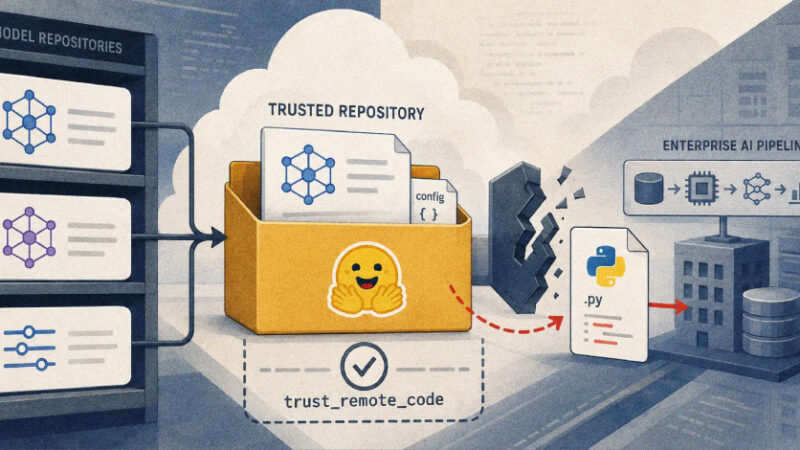
Fake OpenAI Privacy Filter Repo Hits #1 on Hugging Face, Draws 244K Downloads
A malicious Hugging Face repository managed to take a spot in the platform’s trending list by impersonating OpenAI’s Privacy Filter open-weight model to deliver a… Read MoreThe Hacker News
Ollama Out-of-Bounds Read Vulnerability Allows Remote Process Memory Leak
Cybersecurity researchers have disclosed a critical security vulnerability in Ollama that, if successfully exploited, could allow a remote, unauthenticated attacker to leak its entire process… Read MoreThe Hacker News
cPanel, WHM Release Fixes for Three New Vulnerabilities — Patch Now
cPanel has released updates to address three vulnerabilities in cPanel and Web Host Manager (WHM) that could be exploited to achieve privilege escalation, code execution,… Read MoreThe Hacker News
TCLBANKER Banking Trojan Targets Financial Platforms via WhatsApp and Outlook Worms
Threat hunters have flagged a previously undocumented Brazilian banking trojan dubbed TCLBANKER that’s capable of targeting 59 banking, fintech, and cryptocurrency platforms. The activity is… Read MoreThe Hacker News
Fake Call History Apps Stole Payments From Users After 7.3 Million Play Store Downloads
Cybersecurity researchers have discovered fraudulent apps on the official Google Play Store for Android that falsely claimed to offer access to call histories for any… Read MoreThe Hacker News
Quasar Linux RAT Steals Developer Credentials for Software Supply Chain Compromise
A previously undocumented Linux implant codenamed Quasar Linux RAT (QLNX) is targeting developers’ systems to establish a silent foothold as well as facilitate a broad… Read MoreThe Hacker News
One Missed Threat Per Week: What 25M Alerts Reveal About Low-Severity Risk
The dark secret of enterprise security operations is that defenders have quietly institutionalized the practice of not looking. This is not just anecdotal, but rather… Read MoreThe Hacker News
New Linux PamDOORa Backdoor Uses PAM Modules to Steal SSH Credentials
Cybersecurity researchers have disclosed details of a new Linux backdoor named PamDOORa that’s being advertised on the Rehub Russian cybercrime forum for $1,600 by a… Read MoreThe Hacker News
One Click, Total Shutdown: The “Patient Zero” Webinar on Killing Stealth Breaches
The hardest part of cybersecurity isn’t the technology, it’s the people. Every major breach you’ve read about lately usually starts the same way: one employee,… Read MoreThe Hacker News
PAN-OS RCE Exploit Under Active Use Enabling Root Access and Espionage
Palo Alto Networks has disclosed that threat actors may have attempted to unsuccessfully exploit a recently disclosed critical security flaw as early as April 9,… Read MoreThe Hacker News
ThreatsDay Bulletin: Edge Plaintext Passwords, ICS 0-Days, Patch-or-Die Alerts and 25+ New Stories
Bad week. Turns out the easiest way to get hacked in 2026 is still the same old garbage: shady packages, fake apps, forgotten DNS junk,… Read MoreThe Hacker News
Day Zero Readiness: The Operational Gaps That Break Incident Response
Having an incident response retainer, or even a pre-approved external incident response firm, is not the same as being ready for an incident. A retainer… Read MoreThe Hacker News
PyPI Packages Deliver ZiChatBot Malware via Zulip APIs on Windows and Linux
Cybersecurity researchers have discovered three packages on the Python Package Index (PyPI) repository that are designed to stealthily deliver a previously unknown malware family called ZiChatBot… Read MoreThe Hacker News
MuddyWater Uses Microsoft Teams to Steal Credentials in False Flag Ransomware Attack
The Iranian state-sponsored hacking group known as MuddyWater (aka Mango Sandstorm, Seedworm, and Static Kitten) has been attributed to a ransomware attack in what has… Read MoreThe Hacker News
The Hacker News Launches ‘Cybersecurity Stars Awards 2026’ — Submissions Now Open
For nearly 20 years, we at The Hacker News have mostly told scary stories about cyberspace — big hacks, broken systems, and new threats. But… Read MoreThe Hacker News
Your AI Agents Are Already Inside the Perimeter. Do You Know What They’re Doing?
Analysts recently confirmed what identity security teams have quietly feared: AI agents are being deployed faster than enterprises can govern them. In their inaugural Market… Read MoreThe Hacker News
Google’s Android Apps Get Public Verification to Stop Supply Chain Attacks
Google has announced expanded Binary Transparency for Android as a way to safeguard the ecosystem from supply chain attacks. “This new public ledger ensures the… Read MoreThe Hacker News
Windows Phone Link Exploited by CloudZ RAT to Steal Credentials and OTPs
Cybersecurity researchers have disclosed details of an intrusion that involved the use of a CloudZ remote access tool (RAT) and a previous undocumented plugin dubbed… Read MoreThe Hacker News
Critical Apache HTTP/2 Flaw (CVE-2026-23918) Enables DoS and Potential RCE
The Apache Software Foundation (ASF) has released security updates to address several security vulnerabilities in the HTTP Server, including a severe vulnerability that could potentially… Read MoreThe Hacker News
DAEMON Tools Supply Chain Attack Compromises Official Installers with Malware
A newly identified supply chain attack targeting DAEMON Tools software has compromised its installers to serve a malicious payload, according to findings from Kaspersky. “These… Read MoreThe Hacker News
China-Linked UAT-8302 Targets Governments Using Shared APT Malware Across Regions
A sophisticated China-nexus advanced persistent threat (APT) group has been attributed to attacks targeting government entities in South America since at least late 2024 and… Read MoreThe Hacker News
The Back Door Attackers Know About — and Most Security Teams Still Haven’t Closed
Every AI tool, workflow automation, and productivity app your employees connected to Google or Microsoft this year left something behind: a persistent OAuth token with… Read MoreThe Hacker News
MetInfo CMS CVE-2026-29014 Exploited for Remote Code Execution Attacks
Threat actors are actively exploiting a critical security flaw impacting an open-source content management system (CMS) known as MetInfo, according to new findings from VulnCheck.… Read MoreThe Hacker News
Progress Patches Critical MOVEit Automation Bug Enabling Authentication Bypass
Progress Software has released updates to address two security flaws in MOVEit Automation, including a critical bug that could result in an authentication bypass. MOVEit… Read MoreThe Hacker News
⚡ Weekly Recap: AI-Powered Phishing, Android Spying Tool, Linux Exploit, GitHub RCE & More
This week, the shadows moved faster than the patches. While most teams were still triaging last month’s alerts, attackers had already turned control panels into… Read MoreThe Hacker News
2026: The Year of AI-Assisted Attacks
On December 4, 2025, a 17-year-old was arrested in Osaka under Japan’s Unauthorized Access Prohibition Act. The young man had run malicious code to extract… Read MoreThe Hacker News
Silver Fox Deploys ABCDoor Malware via Tax-Themed Phishing in India and Russia
The China-based cybercrime group known as Silver Fox has been linked to a new campaign targeting organizations in Russia and India with a new malware… Read MoreThe Hacker News
Critical cPanel Vulnerability Weaponized to Target Government and MSP Networks
A previously unknown threat actor has been observed targeting government and military entities in Southeast Asia, alongside a smaller cluster of managed service providers (MSPs)… Read MoreThe Hacker News
CISA Adds Actively Exploited Linux Root Access Bug CVE-2026-31431 to KEV
The U.S. Cybersecurity and Infrastructure Security Agency (CISA) on Friday added a recently disclosed security flaw impacting various Linux distributions to its Known Exploited Vulnerabilities… Read MoreThe Hacker News
Trellix Confirms Source Code Breach With Unauthorized Repository Access
Cybersecurity company Trellix has announced that it suffered a breach that enabled unauthorized access to a “portion” of its source code. It said it “recently… Read MoreThe Hacker News
30,000 Facebook Accounts Hacked via Google AppSheet Phishing Campaign
A newly discovered Vietnamese-linked operation has been observed using a Google AppSheet as a “phishing relay” to distribute phishing emails with an aim to compromise… Read MoreThe Hacker News
Cybercrime Groups Using Vishing and SSO Abuse in Rapid SaaS Extortion Attacks
Cybersecurity researchers are warning of two cybercrime groups that are carrying out “rapid, high-impact attacks” operating almost within the confines of SaaS environments, while leaving… Read MoreThe Hacker News
China-Linked Hackers Target Asian Governments, NATO State, Journalists, and Activists
Cybersecurity researchers have disclosed details of a new China-aligned espionage campaign targeting government and defense sectors across South, East, and Southeast Asia, along with one… Read MoreThe Hacker News
Top Five Sales Challenges Costing MSPs Cybersecurity Revenue
The managed security services market is projected to grow from $38.31 billion in 2025 to $69.16 billion by 2030[1], with cybersecurity being the fastest-growing sector[2].… Read MoreThe Hacker News
Two Cybersecurity Professionals Get 4-Year Sentences in BlackCat Ransomware Attacks
The U.S. Department of Justice (DoJ) on Thursday announced the sentencing of two cybersecurity professionals to four years each in prison for their role in… Read MoreThe Hacker News
Poisoned Ruby Gems and Go Modules Exploit CI Pipelines for Credential Theft
A new software supply chain attack campaign has been observed using sleeper packages as a conduit to subsequently push malicious payloads that enabled credential theft,… Read MoreThe Hacker News
PyTorch Lightning Compromised in PyPI Supply Chain Attack to Steal Credentials
In yet another software supply chain attack, threat actors have managed to compromise the popular Python package Lightning to push two malicious versions to conduct… Read MoreThe Hacker News
ThreatsDay Bulletin: SMS Blaster Busts, OpenEMR Flaws, 600K Roblox Hacks and 25 More Stories
The internet is noisy this week. We are seeing some wild new tactics, like people using fake cell towers to send scam texts, while some… Read MoreThe Hacker News
New Python Backdoor Uses Tunneling Service to Steal Browser and Cloud Credentials
Cybersecurity researchers have disclosed details of a stealthy Python-based backdoor framework called DEEP#DOOR that comes with capabilities to establish persistent access and harvest a wide… Read MoreThe Hacker News
EtherRAT Distribution Spoofing Administrative Tools via GitHub Facades
Intro A sophisticated, high-resilience malicious campaign was identified by Atos Threat Research Center (TRC) in March 2026. This operation specifically targets the high-privilege professional accounts… Read MoreThe Hacker News
New Linux ‘Copy Fail’ Vulnerability Enables Root Access on Major Distributions
Cybersecurity researchers have disclosed details of a Linux local privilege escalation (LPE) flaw that could allow an unprivileged local user to obtain root. The high-severity… Read MoreThe Hacker News
SAP npm Packages Compromised by “Mini Shai-Hulud” Credential-Stealing Malware
Cybersecurity researchers are sounding the alarm about a new supply chain attack campaign targeting SAP-related npm Packages with credential-stealing malware. According to reports from Aikido… Read MoreThe Hacker News
New Wave of DPRK Attacks Uses AI-Inserted npm Malware, Fake Firms, and RATs
Cybersecurity researchers have discovered malicious code in an npm package after a malicious package as a dependency to the project by Anthropic’s Claude Opus large… Read MoreThe Hacker News
Webinar: How to Automate Exposure Validation to Match the Speed of AI Attacks
In February 2026, researchers uncovered a shift that completely changed the game: threat actors are now using custom AI setups to automate attacks directly into… Read MoreThe Hacker News
What to Look for in an Exposure Management Platform (And What Most of Them Get Wrong)
Every security team has a version of the same story. The quarter ends with hundreds of vulnerabilities closed. The dashboards are bursting with green. Then… Read MoreThe Hacker News
Critical cPanel Authentication Vulnerability Identified — Update Your Server Immediately
cPanel has released security updates to address a security issue impacting various authentication paths that could allow an attacker to obtain access to the control… Read MoreThe Hacker News
VECT 2.0 Ransomware Irreversibly Destroys Files Over 131KB on Windows, Linux, ESXi
Threat hunters are warning that the cybercriminal operation known as VECT 2.0 acts more like a wiper than a ransomware due to a critical flaw… Read MoreThe Hacker News
Why Secure Data Movement Is the Zero Trust Bottleneck Nobody Talks About
Every security program is betting on the same assumption: once a system is connected, the problem is solved. Open a ticket, stand up a gateway,… Read MoreThe Hacker News
Critical Unpatched Flaw Leaves Hugging Face LeRobot Open to Unauthenticated RCE
Cybersecurity researchers have disclosed details of a critical security flaw impacting LeRobot, Hugging Face’s open-source robotics platform with nearly 24,000 GitHub stars, that could be… Read MoreThe Hacker News
After Mythos: New Playbooks For a Zero-Window Era
When patching isn’t fast enough, NDR helps contain the next era of threats. If you’ve been tracking advancements in AI, you know the exploit window,… Read MoreThe Hacker News
Chinese Silk Typhoon Hacker Extradited to U.S. Over COVID Research Cyberattacks
A Chinese national accused of being a member of the Silk Typhoon hacking group has been extradited to the U.S. from Italy. Xu Zewei, 34,… Read MoreThe Hacker News
Checkmarx Confirms GitHub Repository Data Posted on Dark Web After March 23 Attack
Checkmarx has disclosed that its ongoing investigation tied to the supply chain security incident has revealed that a cybercriminal group published data related to the… Read MoreThe Hacker News
⚡ Weekly Recap: Fast16 Malware, XChat Launch, Federal Backdoor, AI Employee Tracking & More
Everything is dumb again. This week feels broken in a very familiar way. Old tricks are back. New tools are doing shady crap. Supply chains… Read MoreThe Hacker News
Mythos Changed the Math on Vulnerability Discovery. Most Teams Aren’t Ready for the Remediation Side
Anthropic’s Claude Mythos Preview has dominated security discussions since its April 7 announcement. Early reporting describes a powerful cybersecurity-focused AI system capable of identifying vulnerabilities… Read MoreThe Hacker News
PhantomCore Exploits TrueConf Vulnerabilities to Breach Russian Networks
A pro-Ukrainian hacktivist group called PhantomCore has been attributed to attacks actively targeting servers running TrueConf video conferencing software in Russia since September 2025. That’s… Read MoreThe Hacker News
Researchers Uncover 73 Fake VS Code Extensions Delivering GlassWorm v2 Malware
Cybersecurity researchers have flagged dozens of Microsoft Visual Studio Code (VS Code) extensions on the Open VSX repository that are linked to a persistent information-stealing… Read MoreThe Hacker News
Researchers Uncover Pre-Stuxnet ‘fast16’ Malware Targeting Engineering Software
Cybersecurity researchers have discovered a new Lua-based malware created years before the notorious Stuxnet worm that aimed to sabotage Iran’s nuclear program by destroying uranium… Read MoreThe Hacker News
CISA Adds 4 Exploited Flaws to KEV, Sets May 2026 Federal Deadline
The U.S. Cybersecurity and Infrastructure Security Agency (CISA) on Friday added four vulnerabilities impacting SimpleHelp, Samsung MagicINFO 9 Server, and D-Link DIR-823X series routers to… Read MoreThe Hacker News
FIRESTARTER Backdoor Hit Federal Cisco Firepower Device, Survives Security Patches
The U.S. Cybersecurity and Infrastructure Security Agency (CISA) has revealed that an unnamed federal civilian agency’s Cisco Firepower device running Adaptive Security Appliance (ASA) software… Read MoreThe Hacker News
NASA Employees Duped in Chinese Phishing Scheme Targeting U.S. Defense Software
The Office of Inspector General (OIG) of the U.S. National Aeronautics and Space Administration (NASA) has revealed how a Chinese national posed as a U.S.… Read MoreThe Hacker News
Bridging the AI Agent Authority Gap: Continuous Observability as the Decision Engine
The AI Agent Authority Gap – From Ungoverned to Delegation As discussed in our previous article, AI agents are exposing a structural gap in enterprise… Read MoreThe Hacker News
Bridging the AI Agent Authority Gap: Continuous Observability as the Decision Engine
The AI Agent Authority Gap – From Ungoverned to Delegation As discussed in our previous article, AI agents are exposing a structural gap in enterprise… Read MoreThe Hacker News
26 FakeWallet Apps Found on Apple App Store Targeting Crypto Seed Phrases
Cybersecurity researchers have discovered a set of malicious apps on the Apple App Store that impersonate popular cryptocurrency wallets in an attempt to steal recovery… Read MoreThe Hacker News
Tropic Trooper Uses Trojanized SumatraPDF and GitHub to Deploy AdaptixC2
Chinese-speaking individuals are the target of a new campaign that uses a trojanized version of SumatraPDF reader to deploy the AdaptixC2 Beacon post-exploitation agent and… Read MoreThe Hacker News
LMDeploy CVE-2026-33626 Flaw Exploited Within 13 Hours of Disclosure
A high-severity security flaw in LMDeploy, an open-source toolkit for compressing, deploying, and serving LLMs, has come under active exploitation in the wild less than… Read MoreThe Hacker News
Bitwarden CLI Compromised in Ongoing Checkmarx Supply Chain Campaign
Bitwarden CLI has been compromised as part of the newly discovered and ongoing Checkmarx supply chain campaign, according to new findings from JFrog and Socket.… Read MoreThe Hacker News
ThreatsDay Bulletin: $290M DeFi Hack, macOS LotL Abuse, ProxySmart SIM Farms +25 New Stories
You scroll past one incident and see another that feels familiar, like it should have been fixed years ago, but it still works with small… Read MoreThe Hacker News
[Webinar] Mythos Reality Check: Beating Automated Exploitation at AI Speed
Imagine a world where hackers don’t sleep, don’t take breaks, and find weak spots in your systems instantly. Well, that world is already here. Thanks… Read MoreThe Hacker News
Project Glasswing Proved AI Can Find the Bugs. Who’s Going to Fix Them?
Last week, Anthropic announced Project Glasswing, an AI model so effective at discovering software vulnerabilities that they took the extraordinary step of postponing its public… Read MoreThe Hacker News
China-Linked GopherWhisper Infects 12 Mongolian Government Systems with Go Backdoors
Mongolian governmental institutions have emerged as the target of a previously undocumented China-aligned advanced persistent threat (APT) group tracked as GopherWhisper. “The group wields a… Read MoreThe Hacker News
Harvester Deploys Linux GoGra Backdoor in South Asia Using Microsoft Graph API
The threat actor known as Harvester has been attributed to a new Linux version of its GoGra backdoor deployed as part of attacks likely targeting… Read MoreThe Hacker News
Lotus Wiper Malware Targets Venezuelan Energy Systems in Destructive Attack
Cybersecurity researchers have discovered a previously undocumented data wiper that has been used in attacks targeting Venezuela at the end of last year and the… Read MoreThe Hacker News
Toxic Combinations: When Cross-App Permissions Stack into Risk
On January 31, 2026, researchers disclosed that Moltbook, a social network built for AI agents, had left its database wide open, exposing 35,000 email addresses… Read MoreThe Hacker News
Microsoft Patches Critical ASP.NET Core CVE-2026-40372 Privilege Escalation Bug
Microsoft has released out-of-band updates to address a security vulnerability in ASP.NET Core that could allow an attacker to escalate privileges. The vulnerability, tracked as… Read MoreThe Hacker News
Mustang Panda’s New LOTUSLITE Variant Targets India Banks, South Korea Policy Circles
Cybersecurity researchers have discovered a new variant of a known malware called LOTUSLITE that’s distributed via a theme related to India’s banking sector. “The backdoor… Read MoreThe Hacker News
22 BRIDGE:BREAK Flaws Expose Thousands of Lantronix and Silex Serial-to-IP Converters
Cybersecurity researchers have identified 22 new vulnerabilities in popular models of serial-to-IP converters from Lantronix and Silex that could be exploited to hijack susceptible devices… Read MoreThe Hacker News
Ransomware Negotiator Pleads Guilty to Aiding BlackCat Attacks in 2023
A third individual who was employed as a ransomware negotiator has pleaded guilty to conducting ransomware attacks against U.S. companies in 2023. Angelo Martino, 41,… Read MoreThe Hacker News
5 Places where Mature SOCs Keep MTTR Fast and Others Waste Time
Security teams often present MTTR as an internal KPI. Leadership sees it differently: every hour a threat dwells inside the environment is an hour of… Read MoreThe Hacker News
NGate Campaign Targets Brazil, Trojanizes HandyPay to Steal NFC Data and PINs
Cybersecurity researchers have discovered a new iteration of an Android malware family called NGate that has been found to abuse a legitimate application called HandyPay instead of NFCGate.… Read MoreThe Hacker News
No Exploit Needed: How Attackers Walk Through the Front Door via Identity-Based Attacks
The cybersecurity industry has spent the last several years chasing sophisticated threats like zero-days, supply chain compromises, and AI-generated exploits. However, the most reliable entry… Read MoreThe Hacker News
⚡ Weekly Recap: Vercel Hack, Push Fraud, QEMU Abused, New Android RATs Emerge & More
Monday’s recap shows the same pattern in different places. A third-party tool becomes a way in, then leads to internal access. A trusted download path… Read MoreThe Hacker News
Why Most AI Deployments Stall After the Demo
The fastest way to fall in love with an AI tool is to watch the demo. Everything moves quickly. Prompts land cleanly. The system produces… Read MoreThe Hacker News
Anthropic MCP Design Vulnerability Enables RCE, Threatening AI Supply Chain
Cybersecurity researchers have discovered a critical “by design” weakness in the Model Context Protocol’s (MCP) architecture that could pave the way for remote code execution… Read MoreThe Hacker News
Researchers Detect ZionSiphon Malware Targeting Israeli Water, Desalination OT Systems
Cybersecurity researchers have flagged a new malware called ZionSiphon that appears to be specifically designed to target Israeli water treatment and desalination systems. The malware… Read MoreThe Hacker News
Vercel Breach Tied to Context AI Hack Exposes Limited Customer Credentials
Web infrastructure provider Vercel has disclosed a security breach that allows bad actors to gain unauthorized access to “certain” internal Vercel systems. The incident stemmed… Read MoreThe Hacker News
$13.74M Hack Shuts Down Sanctioned Grinex Exchange After Intelligence Claims
Grinex, a Kyrgyzstan-incorporated cryptocurrency exchange sanctioned by the U.K. and the U.S. last year, said it’s suspending operations after it blamed Western intelligence agencies for… Read MoreThe Hacker News
Mirai Variant Nexcorium Exploits CVE-2024-3721 to Hijack TBK DVRs for DDoS Botnet
Threat actors are exploiting security flaws in TBK DVR and end‑of‑life (EoL) TP-Link Wi-Fi routers to deploy Mirai-botnet variants on compromised devices, according to findings… Read MoreThe Hacker News
Three Microsoft Defender Zero-Days Actively Exploited; Two Still Unpatched
Huntress is warning that threat actors are exploiting three recently disclosed security flaws in Microsoft Defender to gain elevated privileges in compromised systems. The activity… Read MoreThe Hacker News
Google Blocks 8.3B Policy-Violating Ads in 2025, Launches Android 17 Privacy Overhaul
Google this week announced a new set of Play policy updates to strengthen user privacy and protect businesses against fraud, even as it revealed it… Read MoreThe Hacker News
NIST Limits CVE Enrichment After 263% Surge in Vulnerability Submissions
The National Institute of Standards and Technology (NIST) has announced changes to the way it handles cybersecurity vulnerabilities and exposures (CVEs) listed in its National… Read MoreThe Hacker News
Operation PowerOFF Seizes 53 DDoS Domains, Exposes 3 Million Criminal Accounts
An international law enforcement operation has taken down 53 domains and arrested four people in connection with commercial distributed denial-of-service (DDoS) operations that were used… Read MoreThe Hacker News
Apache ActiveMQ CVE-2026-34197 Added to CISA KEV Amid Active Exploitation
A recently disclosed high-severity security flaw in Apache ActiveMQ Classic has come under active exploitation in the wild, per the U.S. Cybersecurity and Infrastructure Security Agency (CISA).… Read MoreThe Hacker News
ThreatsDay Bulletin: Defender 0-Day, SonicWall Brute-Force, 17-Year-Old Excel RCE and 15 More Stories
You know that feeling when you open your feed on a Thursday morning and it’s just… a lot? Yeah. This week delivered. We’ve got hackers getting creative in… Read MoreThe Hacker News
[Webinar] Find and Eliminate Orphaned Non-Human Identities in Your Environment
In 2024, compromised service accounts and forgotten API keys were behind 68% of cloud breaches. Not phishing. Not weak passwords. Unmanaged non-human identities that nobody was watching. For… Read MoreThe Hacker News
Cisco Patches Four Critical Identity Services, Webex Flaws Enabling Code Execution
Cisco has announced patches to address four critical security flaws impacting Identity Services and Webex Services that could result in arbitrary code execution and allow… Read MoreThe Hacker News
Obsidian Plugin Abuse Delivers PHANTOMPULSE RAT in Targeted Finance, Crypto Attacks
A “novel” social engineering campaign has been observed abusing Obsidian, a cross-platform note-taking application, as an initial access vector to distribute a previously undocumented Windows… Read MoreThe Hacker News
Actively Exploited nginx-ui Flaw (CVE-2026-33032) Enables Full Nginx Server Takeover
A recently disclosed critical security flaw impacting nginx-ui, an open-source, web-based Nginx management tool, has come under active exploitation in the wild. The vulnerability in question… Read MoreThe Hacker News
April Patch Tuesday Fixes Critical Flaws Across SAP, Adobe, Microsoft, Fortinet, and More
A number of critical vulnerabilities impacting products from Adobe, Fortinet, Microsoft, and SAP have taken center stage in April’s Patch Tuesday releases. Topping the list is an… Read MoreThe Hacker News
Deterministic + Agentic AI: The Architecture Exposure Validation Requires
Few technologies have moved from experimentation to boardroom mandate as quickly as AI. Across industries, leadership teams have embraced its broader potential, and boards, investors, and… Read MoreThe Hacker News
Microsoft Issues Patches for SharePoint Zero-Day and 168 Other New Vulnerabilities
Microsoft on Tuesday released updates to address a record 169 security flaws across its product portfolio, including one vulnerability that has been actively exploited in the wild. Of these 169… Read MoreThe Hacker News
OpenAI Launches GPT-5.4-Cyber with Expanded Access for Security Teams
OpenAI on Tuesday unveiled GPT-5.4-Cyber, a variant of its latest flagship model, GPT‑5.4, that’s specifically optimized for defensive cybersecurity use cases, days after rival Anthropic unveiled its… Read MoreThe Hacker News
New PHP Composer Flaws Enable Arbitrary Command Execution — Patches Released
Two high-severity security vulnerabilities have been disclosed in Composer, a package manager for PHP, that, if successfully exploited, could result in arbitrary command execution. The vulnerabilities have been described as… Read MoreThe Hacker News
Google Adds Rust-Based DNS Parser into Pixel 10 Modem to Enhance Security
Google has announced the integration of a Rust-based Domain Name System (DNS) parser into the modem firmware as part of its ongoing efforts to beef… Read MoreThe Hacker News
AI-Driven Pushpaganda Scam Exploits Google Discover to Spread Scareware and Ad Fraud
Cybersecurity researchers have unmasked a novel ad fraud scheme that has been found to leverage search engine poisoning (SEO) techniques and artificial intelligence (AI)-generated content… Read MoreThe Hacker News
Mirax Android RAT Turns Devices into SOCKS5 Proxies, Reaching 220,000 via Meta Ads
A nascent Android remote access trojan called Mirax has been observed actively targeting Spanish-speaking countries, with campaigns reaching more than 220,000 accounts on Facebook, Instagram, Messenger,… Read MoreThe Hacker News
Analysis of 216M Security Findings Shows a 4x Increase In Critical Risk (2026 Report)
OX Security recently analyzed 216 million security findings across 250 organizations over a 90-day period. The primary takeaway: while raw alert volume grew by 52% year-over-year,… Read MoreThe Hacker News
FBI and Indonesian Police Dismantle W3LL Phishing Network Behind $20M Fraud Attempts
The U.S. Federal Bureau of Investigation (FBI), in partnership with the Indonesian National Police, has dismantled the infrastructure associated with a global phishing operation that… Read MoreThe Hacker News
⚡ Weekly Recap: Fiber Optic Spying, Windows Rootkit, AI Vulnerability Hunting and More
Monday is back, and the weekend’s backlog of chaos is officially hitting the fan. We are tracking a critical zero-day that has been quietly living in your… Read MoreThe Hacker News
Your MTTD Looks Great. Your Post-Alert Gap Doesn’t
Anthropic restricted its Mythos Preview model last week after it autonomously found and exploited zero-day vulnerabilities in every major operating system and browser. Palo Alto Networks’… Read MoreThe Hacker News
North Korea’s APT37 Uses Facebook Social Engineering to Deliver RokRAT Malware
The North Korean hacking group tracked as APT37 (aka ScarCruft) has been attributed to a fresh multi-stage, social engineering campaign in which threat actors approached targets… Read MoreThe Hacker News
OpenAI Revokes macOS App Certificate After Malicious Axios Supply Chain Incident
OpenAI revealed a GitHub Actions workflow used to sign its macOS apps led to the download of the malicious Axios library on March 31, but… Read MoreThe Hacker News
CPUID Breach Distributes STX RAT via Trojanized CPU-Z and HWMonitor Downloads
Unknown threat actors compromised CPUID (“cpuid[.]com”), a website that hosts popular hardware monitoring tools like CPU-Z, HWMonitor, HWMonitor Pro, and PerfMonitor, for less than 24 hours… Read MoreThe Hacker News
Adobe Patches Actively Exploited Acrobat Reader Flaw CVE-2026-34621
Adobe has released emergency updates to fix a critical security flaw in Acrobat Reader that has come under active exploitation in the wild. The vulnerability, assigned the… Read MoreThe Hacker News
Citizen Lab: Law Enforcement Used Webloc to Track 500 Million Devices via Ad Data
Hungarian domestic intelligence, the national police in El Salvador, and several U.S. law enforcement and police departments have been attributed to the use of an advertising-based… Read MoreThe Hacker News
GlassWorm Campaign Uses Zig Dropper to Infect Multiple Developer IDEs
Cybersecurity researchers have flagged yet another evolution of the ongoing GlassWorm campaign, which employs a new Zig dropper that’s designed to stealthily infect all integrated development… Read MoreThe Hacker News
Browser Extensions Are the New AI Consumption Channel That No One Is Talking About
While much of the discussion on AI security centers around protecting ‘shadow’ AI and GenAI consumption, there’s a wide-open window nobody’s guarding: AI browser extensions. A new report from… Read MoreThe Hacker News
Google Rolls Out DBSC in Chrome 146 to Block Session Theft on Windows
Google has made Device Bound Session Credentials (DBSC) generally available to all Windows users of its Chrome web browser, months after it began testing the security feature in open beta.… Read MoreThe Hacker News
Marimo RCE Flaw CVE-2026-39987 Exploited Within 10 Hours of Disclosure
A critical security vulnerability in Marimo, an open-source Python notebook for data science and analysis, has been exploited within 10 hours of public disclosure, according to findings… Read MoreThe Hacker News
Backdoored Smart Slider 3 Pro Update Distributed via Compromised Nextend Servers
Unknown threat actors have hijacked the update system for the Smart Slider 3 Pro plugin for WordPress and Joomla to push a poisoned version containing… Read MoreThe Hacker News
UAT-10362 Targets Taiwanese NGOs with LucidRook Malware in Spear-Phishing Campaigns
A previously undocumented threat cluster dubbed UAT-10362 has been attributed to spear-phishing campaigns targeting Taiwanese non-governmental organizations (NGOs) and suspected universities to deploy a new Lua-based… Read MoreThe Hacker News
ThreatsDay Bulletin: Hybrid P2P Botnet, 13-Year-Old Apache RCE and 18 More Stories
Thursday. Another week, another batch of things that probably should’ve been caught sooner but weren’t. This one’s got some range — old vulnerabilities getting new life, a… Read MoreThe Hacker News
The Hidden Security Risks of Shadow AI in Enterprises
As AI tools become more accessible, employees are adopting them without formal approval from IT and security teams. While these tools may boost productivity, automate tasks, or… Read MoreThe Hacker News
Adobe Reader Zero-Day Exploited via Malicious PDFs Since December 2025
Threat actors have been exploiting a previously unknown zero-day vulnerability in Adobe Reader using maliciously crafted PDF documents since at least December 2025. The finding, detailed… Read MoreThe Hacker News
Bitter-Linked Hack-for-Hire Campaign Targets Journalists Across MENA Region
An apparent hack-for-hire campaign likely orchestrated by a threat actor with suspected ties to the Indian government targeted journalists, activists, and government officials across the Middle… Read MoreThe Hacker News
APT28 Deploys PRISMEX Malware in Campaign Targeting Ukraine and NATO Allies
The Russian threat actor known as APT28 (aka Forest Blizzard and Pawn Storm) has been linked to a fresh spear-phishing campaign targeting Ukraine and its allies… Read MoreThe Hacker News
Shrinking the IAM Attack Surface through Identity Visibility and Intelligence Platforms (IVIP)
The Fragmented State of Modern Enterprise Identity Enterprise IAM is approaching a breaking point. As organizations scale, identity becomes increasingly fragmented across thousands of applications, decentralized teams,… Read MoreThe Hacker News
Anthropic’s Claude Mythos Finds Thousands of Zero-Day Flaws Across Major Systems
Artificial Intelligence (AI) company Anthropic announced a new cybersecurity initiative called Project Glasswing that will use a preview version of its new frontier model, Claude Mythos, to find and address… Read MoreThe Hacker News
N. Korean Hackers Spread 1,700 Malicious Packages Across npm, PyPI, Go, Rust
The North Korea-linked persistent campaign known as Contagious Interview has spread its tentacles by publishing malicious packages targeting the Go, Rust, and PHP ecosystems. “The threat actor’s… Read MoreThe Hacker News
Iran-Linked Hackers Disrupt U.S. Critical Infrastructure by Targeting Internet-Exposed PLCs
Iran-affiliated cyber actors are targeting internet-facing operational technology (OT) devices across critical infrastructures in the U.S., including programmable logic controllers (PLCs), cybersecurity and intelligence agencies warned Tuesday.… Read MoreThe Hacker News
Docker CVE-2026-34040 Lets Attackers Bypass Authorization and Gain Host Access
A high-severity security vulnerability has been disclosed in Docker Engine that could permit an attacker to bypass authorization plugins (AuthZ) under specific circumstances. The vulnerability, tracked as… Read MoreThe Hacker News
Over 1,000 Exposed ComfyUI Instances Targeted in Cryptomining Botnet Campaign
An active campaign has been observed targeting internet-exposed instances running ComfyUI, a popular stable diffusion platform, to enlist them into a cryptocurrency mining and proxy botnet.… Read MoreThe Hacker News
[Webinar] How to Close Identity Gaps in 2026 Before AI Exploits Enterprise Risk
In the rapid evolution of the 2026 threat landscape, a frustrating paradox has emerged for CISOs and security leaders: Identity programs are maturing, yet the risk is actually… Read MoreThe Hacker News
The Hidden Cost of Recurring Credential Incidents
When talking about credential security, the focus usually lands on breach prevention. This makes sense when IBM’s 2025 Cost of a Data Breach Report puts the average cost… Read MoreThe Hacker News
New GPUBreach Attack Enables Full CPU Privilege Escalation via GDDR6 Bit-Flips
New academic research has identified multiple RowHammer attacks against high-performance graphics processing units (GPUs) that could be exploited to escalate privileges and, in some cases,… Read MoreThe Hacker News
Multi-OS Cyberattacks: How SOCs Close a Critical Risk in 3 Steps
Your attack surface no longer lives on one operating system, and neither do the campaigns targeting it. In enterprise environments, attackers move across Windows endpoints, executive MacBooks, Linux… Read MoreThe Hacker News
⚡ Weekly Recap: Axios Hack, Chrome 0-Day, Fortinet Exploits, Paragon Spyware and More
This week had real hits. The key software got tampered with. Active bugs showed up in the tools people use every day. Some attacks didn’t even need much effort… Read MoreThe Hacker News
How LiteLLM Turned Developer Machines Into Credential Vaults for Attackers
The most active piece of enterprise infrastructure in the company is the developer workstation. That laptop is where credentials are created, tested, cached, copied, and reused across… Read MoreThe Hacker News
Qilin and Warlock Ransomware Use Vulnerable Drivers to Disable 300+ EDR Tools
Threat actors associated with Qilin and Warlock ransomware operations have been observed using the bring your own vulnerable driver (BYOVD) technique to silence security tools running on compromised hosts, according… Read MoreThe Hacker News
BKA Identifies REvil Leaders Behind 130 German Ransomware Attacks
Germany’s Federal Criminal Police Office (aka BKA or the Bundeskriminalamt) has unmasked the real identities of two of the key figures associated with the now-defunct… Read MoreThe Hacker News
36 Malicious npm Packages Exploited Redis, PostgreSQL to Deploy Persistent Implants
Cybersecurity researchers have discovered 36 malicious packages in the npm registry that are disguised as Strapi CMS plugins but come with different payloads to facilitate… Read MoreThe Hacker News
Fortinet Patches Actively Exploited CVE-2026-35616 in FortiClient EMS
Fortinet has released out-of-band patches for a critical security flaw impacting FortiClient EMS that it said has been exploited in the wild. The vulnerability, tracked as CVE-2026-35616 (CVSS… Read MoreThe Hacker News
China-Linked TA416 Targets European Governments with PlugX and OAuth-Based Phishing
A China-aligned threat actor has set its sights on European government and diplomatic organizations since mid-2025, following a two-year period of minimal targeting in the region. The campaign… Read MoreThe Hacker News
Microsoft Details Cookie-Controlled PHP Web Shells Persisting via Cron on Linux Servers
Threat actors are increasingly using HTTP cookies as a control channel for PHP-based web shells on Linux servers and to achieve remote code execution, according to… Read MoreThe Hacker News
UNC1069 Social Engineering of Axios Maintainer Led to npm Supply Chain Attack
The maintainer of the Axios npm package has confirmed that the supply chain compromise was the result of a highly-targeted social engineering campaign orchestrated by North… Read MoreThe Hacker News
Why Third-Party Risk Is the Biggest Gap in Your Clients’ Security Posture
The next major breach hitting your clients probably won’t come from inside their walls. It’ll come through a vendor they trust, a SaaS tool their finance team signed… Read MoreThe Hacker News
New SparkCat Variant in iOS, Android Apps Steals Crypto Wallet Recovery Phrase Images
Cybersecurity researchers have discovered a new version of the SparkCat malware on the Apple App Store and Google Play Store, more than a year after the trojan was… Read MoreThe Hacker News
Drift Loses $285 Million in Durable Nonce Social Engineering Attack Linked to DPRK
Solana-based decentralized exchange Drift has confirmed that attackers drained about $285 million from the platform during a security incident that took place on April 1, 2026.… Read MoreThe Hacker News
Hackers Exploit CVE-2025-55182 to Breach 766 Next.js Hosts, Steal Credentials
A large-scale credential harvesting operation has been observed exploiting the React2Shell vulnerability as an initial infection vector to steal database credentials, SSH private keys, Amazon Web Services (AWS)… Read MoreThe Hacker News
Cisco Patches 9.8 CVSS IMC and SSM Flaws Allowing Remote System Compromise
Cisco has released updates to address a critical security flaw in the Integrated Management Controller (IMC) that, if successfully exploited, could allow an unauthenticated, remote attacker… Read MoreThe Hacker News
ThreatsDay Bulletin: Pre-Auth Chains, Android Rootkits, CloudTrail Evasion & 10 More Stories
The latest ThreatsDay Bulletin is basically a cheat sheet for everything breaking on the internet right now. No corporate fluff or boring lectures here, just a quick… Read MoreThe Hacker News
Researchers Uncover Mining Operation Using ISO Lures to Spread RATs and Crypto Miners
A financially motivated operation codenamed REF1695 has been observed leveraging fake installers to deploy remote access trojans (RATs) and cryptocurrency miners since November 2023. “Beyond cryptomining, the threat actor monetizes… Read MoreThe Hacker News
The State of Trusted Open Source Report
In December 2025, we shared the first-ever The State of Trusted Open Source report, featuring insights from our product data and customer base on open source consumption… Read MoreThe Hacker News
WhatsApp Alerts 200 Users After Fake iOS App Installed Spyware; Italian Firm Faces Action
Meta-owned messaging platform WhatsApp said it alerted about 200 users who were tricked into installing a bogus version of its iOS app that was infected… Read MoreThe Hacker News
Microsoft Warns of WhatsApp-Delivered VBS Malware Hijacking Windows via UAC Bypass
Microsoft is calling attention to a new campaign that has leveraged WhatsApp messages to distribute malicious Visual Basic Script (VBS) files. The activity, beginning in… Read MoreThe Hacker News
Block the Prompt, Not the Work: The End of “Doctor No”
There is a character that keeps appearing in enterprise security departments, and most CISOs know exactly who that is. It doesn’t build. It doesn’t enable.… Read MoreThe Hacker News
Casbaneiro Phishing Targets Latin America and Europe Using Dynamic PDF Lures
A multi-pronged phishing campaign is targeting Spanish-speaking users in organizations across Latin America and Europe to deliver Windows banking trojans like Casbaneiro (aka Metamorfo) via… Read MoreThe Hacker News
New Chrome Zero-Day CVE-2026-5281 Under Active Exploitation — Patch Released
Google on Thursday released security updates for its Chrome web browser to address 21 vulnerabilities, including a zero-day flaw that it said has been exploited… Read MoreThe Hacker News
3 Reasons Attackers Are Using Your Trusted Tools Against You (And Why You Don’t See It Coming)
For years, cybersecurity has followed a familiar model: block malware, stop the attack. Now, attackers are moving on to what’s next. Threat actors now use… Read MoreThe Hacker News
TrueConf Zero-Day Exploited in Attacks on Southeast Asian Government Networks
A high-severity security flaw in the TrueConf client video conferencing software has been exploited in the wild as a zero-day as part of a campaign… Read MoreThe Hacker News
Vertex AI Vulnerability Exposes Google Cloud Data and Private Artifacts
Cybersecurity researchers have disclosed a security “blind spot” in Google Cloud’s Vertex AI platform that could allow artificial intelligence (AI) agents to be weaponized by… Read MoreThe Hacker News
The AI Arms Race – Why Unified Exposure Management Is Becoming a Boardroom Priority
The cybersecurity landscape is accelerating at an unprecedented rate. What is emerging is not simply a rise in the number of vulnerabilities or tools, but… Read MoreThe Hacker News
Silver Fox Expands Asia Cyber Campaign with AtlasCross RAT and Fake Domains
Chinese-speaking users are the target of an active campaign that uses typosquatted domains impersonating trusted software brands to deliver a previously undocumented remote access trojan… Read MoreThe Hacker News
Axios Supply Chain Attack Pushes Cross-Platform RAT via Compromised npm Account
The popular HTTP client known as Axios has suffered a supply chain attack after two newly published versions of the npm package introduced a malicious… Read MoreThe Hacker News
⚡ Weekly Recap: Telecom Sleeper Cells, LLM Jailbreaks, Apple Forces U.K. Age Checks and More
Some weeks are loud. This one was quieter but not in a good way. Long-running operations are finally hitting courtrooms, old attack methods are showing… Read MoreThe Hacker News
3 SOC Process Fixes That Unlock Tier 1 Productivity
What is really slowing Tier 1 down: the threat itself or the process around it? In many SOCs, the biggest delays do not come from… Read MoreThe Hacker News
Russian CTRL Toolkit Delivered via Malicious LNK Files Hijacks RDP via FRP Tunnels
Cybersecurity researchers have discovered a remote access toolkit of Russian-origin that’s distributed via malicious Windows shortcut (LNK) files that are disguised as private key folders.… Read MoreThe Hacker News
The State of Secrets Sprawl 2026: 9 Takeaways for CISOs
Secrets sprawl isn’t slowing down: in 2025, it accelerated faster than most security teams anticipated. GitGuardian’s State of Secrets Sprawl 2026 report analyzed billions of… Read MoreThe Hacker News
Three China-Linked Clusters Target Southeast Asian Government in 2025 Cyber Campaign
Three threat activity clusters aligned with China have targeted a government organization in Southeast Asia as part of what has been described as a “complex… Read MoreThe Hacker News
Iran-Linked Hackers Breach FBI Director’s Personal Email, Hit Stryker With Wiper Attack
Threat actors with ties to Iran successfully broke into the personal email account of Kash Patel, the director of the U.S. Federal Bureau of Investigation… Read MoreThe Hacker News
Citrix NetScaler Under Active Recon for CVE-2026-3055 (CVSS 9.3) Memory Overread Bug
A recently disclosed critical security flaw impacting Citrix NetScaler ADC and NetScaler Gateway is witnessing active reconnaissance activity, according to Defused Cyber and watchTowr. The… Read MoreThe Hacker News
TA446 Deploys DarkSword iOS Exploit Kit in Targeted Spear-Phishing Campaign
Proofpoint has disclosed details of a targeted email campaign in which threat actors with ties to Russia are leveraging the recently disclosed DarkSword exploit kit… Read MoreThe Hacker News
CISA Adds CVE-2025-53521 to KEV After Active F5 BIG-IP APM Exploitation
The U.S. Cybersecurity and Infrastructure Security Agency (CISA) on Friday added a critical security flaw impacting F5 BIG-IP Access Policy Manager (APM) to its Known… Read MoreThe Hacker News
Apple Sends Lock Screen Alerts to Outdated iPhones Over Active Web-Based Exploits
Apple is now sending Lock Screen notifications to iPhones and iPads running older versions of iOS and iPadOS to alert users of web-based attacks and… Read MoreThe Hacker News
Open VSX Bug Let Malicious VS Code Extensions Bypass Pre-Publish Security Checks
Cybersecurity researchers have disclosed details of a now-patched bug impacting Open VSX’s pre-publish scanning pipeline to cause the tool to allow a malicious Microsoft Visual… Read MoreThe Hacker News
AitM Phishing Targets TikTok Business Accounts Using Cloudflare Turnstile Evasion
Threat actors are using adversary-in-the-middle (AitM) phishing pages to seize control of TikTok for Business accounts in a new campaign, according to a report from… Read MoreThe Hacker News
We Are At War
We Are At War
Rising geopolitical tensions are reflected (or in some cases preceded) by cyber operations, while technology itself has become politicized. Let’s admit it: we are in… Read MoreThe Hacker News
Bearlyfy Hits Russian Firms with Custom GenieLocker Ransomware
A pro-Ukrainian group called Bearlyfy has been attributed to more than 70 cyber attacks targeting Russian companies since it first surfaced in the threat landscape… Read MoreThe Hacker News
LangChain, LangGraph Flaws Expose Files, Secrets, Databases in Widely Used AI Frameworks
Cybersecurity researchers have disclosed three security vulnerabilities impacting LangChain and LangGraph that, if successfully exploited, could expose filesystem data, environment secrets, and conversation history. Both… Read MoreThe Hacker News
[Webinar] Stop Guessing. Learn to Validate Your Defenses Against Real Attacks
Most teams have security tools in place. Alerts are firing, dashboards look clean, threat intel is flowing in. On the surface, everything feels under control.… Read MoreThe Hacker News
Claude Extension Flaw Enabled Zero-Click XSS Prompt Injection via Any Website
Cybersecurity researchers have disclosed a vulnerability in Anthropic’s Claude Google Chrome Extension that could have been exploited to trigger malicious prompts simply by visiting a… Read MoreThe Hacker News
Masters of Imitation: How Hackers and Art Forgers Perfect the Art of Deception
Unmasking impostors is something the art world has faced for decades, and there are valuable lessons from the works of Elmyr de Hory that can… Read MoreThe Hacker News
ThreatsDay Bulletin: PQC Push, AI Vuln Hunting, Pirated Traps, Phishing Kits & 20 More Stories
Some weeks in security feel loud. This one feels sneaky. Less big dramatic fireworks, more of that slow creeping sense that too many people are… Read MoreThe Hacker News
Coruna iOS Kit Reuses 2023 Triangulation Exploit Code in New Mass Attacks
The kernel exploit for two security vulnerabilities used in the recently uncovered Apple iOS exploit kit known as Coruna is an updated version of the… Read MoreThe Hacker News
GlassWorm Malware Uses Solana Dead Drops to Deliver RAT and Steal Browser, Crypto Data
Cybersecurity researchers have flagged a new evolution of the GlassWorm campaign that delivers a multi-stage framework capable of comprehensive data theft and installing a remote… Read MoreThe Hacker News
The Kill Chain Is Obsolete When Your AI Agent Is the Threat
In September 2025, Anthropic disclosed that a state-sponsored threat actor used an AI coding agent to execute an autonomous cyber espionage campaign against 30 global… Read MoreThe Hacker News
Russian Hacker Sentenced to 2 Years for TA551 Botnet-Driven Ransomware Attacks
The U.S. Department of Justice (DoJ) said a Russian national has been sentenced to two years in prison for managing a botnet that was used… Read MoreThe Hacker News
Device Code Phishing Hits 340+ Microsoft 365 Orgs Across Five Countries via OAuth Abuse
Cybersecurity researchers are calling attention to an active device code phishing campaign that’s targeting Microsoft 365 identities across more than 340 organizations in the U.S.,… Read MoreThe Hacker News
FCC Bans New Foreign-Made Routers Over Supply Chain and Cyber Risk Concerns
The U.S. Federal Communications Commission (FCC) said on Monday that it was banning the import of new, foreign-made consumer routers, citing “unacceptable” risks to cyber… Read MoreThe Hacker News
Ghost Campaign Uses 7 npm Packages to Steal Crypto Wallets and Credentials
Cybersecurity researchers have uncovered a new set of malicious npm packages that are designed to steal cryptocurrency wallets and sensitive data. The activity is being… Read MoreThe Hacker News
5 Learnings from the First-Ever Gartner Market Guide for Guardian Agents
On February 25, 2026, Gartner published its inaugural Market Guide for Guardian Agents, marking an important milestone for this emerging category. For those unfamiliar with… Read MoreThe Hacker News
TeamPCP Hacks Checkmarx GitHub Actions Using Stolen CI Credentials
Two more GitHub Actions workflows have become the latest to be compromised by credential-stealing malware by a threat actor known as TeamPCP, the cloud-native cybercriminal… Read MoreThe Hacker News
The Hidden Cost of Cybersecurity Specialization: Losing Foundational Skills
Cybersecurity has changed fast. Roles are more specialized, and tooling is more advanced. On paper, this should make organizations more secure. But in practice, many teams… Read MoreThe Hacker News
U.S. Sentences Russian Hacker to 6.75 Years for Role in $9M Ransomware Damage
A 26-year-old Russian citizen has been sentenced in the U.S. to 6.75 years (81 months) in prison for his role in assisting major cybercrime groups,… Read MoreThe Hacker News

⚡ Weekly Recap: CI/CD Backdoor, FBI Buys Location Data, WhatsApp Ditches Numbers & More
Another week, another reminder that the internet is still a mess. Systems people thought were secure are being broken in simple ways, showing many still… Read MoreThe Hacker News

We Found Eight Attack Vectors Inside AWS Bedrock. Here’s What Attackers Can Do with Them
AWS Bedrock is Amazon’s platform for building AI-powered applications. It gives developers access to foundation models and the tools to connect those models directly to… Read MoreThe Hacker News

Microsoft Warns IRS Phishing Hits 29,000 Users, Deploys RMM Malware
Microsoft has warned of fresh campaigns that are capitalizing on the upcoming tax season in the U.S. to harvest credentials and deliver malware. The email… Read MoreThe Hacker News

Trivy Hack Spreads Infostealer via Docker, Triggers Worm and Kubernetes Wiper
Cybersecurity researchers have uncovered malicious artifacts distributed via Docker Hub following the Trivy supply chain attack, highlighting the widening blast radius across developer environments. The… Read MoreThe Hacker News

Hackers Exploit CVE-2025-32975 (CVSS 10.0) to Hijack Unpatched Quest KACE SMA Systems
Threat actors are suspected to be exploiting a maximum-severity security flaw impacting Quest KACE Systems Management Appliance (SMA), according to Arctic Wolf. The cybersecurity company… Read MoreThe Hacker News

FBI Warns Russian Hackers Target Signal, WhatsApp in Mass Phishing Attacks
Threat actors affiliated with Russian Intelligence Services are conducting phishing campaigns to compromise commercial messaging applications (CMAs) like WhatsApp and Signal to seize control of accounts belonging to individuals with high intelligence value, the U.S. Cybersecurity and Infrastructure Security Agency (CISA) and Federal Bureau of Investigation (FBI) said Friday.
“The campaign
Oracle Patches Critical CVE-2026-21992 Enabling Unauthenticated RCE in Identity Manager
Oracle has released security updates to address a critical security flaw impacting Identity Manager and Web Services Manager that could be exploited to achieve remote code execution.
The vulnerability, tracked as CVE-2026-21992, carries a CVSS score of 9.8 out of a maximum of 10.0.
“This vulnerability is remotely exploitable without authentication,” Oracle said in an advisory. “If successfully
CISA Flags Apple, Craft CMS, Laravel Bugs in KEV, Orders Patching by April 3, 2026
The U.S. Cybersecurity and Infrastructure Security Agency (CISA) on Friday added five security flaws impacting Apple, Craft CMS, and Laravel Livewire to its Known Exploited Vulnerabilities (KEV) catalog, urging federal agencies to patch them by April 3, 2026.
The vulnerabilities that have come under exploitation are listed below –
CVE-2025-31277 (CVSS score: 8.8) – A vulnerability in Apple
Trivy Supply Chain Attack Triggers Self-Spreading CanisterWorm Across 47 npm Packages
The threat actors behind the supply chain attack targeting the popular Trivy scanner are suspected to be conducting follow-on attacks that have led to the compromise of a large number of npm packages with a previously undocumented self-propagating worm dubbed CanisterWorm.
The name is a reference to the fact that the malware uses an ICP canister, which refers to tamperproof smart contracts on
Trivy Security Scanner GitHub Actions Breached, 75 Tags Hijacked to Steal CI/CD Secrets
Trivy, a popular open-source vulnerability scanner maintained by Aqua Security, was compromised a second time within the span of a month to deliver malware that stole sensitive CI/CD secrets.
The latest incident impacted GitHub Actions “aquasecurity/trivy-action” and “aquasecurity/setup-trivy,” which are used to scan Docker container images for vulnerabilities and set up GitHub Actions workflow
Critical Langflow Flaw CVE-2026-33017 Triggers Attacks within 20 Hours of Disclosure
A critical security flaw impacting Langflow has come under active exploitation within 20 hours of public disclosure, highlighting the speed at which threat actors weaponize newly published vulnerabilities.
The security defect, tracked as CVE-2026-33017 (CVSS score: 9.3), is a case of missing authentication combined with code injection that could result in remote code execution.
“The POST /api/v1
Google Adds 24-Hour Wait for Unverified App Sideloading to Reduce Malware and Scams
Google on Thursday announced a new “advanced flow” for Android sideloading that requires a mandatory 24-hour wait period to install apps from unverified developers in an attempt to balance openness with safety.
The new changes come against the backdrop of a developer verification mandate the tech giant announced last year that requires all Android apps to be registered by verified developers to
The Importance of Behavioral Analytics in AI-Enabled Cyber Attacks
Artificial Intelligence (AI) is changing how individuals and organizations conduct many activities, including how cybercriminals carry out phishing attacks and iterate on malware. Now, cybercriminals are using AI to generate personalized phishing emails, deepfakes and malware that evade traditional detection by impersonating normal user activity and bypassing legacy security models. As a result,
Magento PolyShell Flaw Enables Unauthenticated Uploads, RCE and Account Takeover
Sansec is warning of a critical security flaw in Magento’s REST API that could allow unauthenticated attackers to upload arbitrary executables and achieve code execution and account takeover.
The vulnerability has been codenamed PolyShell by Sansec owing to the fact that the attack hinges on disguising malicious code as an image. There is no evidence that the shortcoming has been exploited in
Speagle Malware Hijacks Cobra DocGuard to Steal Data via Compromised Servers
Cybersecurity researchers have flagged a new malware dubbed Speagle that hijacks the functionality and infrastructure of a legitimate program called Cobra DocGuard.
“Speagle is designed to surreptitiously harvest sensitive information from infected computers and transmit it to a Cobra DocGuard server that has been compromised by the attackers, masking the data exfiltration process as legitimate
54 EDR Killers Use BYOVD to Exploit 34 Signed Vulnerable Drivers and Disable Security
A new analysis of endpoint detection and response (EDR) killers has revealed that 54 of them leverage a technique known as bring your own vulnerable driver (BYOVD) by abusing a total of 34 vulnerable drivers.
EDR killer programs have been a common presence in ransomware intrusions as they offer a way for affiliates to neutralize security software before deploying file-encrypting malware. This
ThreatsDay Bulletin: FortiGate RaaS, Citrix Exploits, MCP Abuse, LiveChat Phish & More
ThreatsDay Bulletin is back on The Hacker News, and this week feels off in a familiar way. Nothing loud, nothing breaking everything at once. Just a lot of small things that shouldn’t work anymore but still do.
Some of it looks simple, almost sloppy, until you see how well it lands. Other bits feel a little too practical, like they’re already closer to real-world use than anyone
New Perseus Android Banking Malware Monitors Notes Apps to Extract Sensitive Data
Cybersecurity researchers have disclosed a new Android malware family called Perseus that’s being actively distributed in the wild with an aim to conduct device takeover (DTO) and financial fraud.
Perseus is built upon the foundations of Cerberus and Phoenix, at the same time evolving into a “more flexible and capable platform” for compromising Android devices through dropper apps distributed
How Ceros Gives Security Teams Visibility and Control in Claude Code
Security teams have spent years building identity and access controls for human users and service accounts. But a new category of actor has quietly entered most enterprise environments, and it operates entirely outside those controls.
Claude Code, Anthropic’s AI coding agent, is now running across engineering organizations at scale. It reads files, executes shell commands, calls external APIs,
OFAC Sanctions DPRK IT Worker Network Funding WMD Programs Through Fake Remote Jobs
The U.S. Department of the Treasury’s Office of Foreign Assets Control (OFAC) has sanctioned six individuals and two entities for their involvement in the Democratic People’s Republic of Korea (DPRK) information technology (IT) worker scheme with an aim to defraud U.S. businesses and generate illicit revenue for the regime to fund its weapons of mass destruction (WMD) programs.
“The North Korean
Interlock Ransomware Exploits Cisco FMC Zero-Day CVE-2026-20131 for Root Access
Amazon Threat Intelligence is warning of an active Interlock ransomware campaign that’s exploiting a recently disclosed critical security flaw in Cisco Secure Firewall Management Center (FMC) Software.
The vulnerability in question is CVE-2026-20131 (CVSS score: 10.0), a case of insecure deserialization of user-supplied Java byte stream, which could allow an unauthenticated, remote attacker to
Critical Unpatched Telnetd Flaw (CVE-2026-32746) Enables Unauthenticated Root RCE
Cybersecurity researchers have disclosed a critical security flaw impacting the GNU InetUtils telnet daemon (telnetd) that could be exploited by an unauthenticated remote attacker to execute arbitrary code with elevated privileges.
The vulnerability, tracked as CVE-2026-32746, carries a CVSS score of 9.8 out of 10.0. It has been described as a case of out-of-bounds write in the LINEMODE Set
Claude Code Security and Magecart: Getting the Threat Model Right
When a Magecart payload hides inside the EXIF data of a dynamically loaded third-party favicon, no repository scanner will catch it – because the malicious code never actually touches your repo. As teams adopt Claude Code Security for static analysis, this is the exact technical boundary where AI code scanning stops and client-side runtime execution begins.
A detailed analysis of where Claude
9 Critical IP KVM Flaws Enable Unauthenticated Root Access Across Four Vendors
Cybersecurity researchers have warned about the risks posed by low-cost IP KVM (Keyboard, Video, Mouse over Internet Protocol) devices, which can grant attackers extensive control over compromised hosts.
The nine vulnerabilities, discovered by Eclypsium, span four different products from GL-iNet Comet RM-1, Angeet/Yeeso ES3 KVM, Sipeed NanoKVM, and JetKVM. The most severe of them allow
AI Flaws in Amazon Bedrock, LangSmith, and SGLang Enable Data Exfiltration and RCE
Cybersecurity researchers have disclosed details of a new method for exfiltrating sensitive data from artificial intelligence (AI) code execution environments using domain name system (DNS) queries.
In a report published Monday, BeyondTrust revealed that Amazon Bedrock AgentCore Code Interpreter’s sandbox mode permits outbound DNS queries that an attacker can exploit to enable interactive shells
LeakNet Ransomware Uses ClickFix via Hacked Sites, Deploys Deno In-Memory Loader
The ransomware operation known as LeakNet has adopted the ClickFix social engineering tactic delivered through compromised websites as an initial access method.
The use of ClickFix, where users are tricked into manually running malicious commands to address non-existent errors, is a departure from relying on traditional methods for obtaining initial access, such as through stolen credentials
AI is Everywhere, But CISOs are Still Securing It with Yesterday’s Skills and Tools, Study Finds
A majority of security leaders are struggling to defend AI systems with tools and skills that are not fit for the challenge, according to the AI and Adversarial Testing Benchmark Report 2026 from Pentera.
The report, based on a survey of 300 US CISOs and senior security leaders, examines how organizations are securing AI infrastructure and highlights critical gaps tied to skills shortages and
Konni Deploys EndRAT Through Phishing, Uses KakaoTalk to Propagate Malware
North Korean threat actors have been observed sending phishing to compromise targets and obtain access to a victim’s KakaoTalk desktop application to distribute malicious payloads to certain contacts.
The activity has been attributed by South Korean threat intelligence firm Genians to a hacking group referred to as Konni.
“Initial access was achieved through a spear-phishing email disguised as a
CISA Flags Actively Exploited Wing FTP Vulnerability Leaking Server Paths
The U.S. Cybersecurity and Infrastructure Security Agency (CISA) on Monday added a medium-severity security flaw impacting Wing FTP to its Known Exploited Vulnerabilities (KEV) catalog, citing evidence of active exploitation.
The vulnerability, CVE-2025-47813 (CVSS score: 4.3), is an information disclosure vulnerability that leaks the installation path of the application under certain conditions
GlassWorm Attack Uses Stolen GitHub Tokens to Force-Push Malware Into Python Repos
The GlassWorm malware campaign is being used to fuel an ongoing attack that leverages the stolen GitHub tokens to inject malware into hundreds of Python repositories.
“The attack targets Python projects — including Django apps, ML research code, Streamlit dashboards, and PyPI packages — by appending obfuscated code to files like setup.py, main.py, and app.py,” StepSecurity said. “Anyone who runs
⚡ Weekly Recap: Chrome 0-Days, Router Botnets, AWS Breach, Rogue AI Agents & More
Some weeks in security feel normal. Then you read a few tabs and get that immediate “ah, great, we’re doing this now” feeling.
This week has that energy. Fresh messes, old problems getting sharper, and research that stops feeling theoretical real fast. A few bits hit a little too close to real life, too. There’s a good mix here: weird abuse of trusted stuff, quiet infrastructure ugliness,
Why Security Validation Is Becoming Agentic
If you run security at any reasonably complex organization, your validation stack probably looks something like this: a BAS tool in one corner. A pentest engagement, or maybe an automated pentesting product, in another. A vulnerability scanner feeding an attack surface management platform somewhere else. Each tool gives you a slice of the picture. None of them talks to each other in any
ClickFix Campaigns Spread MacSync macOS Infostealer via Fake AI Tool Installers
Three different ClickFix campaigns have been found to act as a delivery vector for the deployment of a macOS information stealer called MacSync.
“Unlike traditional exploit-based attacks, this method relies entirely on user interaction – usually in the form of copying and executing commands – making it particularly effective against users who may not appreciate the implications of running
DRILLAPP Backdoor Targets Ukraine, Abuses Microsoft Edge Debugging for Stealth Espionage
Ukrainian entities have emerged as the target of a new campaign likely orchestrated by threat actors linked to Russia, according to a report from S2 Grupo’s LAB52 threat intelligence team.
The campaign, observed in February 2026, has been assessed to share overlaps with a prior campaign mounted by Laundry Bear (aka UAC-0190 or Void Blizzard) aimed at Ukrainian defense forces with a malware
OpenClaw AI Agent Flaws Could Enable Prompt Injection and Data Exfiltration
China’s National Computer Network Emergency Response Technical Team (CNCERT) has issued a warning about the security stemming from the use of OpenClaw (formerly Clawdbot and Moltbot), an open-source and self-hosted autonomous artificial intelligence (AI) agent.
In a post shared on WeChat, CNCERT noted that the platform’s “inherently weak default security configurations,” coupled with its
GlassWorm Supply-Chain Attack Abuses 72 Open VSX Extensions to Target Developers
Cybersecurity researchers have flagged a new iteration of the GlassWorm campaign that they say represents a “significant escalation” in how it propagates through the Open VSX registry.
“Instead of requiring every malicious listing to embed the loader directly, the threat actor is now abusing extensionPack and extensionDependencies to turn initially standalone-looking extensions into transitive
Chinese Hackers Target Southeast Asian Militaries with AppleChris and MemFun Malware
A suspected China-based cyber espionage operation has targeted Southeast Asian military organizations as part of a state-sponsored campaign that dates back to at least 2020.
Palo Alto Networks Unit 42 is tracking the threat activity under the moniker CL-STA-1087, where CL refers to cluster, and STA stands for state-backed motivation.
“The activity demonstrated strategic operational patience and
Meta to Shut Down Instagram End-to-End Encrypted Chat Support Starting May 2026
Meta has announced plans to discontinue support for end-to-end encryption (E2EE) for chats on Instagram after May 8, 2026.
“If you have chats that are impacted by this change, you will see instructions on how you can download any media or messages you may want to keep,” the social media giant said in a help document. “If you’re on an older version of Instagram, you may also need to update the
INTERPOL Dismantles 45,000 Malicious IPs, Arrests 94 in Global Cybercrime
INTERPOL on Friday announced the takedown of 45,000 malicious IP addresses and servers used in connection with phishing, malware, and ransomware campaigns, as part of the agency’s ongoing efforts to dismantle criminal networks, disrupt emerging threats, and safeguard victims from scams.
The effort is part of an international law enforcement operation that involved 72 countries and territories.
Storm-2561 Spreads Trojan VPN Clients via SEO Poisoning to Steal Credentials
Microsoft has disclosed details of a credential theft campaign that employs fake virtual private network (VPN) clients distributed through search engine optimization (SEO) poisoning techniques.
“The campaign redirects users searching for legitimate enterprise software to malicious ZIP files on attacker-controlled websites to deploy digitally signed trojans that masquerade as trusted VPN clients
Investigating a New Click-Fix Variant
Disclaimer: This report has been prepared by the Threat Research Center to enhance cybersecurity awareness and support the strengthening of defense capabilities. It is based on independent research and observations of the current threat landscape available at the time of publication. The content is intended for informational and preparedness purposes only.
Read more blogs around threat
Rust-Based VENON Malware Targets 33 Brazilian Banks with Credential-Stealing Overlays
Cybersecurity researchers have disclosed details of a new banking malware targeting Brazilian users that’s written in Rust, marking a significant departure from other known Delphi-based malware families associated with the Latin American cybercrime ecosystem.
The malware, which is designed to infect Windows systems and was first discovered last month, has been codenamed VENON by Brazilian
Hive0163 Uses AI-Assisted Slopoly Malware for Persistent Access in Ransomware Attacks
Cybersecurity researchers have disclosed details of a suspected artificial intelligence (AI)-generated malware codenamed Slopoly put to use by a financially motivated threat actor named Hive0163.
“Although still relatively unspectacular, AI-generated malware such as Slopoly shows how easily threat actors can weaponize AI to develop new malware frameworks in a fraction of the time it used to take
How to Scale Phishing Detection in Your SOC: 3 Steps for CISOs
Phishing has quietly turned into one of the hardest enterprise threats to expose early. Instead of crude lures and obvious payloads, modern campaigns rely on trusted infrastructure, legitimate-looking authentication flows, and encrypted traffic that conceals malicious behavior from traditional detection layers. For CISOs, the priority is now clear: scale phishing detection in a way that helps
ThreatsDay Bulletin: OAuth Trap, EDR Killer, Signal Phishing, Zombie ZIP, AI Platform Hack & More
Another Thursday, another pile of weird security stuff that somehow happened in just seven days. Some of it is clever. Some of it is lazy. A few bits fall into that uncomfortable category of “yeah… this is probably going to show up in real incidents sooner than we’d like.”
The pattern this week feels familiar in a slightly annoying way. Old tricks are getting polished. New research shows how
Attackers Don’t Just Send Phishing Emails. They Weaponize Your SOC’s Workload
The most dangerous phishing campaigns aren’t just designed to fool employees. Many are designed to exhaust the analysts investigating them. When a phishing investigation takes 12 hours instead of five minutes, the outcome can shift from a contained incident to a breach.
For years, the cybersecurity industry has focused on the front door of phishing defense: employee training, email gateways that
Researchers Trick Perplexity’s Comet AI Browser Into Phishing Scam in Under Four Minutes
Agentic web browsers that leverage artificial intelligence (AI) capabilities to autonomously execute actions across multiple websites on behalf of a user could be trained and tricked into falling prey to phishing and scam traps.
The attack, at its core, takes advantage of AI browsers’ tendency to reason their actions and use it against the model itself to lower their security guardrails, Guardio
Critical n8n Flaws Allow Remote Code Execution and Exposure of Stored Credentials
Cybersecurity researchers have disclosed details of two now-patched security flaws in the n8n workflow automation platform, including two critical bugs that could result in arbitrary command execution.
The vulnerabilities are listed below –
CVE-2026-27577 (CVSS score: 9.4) – Expression sandbox escape leading to remote code execution (RCE)
CVE-2026-27493 (CVSS score: 9.5) – Unauthenticated
Meta Disables 150K Accounts Linked to Southeast Asia Scam Centers in Global Crackdown
Meta on Wednesday said it disabled over 150,000 accounts associated with scam centers in Southeast Asia as part of a coordinated effort in partnership with authorities from Thailand, the U.S., the U.K., Canada, Korea, Japan, Singapore, the Philippines, Australia, New Zealand, and Indonesia.
The effort also led to 21 arrests made by the Royal Thai Police, the company said. The action builds upon
Meta Disables 150K Accounts Linked to Southeast Asia Scam Centers in Global Crackdown
Meta on Wednesday said it disabled over 150,000 accounts associated with scam centers in Southeast Asia as part of a coordinated effort in partnership with authorities from Thailand, the U.S., the U.K., Canada, Korea, Japan, Singapore, the Philippines, Australia, New Zealand, and Indonesia.
The effort also led to 21 arrests made by the Royal Thai Police, the company said. The action builds upon
Dozens of Vendors Patch Security Flaws Across Enterprise Software and Network Devices
SAP has released security updates to address two critical security flaws that could be exploited to achieve arbitrary code execution on affected systems.
The vulnerabilities in question listed below –
CVE-2019-17571 (CVSS score: 9.8) – A code injection vulnerability in SAP Quotation Management Insurance application (FS-QUO)
CVE-2026-27685 (CVSS score: 9.1) – An insecure deserialization
What Boards Must Demand in the Age of AI-Automated Exploitation
“You knew, and you could have acted. Why didn’t you?”
This is the question you do not want to be asked. And increasingly, it’s the question leaders are forced to answer after an incident.
For years, many executive teams and boards have treated a large vulnerability backlog as an uncomfortable but tolerable fact of life: “we’ve accepted the risk.” If you’ve ever seen a report showing
FortiGate Devices Exploited to Breach Networks and Steal Service Account Credentials
Cybersecurity researchers are calling attention to a new campaign where threat actors are abusing FortiGate Next-Generation Firewall (NGFW) appliances as entry points to breach victim networks.
The activity involves the exploitation of recently disclosed security vulnerabilities or weak credentials to extract configuration files containing service account credentials and network topology
How to Stop AI Data Leaks: A Webinar Guide to Auditing Modern Agentic Workflows
Artificial Intelligence (AI) is no longer just a tool we talk to; it is a tool that does things for us. These are called AI Agents. They can send emails, move data, and even manage software on their own.
But there is a problem. While these agents make work faster, they also open a new “back door” for hackers.
The Problem: “The Invisible Employee”
Think of an AI Agent like a new employee who has
KadNap Malware Infects 14,000+ Edge Devices to Power Stealth Proxy Botnet
Cybersecurity researchers have discovered a new malware called KadNap that’s primarily targeting Asus routers to enlist them into a botnet for proxying malicious traffic.
The malware, first detected in the wild in August 2025, has expanded to over 14,000 infected devices, with more than 60% of victims located in the U.S., according to the Black Lotus Labs team at Lumen. A lesser number of
New “LeakyLooker” Flaws in Google Looker Studio Could Enable Cross-Tenant SQL Queries
Cybersecurity researchers have disclosed nine cross-tenant vulnerabilities in Google Looker Studio that could have permitted attackers to run arbitrary SQL queries on victims’ databases and exfiltrate sensitive data within organizations’ Google Cloud environments.
The shortcomings have been collectively named LeakyLooker by Tenable. There is no evidence that the vulnerabilities were exploited in
The Zero-Day Scramble is Avoidable: A Guide to Attack Surface Reduction
You can’t control when the next critical vulnerability drops. You can control how much of your environment is exposed when it does. The problem is that most teams have more internet-facing exposure than they realise. Intruder’s Head of Security digs into why this happens and how teams can manage it deliberately.
Time-to-exploit is shrinking
The larger and less controlled your attack surface is,
Malicious npm Package Posing as OpenClaw Installer Deploys RAT, Steals macOS Credentials
Cybersecurity researchers have discovered a malicious npm package that masquerades as an OpenClaw installer to deploy a remote access trojan (RAT) and steal sensitive data from compromised hosts.
The package, named “@openclaw-ai/openclawai,” was uploaded to the registry by a user named “openclaw-ai” on March 3, 2026. It has been downloaded 178 times to date. The library is still available for
UNC4899 Breached Crypto Firm After Developer AirDropped Trojanized File to Work Device
The North Korean threat actor known as UNC4899 is suspected to be behind a sophisticated cloud compromise campaign targeting a cryptocurrency organization in 2025 to steal millions of dollars in cryptocurrency.
The activity has been attributed with moderate confidence to the state-sponsored adversary, which is also tracked under the cryptonyms Jade Sleet, PUKCHONG, Slow Pisces, and
⚡ Weekly Recap: Qualcomm 0-Day, iOS Exploit Chains, AirSnitch Attack & Vibe-Coded Malware
Another week in cybersecurity. Another week of “you’ve got to be kidding me.”
Attackers were busy. Defenders were busy. And somewhere in the middle, a whole lot of people had a very bad Monday morning. That’s kind of just how it goes now.
The good news? There were some actual wins this week. Real ones. The kind where the good guys showed up, did the work, and made a dent. It doesn’t always
Can the Security Platform Finally Deliver for the Mid-Market?
Mid-market organizations are constantly striving to achieve security levels on a par with their enterprise peers. With heightened awareness of supply chain attacks, your customers and business partners are defining the security level you must meet.
What if you could be the enabler for your organization to remain competitive — and help win business — by easily demonstrating that you meet these
Chrome Extension Turns Malicious After Ownership Transfer, Enabling Code Injection and Data Theft
Two Google Chrome extensions have turned malicious after what appears to be a case of ownership transfer, offering attackers a way to push malware to downstream customers, inject arbitrary code, and harvest sensitive data.
The extensions in question, both originally associated with a developer named “akshayanuonline@gmail.com” (BuildMelon), are listed below –
QuickLens – Search Screen with
OpenAI Codex Security Scanned 1.2 Million Commits and Found 10,561 High-Severity Issues
OpenAI on Friday began rolling out Codex Security, an artificial intelligence (AI)-powered security agent that’s designed to find, validate, and propose fixes for vulnerabilities.
The feature is available in a research preview to ChatGPT Pro, Enterprise, Business, and Edu customers via the Codex web with free usage for the next month.
“It builds deep context about your project to identify
Anthropic Finds 22 Firefox Vulnerabilities Using Claude Opus 4.6 AI Model
Anthropic on Friday said it discovered 22 new security vulnerabilities in the Firefox web browser as part of a security partnership with Mozilla.
Of these, 14 have been classified as high, seven have been classified as moderate, and one has been rated low in severity. The issues were addressed in Firefox 148, released late last month. The vulnerabilities were identified over a two-week period in
Transparent Tribe Uses AI to Mass-Produce Malware Implants in Campaign Targeting India
The Pakistan-aligned threat actor known as Transparent Tribe has become the latest hacking group to embrace artificial intelligence (AI)-powered coding tools to strike targets with various implants.
The activity is designed to produce a “high-volume, mediocre mass of implants” that are developed using lesser-known programming languages like Nim, Zig, and Crystal and rely on trusted services like
Multi-Stage VOID#GEIST Malware Delivering XWorm, AsyncRAT, and Xeno RAT
Cybersecurity researchers have disclosed details of a multi-stage malware campaign that uses batch scripts as a pathway to deliver various encrypted remote access trojan (RATs) payloads that correspond to XWorm, AsyncRAT, and Xeno RAT.
The stealthy attack chain has been codenamed VOID#GEIST by Securonix Threat Research.
At a high level, the obfuscated batch script is used to deploy a second
The MSP Guide to Using AI-Powered Risk Management to Scale Cybersecurity
Scaling cybersecurity services as an MSP or MSSP requires technical expertise and a business model that delivers measurable value at scale.
Risk-based cybersecurity is the foundation of that model. When done right, it builds client trust, increases upsell opportunities, and drives recurring revenue. But to deliver this consistently and efficiently, you need the right technology and processes.
Iran-Linked MuddyWater Hackers Target U.S. Networks With New Dindoor Backdoor
New research from Broadcom’s Symantec and Carbon Black Threat Hunter Team has discovered evidence of an Iranian hacking group embedding itself in several U.S. companies’ networks, including banks, airports, non-profit, and the Israeli arm of a software company.
The activity has been attributed to a state-sponsored hacking group called MuddyWater (aka Seedworm). It’s affiliated with the Iranian
China-Linked Hackers Use TernDoor, PeerTime, BruteEntry in South American Telecom Attacks
A China-linked advanced persistent threat (APT) actor has been targeting critical telecommunications infrastructure in South America since 2024, targeting Windows and Linux systems and edge devices with three different implants.
The activity is being tracked by Cisco Talos under the moniker UAT-9244, describing it as closely associated with another cluster known as FamousSparrow.
It’s worth
Cisco Confirms Active Exploitation of Two Catalyst SD-WAN Manager Vulnerabilities
Cisco has disclosed that two more vulnerabilities affecting Catalyst SD-WAN Manager (formerly SD-WAN vManage) have come under active exploitation in the wild.
The vulnerabilities in question are listed below –
CVE-2026-20122 (CVSS score: 7.1) – An arbitrary file overwrite vulnerability that could allow an authenticated, remote attacker to overwrite arbitrary files on the local file system.
Preparing for the Quantum Era: Post-Quantum Cryptography Webinar for Security Leaders
Most organizations assume encrypted data is safe.
But many attackers are already preparing for a future where today’s encryption can be broken. Instead of trying to decrypt information now, they are collecting encrypted data and storing it so it can be decrypted later using quantum computers.
This tactic—known as “harvest now, decrypt later”—means sensitive data transmitted today could become
ThreatsDay Bulletin: DDR5 Bot Scalping, Samsung TV Tracking, Reddit Privacy Fine & More
Some weeks in cybersecurity feel routine. This one doesn’t.
Several new developments surfaced over the past few days, showing how quickly the threat landscape keeps shifting. Researchers uncovered fresh activity, security teams shared new findings, and a few unexpected moves from major tech companies also drew attention.
Together, these updates offer a useful snapshot of what is happening
Dust Specter Targets Iraqi Officials with New SPLITDROP and GHOSTFORM Malware
A suspected Iran-nexus threat actor has been attributed to a campaign targeting government officials in Iraq by impersonating the country’s Ministry of Foreign Affairs to deliver a set of never-before-seen malware.
Zscaler ThreatLabz, which observed the activity in January 2026, is tracking the cluster under the name Dust Specter. The attacks, which manifest in the form of two different
Where Multi-Factor Authentication Stops and Credential Abuse Starts
Organizations typically roll out multi-factor authentication (MFA) and assume stolen passwords are no longer enough to access systems. In Windows environments, that assumption is often wrong. Attackers still compromise networks every day using valid credentials. The issue is not MFA itself, but coverage.
Enforced through an identity provider (IdP) such as Microsoft Entra ID, Okta, or
149 Hacktivist DDoS Attacks Hit 110 Organizations in 16 Countries After Middle East Conflict
Cybersecurity researchers have warned of a surge in retaliatory hacktivist activity following the U.S.-Israel coordinated military campaign against Iran, codenamed Epic Fury and Roaring Lion.
“The hacktivist threat in the Middle East is highly lopsided, with two groups, Keymous+ and DieNet, driving nearly 70% of all attack activity between February 28 and March 2,” Radware said in a Tuesday
Coruna iOS Exploit Kit Uses 23 Exploits Across Five Chains Targeting iOS 13–17.2.1
Google said it identified a “new and powerful” exploit kit dubbed Coruna (aka CryptoWaters) targeting Apple iPhone models running iOS versions between 13.0 and 17.2.1.
The exploit kit featured five full iOS exploit chains and a total of 23 exploits, Google Threat Intelligence Group (GTIG) said. It’s not effective against the latest version of iOS. The findings were first reported by WIRED.
“The
New RFP Template for AI Usage Control and AI Governance
As AI becomes the central engine for enterprise productivity, security leaders are finally getting the green light — and the budget — to secure it. But there’s a quiet crisis unfolding in the boardroom: many organizations know they need “AI Governance,” but they have no idea what they are actually looking for.
The CISO’s Dilemma: You Have the AI Budget, but Do You Have the Requirements?
As AI
Fake Laravel Packages on Packagist Deploy RAT on Windows, macOS, and Linux
Cybersecurity researchers have flagged malicious Packagist PHP packages masquerading as Laravel utilities that act as a conduit for a cross-platform remote access trojan (RAT) that’s functional on Windows, macOS, and Linux systems.
The names of the packages are listed below –
nhattuanbl/lara-helper (37 Downloads)
nhattuanbl/simple-queue (29 Downloads)
nhattuanbl/lara-swagger (49 Downloads)
APT41-Linked Silver Dragon Targets Governments Using Cobalt Strike and Google Drive C2
Cybersecurity researchers have disclosed details of an advanced persistent threat (APT) group dubbed Silver Dragon that has been linked to cyber attacks targeting entities in Europe and Southeast Asia since at least mid-2024.
“Silver Dragon gains its initial access by exploiting public-facing internet servers and by delivering phishing emails that contain malicious attachments,” Check Point said
Fake Tech Support Spam Deploys Customized Havoc C2 Across Organizations
Threat hunters have called attention to a new campaign as part of which bad actors masqueraded as fake IT support to deliver the Havoc command-and-control (C2) framework as a precursor to data exfiltration or ransomware attack.
The intrusions, identified by Huntress last month across five partner organizations, involved the threat actors using email spam as lures, followed by a phone call from
Building a High-Impact Tier 1: The 3 Steps CISOs Must Follow
Every CISO knows the uncomfortable truth about their Security Operations Center: the people most responsible for catching threats in real time are the people with the least experience. Tier 1 analysts sit at the front line of detection, and yet they are also the most vulnerable to the cognitive and organizational pressures that quietly erode SOC performance over time.
The Paradox at the Gate:
Open-Source CyberStrikeAI Deployed in AI-Driven FortiGate Attacks Across 55 Countries
The threat actor behind the recently disclosed artificial intelligence (AI)-assisted campaign targeting Fortinet FortiGate appliances leveraged an open-source, AI-native security testing platform called CyberStrikeAI to execute the attacks.
The new findings come from Team Cymru, which detected its use following an analysis of the IP address (“212.11.64[.]250”) that was used by the suspected
AI Agents: The Next Wave Identity Dark Matter – Powerful, Invisible, and Unmanaged
The Rise of MCPs in the Enterprise
The Model Context Protocol (MCP) is quickly becoming a practical way to push LLMs from “chat” into real work. By providing structured access to applications, APIs, and data, MCP enables prompt-driven AI agents that can retrieve information, take action, and automate end-to-end business workflows across the enterprise. This is already showing up in production
Starkiller Phishing Suite Uses AitM Reverse Proxy to Bypass Multi-Factor Authentication
Cybersecurity researchers have disclosed details of a new phishing suite called Starkiller that proxies legitimate login pages to bypass multi-factor authentication (MFA) protections.
It’s advertised as a cybercrime platform by a threat group calling itself Jinkusu, granting customers access to a dashboard that lets them select a brand to impersonate or enter a brand’s real URL. It also lets
New Chrome Vulnerability Let Malicious Extensions Escalate Privileges via Gemini Panel
Cybersecurity researchers have disclosed details of a now-patched security flaw in Google Chrome that could have permitted attackers to escalate privileges and gain access to local files on the system.
The vulnerability, tracked as CVE-2026-0628 (CVSS score: 8.8), has been described as a case of insufficient policy enforcement in the WebView tag. It was patched by Google in early January 2026
Google Develops Merkle Tree Certificates to Enable Quantum-Resistant HTTPS in Chrome
Google has announced a new program in its Chrome browser to ensure that HTTPS certificates are secure against the future risk posed by quantum computers.
“To ensure the scalability and efficiency of the ecosystem, Chrome has no immediate plan to add traditional X.509 certificates containing post-quantum cryptography to the Chrome Root Store,” the Chrome Secure Web and Networking Team said.
“
⚡ Weekly Recap: SD-WAN 0-Day, Critical CVEs, Telegram Probe, Smart TV Proxy SDK and More
This week is not about one big event. It shows where things are moving. Network systems, cloud setups, AI tools, and common apps are all being pushed in different ways. Small gaps in access control, exposed keys, and normal features are being used as entry points.
The pattern becomes clear only when you see everything together. Faster scans, smarter misuse of trusted services, and steady
How to Protect Your SaaS from Bot Attacks with SafeLine WAF
Most SaaS teams remember the day their user traffic started growing fast. Few notice the day bots started targeting them.
On paper, everything looks great: more sign-ups, more sessions, more API calls. But in reality, something feels off:
Sign-ups increase, but users aren’t activating.
Server costs rise faster than revenue.
Logs are filled with repeated requests from strange user agents.
If
APT28 Tied to CVE-2026-21513 MSHTML 0-Day Exploited Before Feb 2026 Patch Tuesday
A recently disclosed security flaw patched by Microsoft may have been exploited by the Russia-linked state-sponsored threat actor known as APT28, according to new findings from Akamai.
The vulnerability in question is CVE-2026-21513 (CVSS score: 8.8), a high-severity security feature bypass affecting the MSHTML Framework.
“Protection mechanism failure in MSHTML Framework allows an unauthorized
ClawJacked Flaw Lets Malicious Sites Hijack Local OpenClaw AI Agents via WebSocket
OpenClaw has fixed a high-severity security issue that, if successfully exploited, could have allowed a malicious website to connect to a locally running artificial intelligence (AI) agent and take over control.
“Our vulnerability lives in the core system itself – no plugins, no marketplace, no user-installed extensions – just the bare OpenClaw gateway, running exactly as documented,” Oasis
Thousands of Public Google Cloud API Keys Exposed with Gemini Access After API Enablement
New research has found that Google Cloud API keys, typically designated as project identifiers for billing purposes, could be abused to authenticate to sensitive Gemini endpoints and access private data.
The findings come from Truffle Security, which discovered nearly 3,000 Google API keys (identified by the prefix “AIza”) embedded in client-side code to provide Google-related services like
Pentagon Designates Anthropic Supply Chain Risk Over AI Military Dispute
Anthropic on Friday hit back after U.S. Secretary of Defense Pete Hegseth directed the Pentagon to designate the artificial intelligence (AI) upstart as a “supply chain risk.”
“This action follows months of negotiations that reached an impasse over two exceptions we requested to the lawful use of our AI model, Claude: the mass domestic surveillance of Americans and fully autonomous weapons,” the
DoJ Seizes $61 Million in Tether Linked to Pig Butchering Crypto Scams
The U.S. Department of Justice (DoJ) this week announced the seizure of $61 million worth of Tether that were allegedly associated with bogus cryptocurrency schemes known as pig butchering.
The confiscated funds were traced to cryptocurrency addresses used for the laundering of criminally derived proceeds stolen from victims of cryptocurrency investment scams, the department added.
“Criminal
900+ Sangoma FreePBX Instances Compromised in Ongoing Web Shell Attacks
The Shadowserver Foundation has revealed that over 900 Sangoma FreePBX instances still remain infected with web shells as part of attacks that exploited a command injection vulnerability starting in December 2025.
Of these, 401 instances are located in the U.S., followed by 51 in Brazil, 43 in Canada, 40 in Germany, and 36 in France.
The non-profit entity said the compromises are likely
Malicious Go Crypto Module Steals Passwords, Deploys Rekoobe Backdoor
Cybersecurity researchers have disclosed details of a malicious Go module that’s designed to harvest passwords, create persistent access via SSH, and deliver a Linux backdoor named Rekoobe.
The Go module, github[.]com/xinfeisoft/crypto, impersonates the legitimate “golang.org/x/crypto” codebase, but injects malicious code that’s responsible for exfiltrating secrets entered via terminal password
ScarCruft Uses Zoho WorkDrive and USB Malware to Breach Air-Gapped Networks
The North Korean threat actor known as ScarCruft has been attributed to a fresh set of tools, including a backdoor that uses Zoho WorkDrive for command-and-control (C2) communications to fetch more payloads and an implant that uses removable media to relay commands and breach air-gapped networks.
The campaign, codenamed Ruby Jumper by Zscaler ThreatLabz, involves the deployment of malware
Trojanized Gaming Tools Spread Java-Based RAT via Browser and Chat Platforms
Threat actors are luring unsuspecting users into running trojanized gaming utilities that are distributed via browsers and chat platforms to distribute a remote access trojan (RAT).
“A malicious downloader staged a portable Java runtime and executed a malicious Java archive (JAR) file named jd-gui.jar,” the Microsoft Threat Intelligence team said in a post on X. “This downloader used PowerShell
Aeternum C2 Botnet Stores Encrypted Commands on Polygon Blockchain to Evade Takedown
Cybersecurity researchers have disclosed details of a new botnet loader called Aeternum C2 that uses a blockchain-based command-and-control (C2) infrastructure to make it resilient to takedown efforts.
“Instead of relying on traditional servers or domains for command-and-control, Aeternum stores its instructions on the public Polygon blockchain,” Qrator Labs said in a report shared with The
UAT-10027 Targets U.S. Education and Healthcare with Dohdoor Backdoor
A previously undocumented threat activity cluster has been attributed to an ongoing malicious campaign targeting education and healthcare sectors in the U.S. since at least December 2025.
The campaign is being tracked by Cisco Talos under the moniker UAT-10027. The end goal of the attacks is to deliver a never-before-seen backdoor codenamed Dohdoor.
“Dohdoor utilizes the DNS-over-HTTPS (DoH)
ThreatsDay Bulletin: Kali Linux + Claude, Chrome Crash Traps, WinRAR Flaws, LockBit & 15+ Stories
Nothing here looks dramatic at first glance. That’s the point. Many of this week’s threats begin with something ordinary, like an ad, a meeting invite, or a software update.
Behind the scenes, the tactics are sharper. Access happens faster. Control is established sooner. Cleanup becomes harder.
Here is a quick look at the signals worth paying attention to.
AI-powered command
Expert Recommends: Prepare for PQC Right Now
Introduction: Steal It Today, Break It in a Decade
Digital evolution is unstoppable, and though the pace may vary, things tend to fall into place sooner rather than later. That, of course, applies to adversaries as well. The rise of ransomware and cyber extortion generated funding for a complex and highly professional criminal ecosystem. The era of the cloud brought general availability of
Microsoft Warns Developers of Fake Next.js Job Repos Delivering In-Memory Malware
A “coordinated developer-targeting campaign” is using malicious repositories disguised as legitimate Next.js projects and technical assessments to trick victims into executing them and establish persistent access to compromised machines.
“The activity aligns with a broader cluster of threats that use job-themed lures to blend into routine developer workflows and increase the likelihood of code
Google Disrupts UNC2814 GRIDTIDE Campaign After 53 Breaches Across 42 Countries
Google on Wednesday disclosed that it worked with industry partners to disrupt the infrastructure of a suspected China-nexus cyber espionage group tracked as UNC2814 that breached at least 53 organizations across 42 countries.
“This prolific, elusive actor has a long history of targeting international governments and global telecommunications organizations across Africa, Asia, and the Americas,”
Claude Code Flaws Allow Remote Code Execution and API Key Exfiltration
Cybersecurity researchers have disclosed multiple security vulnerabilities in Anthropic’s Claude Code, an artificial intelligence (AI)-powered coding assistant, that could result in remote code execution and theft of API credentials.
“The vulnerabilities exploit various configuration mechanisms, including Hooks, Model Context Protocol (MCP) servers, and environment variables – executing
SLH Offers $500–$1,000 Per Call to Recruit Women for IT Help Desk Vishing Attacks
The notorious cybercrime collective known as Scattered LAPSUS$ Hunters (SLH) has been observed offering financial incentives to recruit women to pull off social engineering attacks.
The idea is to hire them for voice phishing campaigns targeting IT help desks, Dataminr said in a new threat brief. The group is said to be offering anywhere between $500 and $1,000 upfront per call, in addition to
Top 5 Ways Broken Triage Increases Business Risk Instead of Reducing It
Triage is supposed to make things simpler. In a lot of teams, it does the opposite.
When you can’t reach a confident verdict early, alerts turn into repeat checks, back-and-forth, and “just escalate it” calls. That cost doesn’t stay inside the SOC; it shows up as missed SLAs, higher cost per case, and more room for real threats to slip through.
So where does triage go wrong? Here are five triage
Malicious NuGet Packages Stole ASP.NET Data; npm Package Dropped Malware
Cybersecurity researchers have discovered four malicious NuGet packages that are designed to target ASP.NET web application developers to steal sensitive data.
The campaign, discovered by Socket, exfiltrates ASP.NET Identity data, including user accounts, role assignments, and permission mappings, as well as manipulates authorization rules to create persistent backdoors in victim applications.
RoguePilot Flaw in GitHub Codespaces Enabled Copilot to Leak GITHUB_TOKEN
A vulnerability in GitHub Codespaces could have been exploited by bad actors to seize control of repositories by injecting malicious Copilot instructions in a GitHub issue.
The artificial intelligence (AI)-driven vulnerability has been codenamed RoguePilot by Orca Security. It has since been patched by Microsoft following responsible disclosure.
“Attackers can craft hidden instructions inside a
UAC-0050 Targets European Financial Institution With Spoofed Domain and RMS Malware
A Russia-aligned threat actor has been observed targeting a European financial institution as part of a social engineering attack to likely facilitate intelligence gathering or financial theft, signaling a possible expansion of the threat actor’s targeting beyond Ukraine and into entities supporting the war-torn nation.
The activity, which targeted an unnamed entity involved in regional
Identity Prioritization isn’t a Backlog Problem – It’s a Risk Math Problem
Most identity programs still prioritize work the way they prioritize IT tickets: by volume, loudness, or “what failed a control check.” That approach breaks the moment your environment stops being mostly-human and mostly-onboarded.
In modern enterprises, identity risk is created by a compound of factors: control posture, hygiene, business context, and intent. Any one of these can perhaps be
Lazarus Group Uses Medusa Ransomware in Middle East and U.S. Healthcare Attacks
The North Korea-linked Lazarus Group (aka Diamond Sleet and Pompilus) has been observed using Medusa ransomware in an attack targeting an unnamed entity in the Middle East, according to a new report by the Symantec and Carbon Black Threat Hunter Team.
Broadcom’s threat intelligence division said it also identified the same threat actors mounting an unsuccessful attack against a healthcare
UnsolicitedBooker Targets Central Asian Telecoms With LuciDoor and MarsSnake Backdoors
The threat activity cluster known as UnsolicitedBooker has been observed targeting telecommunications companies in Kyrgyzstan and Tajikistan, marking a shift from prior attacks aimed at Saudi Arabian entities.
The attacks involve the deployment of two distinct backdoors codenamed LuciDoor and MarsSnake, according to a report published by Positive Technologies last week.
“The group used several
APT28 Targeted European Entities Using Webhook-Based Macro Malware
The Russia-linked state-sponsored threat actor tracked as APT28 has been attributed to a new campaign targeting specific entities in Western and Central Europe.
The activity, per S2 Grupo’s LAB52 threat intelligence team, was active between September 2025 and January 2026. It has been codenamed Operation MacroMaze. “The campaign relies on basic tooling and the exploitation of legitimate services
Wormable XMRig Campaign Uses BYOVD Exploit and Time-Based Logic Bomb
Cybersecurity researchers have disclosed details of a new cryptojacking campaign that uses pirated software bundles as lures to deploy a bespoke XMRig miner program on compromised hosts.
“Analysis of the recovered dropper, persistence triggers, and mining payload reveals a sophisticated, multi-stage infection prioritizing maximum cryptocurrency mining hashrate, often destabilizing the victim
⚡ Weekly Recap: Double-Tap Skimmers, PromptSpy AI, 30Tbps DDoS, Docker Malware & More
Security news rarely moves in a straight line. This week, it feels more like a series of sharp turns, some happening quietly in the background, others playing out in public view. The details are different, but the pressure points are familiar.
Across devices, cloud services, research labs, and even everyday apps, the line between normal behavior and hidden risk keeps getting thinner. Tools
How Exposed Endpoints Increase Risk Across LLM Infrastructure
As more organizations run their own Large Language Models (LLMs), they are also deploying more internal services and Application Programming Interfaces (APIs) to support those models. Modern security risks are being introduced less from the models themselves and more from the infrastructure that serves, connects and automates the model. Each new LLM endpoint expands the attack surface, often in
Malicious npm Packages Harvest Crypto Keys, CI Secrets, and API Tokens
Cybersecurity researchers have disclosed what they say is an active “Shai-Hulud-like” supply chain worm campaign that has leveraged a cluster of at least 19 malicious npm packages to enable credential harvesting and cryptocurrency key theft.
The campaign has been codenamed SANDWORM_MODE by supply chain security company Socket. As with prior Shai-Hulud attack waves, the malicious code embedded
AI-Assisted Threat Actor Compromises 600+ FortiGate Devices in 55 Countries
A Russian-speaking, financially motivated threat actor has been observed taking advantage of commercial generative artificial intelligence (AI) services to compromise over 600 FortiGate devices located in 55 countries.
That’s according to new findings from Amazon Threat Intelligence, which said it observed the activity between January 11 and February 18, 2026.
“No exploitation of FortiGate
Anthropic Launches Claude Code Security for AI-Powered Vulnerability Scanning
Artificial intelligence (AI) company Anthropic has begun to roll out a new security feature for Claude Code that can scan a user’s software codebase for vulnerabilities and suggest patches.
The capability, called Claude Code Security, is currently available in a limited research preview to Enterprise and Team customers.
“It scans codebases for security vulnerabilities and suggests targeted
CISA Adds Two Actively Exploited Roundcube Flaws to KEV Catalog
The U.S. Cybersecurity and Infrastructure Security Agency (CISA) on Friday added two security flaws impacting Roundcube webmail software to its Known Exploited Vulnerabilities (KEV) catalog, citing evidence of active exploitation.
The vulnerabilities in question are listed below –
CVE-2025-49113 (CVSS score: 9.9) – A deserialization of untrusted data vulnerability that allows remote code
EC-Council Expands AI Certification Portfolio to Strengthen U.S. AI Workforce Readiness and Security
With $5.5 trillion in global AI risk exposure and 700,000 U.S. workers needing reskilling, four new AI certifications and Certified CISO v4 help close the gap between AI adoption and workforce readiness.
EC-Council, creator of the world-renowned Certified Ethical Hacker (CEH) credential and a global leader in applied cybersecurity education, today launched its Enterprise AI Credential Suite,
BeyondTrust Flaw Used for Web Shells, Backdoors, and Data Exfiltration
Threat actors have been observed exploiting a recently disclosed critical security flaw impacting BeyondTrust Remote Support (RS) and Privileged Remote Access (PRA) products to conduct a wide range of malicious actions, including deploying VShell and
The vulnerability, tracked as CVE-2026-1731 (CVSS score: 9.9), allows attackers to execute operating system commands in the context of the
Cline CLI 2.3.0 Supply Chain Attack Installed OpenClaw on Developer Systems
In yet another software supply chain attack, the open-source, artificial intelligence (AI)-powered coding assistant Cline CLI was updated to stealthily install OpenClaw, a self-hosted autonomous AI agent that has become exceedingly popular in the past few months.
“On February 17, 2026, at 3:26 AM PT, an unauthorized party used a compromised npm publish token to publish an update to Cline CLI
ClickFix Campaign Abuses Compromised Sites to Deploy MIMICRAT Malware
Cybersecurity researchers have disclosed details of a new ClickFix campaign that abuses compromised legitimate sites to deliver a previously undocumented remote access trojan (RAT) called MIMICRAT (aka AstarionRAT).
“The campaign demonstrates a high level of operational sophistication: compromised sites spanning multiple industries and geographies serve as delivery infrastructure, a multi-stage
Identity Cyber Scores: The New Metric Shaping Cyber Insurance in 2026
With one in three cyber-attacks now involving compromised employee accounts, insurers and regulators are placing far greater emphasis on identity posture when assessing cyber risk.
For many organizations, however, these assessments remain largely opaque. Elements such as password hygiene, privileged access management, and the extent of multi-factor authentication (MFA) coverage are
Ukrainian National Sentenced to 5 Years in North Korea IT Worker Fraud Case
A 29-year-old Ukrainian national has been sentenced to five years in prison in the U.S. for his role in facilitating North Korea’s fraudulent information technology (IT) worker scheme.
In November 2025, Oleksandr “Alexander” Didenko pleaded guilty to wire fraud conspiracy and aggravated identity theft for stealing the identities of U.S. citizens and selling them to IT workers to help them land
PromptSpy Android Malware Abuses Gemini AI to Automate Recent-Apps Persistence
Cybersecurity researchers have discovered what they say is the first Android malware that abuses Gemini, Google’s generative artificial intelligence (AI) chatbot, as part of its execution flow and achieves persistence.
The malware has been codenamed PromptSpy by ESET. The malware is equipped to capture lockscreen data, block uninstallation efforts, gather device information, take screenshots,
INTERPOL Operation Red Card 2.0 Arrests 651 in African Cybercrime Crackdown
An international cybercrime operation against online scams has led to 651 arrests and recovered more than $4.3 million as part of an effort led by law enforcement agencies from 16 African countries.
The initiative, codenamed Operation Red Card 2.0, took place between December 8, 2025 and January 30, 2026, according to INTERPOL. It targeted infrastructure and actors behind high-yield investment
Microsoft Patches CVE-2026-26119 Privilege Escalation in Windows Admin Center
Microsoft has disclosed a now-patched security flaw in Windows Admin Center that could allow an attacker to escalate their privileges.
Windows Admin Center is a locally deployed, browser-based management tool set that lets users manage their Windows Clients, Servers, and Clusters without the need for connecting to the cloud.
The high-severity vulnerability, tracked as CVE-2026-26119, carries a
ThreatsDay Bulletin: OpenSSL RCE, Foxit 0-Days, Copilot Leak, AI Password Flaws & 20+ Stories
The cyber threat space doesn’t pause, and this week makes that clear. New risks, new tactics, and new security gaps are showing up across platforms, tools, and industries — often all at the same time.
Some developments are headline-level. Others sit in the background but carry long-term impact. Together, they shape how defenders need to think about exposure, response, and preparedness right now
From Exposure to Exploitation: How AI Collapses Your Response Window
We’ve all seen this before: a developer deploys a new cloud workload and grants overly broad permissions just to keep the sprint moving. An engineer generates a “temporary” API key for testing and forgets to revoke it. In the past, these were minor operational risks, debts you’d eventually pay down during a slower cycle.
In 2026, “Eventually” is Now
But today, within minutes, AI-powered
Citizen Lab Finds Cellebrite Tool Used on Kenyan Activist’s Phone in Police Custody
New research from the Citizen Lab has found signs that Kenyan authorities used a commercial forensic extraction tool manufactured by Israeli company Cellebrite to break into a prominent dissident’s phone, making it the latest case of abuse of the technology targeting civil society.
The interdisciplinary research unit at the University of Toronto’s Munk School of Global Affairs & Public
Grandstream GXP1600 VoIP Phones Exposed to Unauthenticated Remote Code Execution
Cybersecurity researchers have disclosed a critical security flaw in the Grandstream GXP1600 series of VoIP phones that could allow an attacker to seize control of susceptible devices.
The vulnerability, tracked as CVE-2026-2329, carries a CVSS score of 9.3 out of a maximum of 10.0. It has been described as a case of unauthenticated stack-based buffer overflow that could result in remote code
Critical Flaws Found in Four VS Code Extensions with Over 125 Million Installs
Cybersecurity researchers have disclosed multiple security vulnerabilities in four popular Microsoft Visual Studio Code (VS Code) extensions that, if successfully exploited, could allow threat actors to steal local files and execute code remotely.
The extensions, which have been collectively installed more than 125 million times, are Live Server, Code Runner, Markdown Preview Enhanced, and
Cybersecurity Tech Predictions for 2026: Operating in a World of Permanent Instability
In 2025, navigating the digital seas still felt like a matter of direction. Organizations charted routes, watched the horizon, and adjusted course to reach safe harbors of resilience, trust, and compliance.
In 2026, the seas are no longer calm between storms. Cybersecurity now unfolds in a state of continuous atmospheric instability: AI-driven threats that adapt in real time, expanding
Dell RecoverPoint for VMs Zero-Day CVE-2026-22769 Exploited Since Mid-2024
A maximum severity security vulnerability in Dell RecoverPoint for Virtual Machines has been exploited as a zero-day by a suspected China-nexus threat cluster dubbed UNC6201 since mid-2024, according to a new report from Google Mandiant and Google Threat Intelligence Group (GTIG).
The activity involves the exploitation of CVE-2026-22769 (CVSS score: 10.0), a case of hard-coded credentials
Webinar: How Modern SOC Teams Use AI and Context to Investigate Cloud Breaches Faster
Cloud attacks move fast — faster than most incident response teams.
In data centers, investigations had time. Teams could collect disk images, review logs, and build timelines over days. In the cloud, infrastructure is short-lived. A compromised instance can disappear in minutes. Identities rotate. Logs expire. Evidence can vanish before analysis even begins.
Cloud forensics is fundamentally
Researchers Show Copilot and Grok Can Be Abused as Malware C2 Proxies
Cybersecurity researchers have disclosed that artificial intelligence (AI) assistants that support web browsing or URL fetching capabilities can be turned into stealthy command-and-control (C2) relays, a technique that could allow attackers to blend into legitimate enterprise communications and evade detection.
The attack method, which has been demonstrated against Microsoft Copilot and xAI Grok
Keenadu Firmware Backdoor Infects Android Tablets via Signed OTA Updates
A new Android backdoor that’s embedded deep into the device firmware can silently harvest data and remotely control its behavior, according to new findings from Kaspersky.
The Russian cybersecurity vendor said it discovered the backdoor, dubbed Keenadu, in the firmware of devices associated with various brands, including Alldocube, with the compromise occurring during the firmware build phase.
SmartLoader Attack Uses Trojanized Oura MCP Server to Deploy StealC Infostealer
Cybersecurity researchers have disclosed details of a new SmartLoader campaign that involves distributing a trojanized version of a Model Context Protocol (MCP) server associated with Oura Health to deliver an information stealer known as StealC.
“The threat actors cloned a legitimate Oura MCP Server – a tool that connects AI assistants to Oura Ring health data – and built a deceptive
My Day Getting My Hands Dirty with an NDR System
My objectiveThe role of NDR in SOC workflowsStarting up the NDR systemHow AI complements the human responseWhat else did I try out?What could I see with NDR that I wouldn’t otherwise?Am I ready to be a network security analyst now?
My objective
As someone relatively inexperienced with network threat hunting, I wanted to get some hands-on experience using a network detection and response (
Infostealer Steals OpenClaw AI Agent Configuration Files and Gateway Tokens
Cybersecurity researchers disclosed they have detected a case of an information stealer infection successfully exfiltrating a victim’s OpenClaw (formerly Clawdbot and Moltbot) configuration environment.
“This finding marks a significant milestone in the evolution of infostealer behavior: the transition from stealing browser credentials to harvesting the ‘souls’ and identities of personal AI [
Study Uncovers 25 Password Recovery Attacks in Major Cloud Password Managers
A new study has found that multiple cloud-based password managers, including Bitwarden, Dashlane, and LastPass, are susceptible to password recovery attacks under certain conditions.
“The attacks range in severity from integrity violations to the complete compromise of all vaults in an organization,” researchers Matteo Scarlata, Giovanni Torrisi, Matilda Backendal, and Kenneth G. Paterson said.
Weekly Recap: Outlook Add-Ins Hijack, 0-Day Patches, Wormable Botnet & AI Malware
This week’s recap shows how small gaps are turning into big entry points. Not always through new exploits, often through tools, add-ons, cloud setups, or workflows that people already trust and rarely question.
Another signal: attackers are mixing old and new methods. Legacy botnet tactics, modern cloud abuse, AI assistance, and supply-chain exposure are being used side by side, whichever path
Safe and Inclusive E‑Society: How Lithuania Is Bracing for AI‑Driven Cyber Fraud
Presentation of the KTU Consortium Mission ‘A Safe and Inclusive Digital Society’ at the Innovation Agency event ‘Innovation Breakfast: How Mission-Oriented Science and Innovation Programmes Will Address Societal Challenges’.
Technologies are evolving fast, reshaping economies, governance, and daily life. Yet, as innovation accelerates, so do digital risks. Technological change is no longer
New ZeroDayRAT Mobile Spyware Enables Real-Time Surveillance and Data Theft
Cybersecurity researchers have disclosed details of a new mobile spyware platform dubbed ZeroDayRAT that’s being advertised on Telegram as a way to grab sensitive data and facilitate real-time surveillance on Android and iOS devices.
“The developer runs dedicated channels for sales, customer support, and regular updates, giving buyers a single point of access to a fully operational spyware
Microsoft Discloses DNS-Based ClickFix Attack Using Nslookup for Malware Staging
Microsoft has disclosed details of a new version of the ClickFix social engineering tactic in which the attackers trick unsuspecting users into running commands that carry out a Domain Name System (DNS) lookup to retrieve the next-stage payload.
Specifically, the attack relies on using the “nslookup” (short for nameserver lookup) command to execute a custom DNS lookup triggered via the Windows
Google Ties Suspected Russian Actor to CANFAIL Malware Attacks on Ukrainian Orgs
A previously undocumented threat actor has been attributed to attacks targeting Ukrainian organizations with malware known as CANFAIL.
Google Threat Intelligence Group (GTIG) described the hack group as possibly affiliated with Russian intelligence services. The threat actor is assessed to have targeted defense, military, government, and energy organizations within the Ukrainian regional and
Google Links China, Iran, Russia, North Korea to Coordinated Defense Sector Cyber Operations
Several state-sponsored actors, hacktivist entities, and criminal groups from China, Iran, North Korea, and Russia have trained their sights on the defense industrial base (DIB) sector, according to findings from Google Threat Intelligence Group (GTIG).
The tech giant’s threat intelligence division said the adversarial targeting of the sector is centered around four key themes: striking defense
UAT-9921 Deploys VoidLink Malware to Target Technology and Financial Sectors
A previously unknown threat actor tracked as UAT-9921 has been observed leveraging a new modular framework called VoidLink in its campaigns targeting the technology and financial services sectors, according to findings from Cisco Talos.
“This threat actor seems to have been active since 2019, although they have not necessarily used VoidLink over the duration of their activity,” researchers Nick
Malicious Chrome Extensions Caught Stealing Business Data, Emails, and Browsing History
Cybersecurity researchers have discovered a malicious Google Chrome extension that’s designed to steal data associated with Meta Business Suite and Facebook Business Manager.
The extension, named CL Suite by @CLMasters (ID: jkphinfhmfkckkcnifhjiplhfoiefffl), is marketed as a way to scrape Meta Business Suite data, remove verification pop-ups, and generate two-factor authentication (2FA) codes.
npm’s Update to Harden Their Supply Chain, and Points to Consider
In December 2025, in response to the Sha1-Hulud incident, npm completed a major authentication overhaul intended to reduce supply-chain attacks. While the overhaul is a solid step forward, the changes don’t make npm projects immune from supply-chain attacks. npm is still susceptible to malware attacks – here’s what you need to know for a safer Node community.
Let’s start with the original
Google Reports State-Backed Hackers Using Gemini AI for Recon and Attack Support
Google on Thursday said it observed the North Korea-linked threat actor known as UNC2970 using its generative artificial intelligence (AI) model Gemini to conduct reconnaissance on its targets, as various hacking groups continue to weaponize the tool for accelerating various phases of the cyber attack life cycle, enabling information operations, and even conducting model extraction attacks.
“The
Lazarus Campaign Plants Malicious Packages in npm and PyPI Ecosystems
Cybersecurity researchers have discovered a fresh set of malicious packages across npm and the Python Package Index (PyPI) repository linked to a fake recruitment-themed campaign orchestrated by the North Korea-linked Lazarus Group.
The coordinated campaign has been codenamed graphalgo in reference to the first package published in the npm registry. It’s assessed to be active since May 2025.
“
ThreatsDay Bulletin: AI Prompt RCE, Claude 0-Click, RenEngine Loader, Auto 0-Days & 25+ Stories
Threat activity this week shows one consistent signal — attackers are leaning harder on what already works. Instead of flashy new exploits, many operations are built around quiet misuse of trusted tools, familiar workflows, and overlooked exposures that sit in plain sight.
Another shift is how access is gained versus how it’s used. Initial entry points are getting simpler, while post-compromise
The CTEM Divide: Why 84% of Security Programs Are Falling Behind
A new 2026 market intelligence study of 128 enterprise security decision-makers (available here) reveals a stark divide forming between organizations – one that has nothing to do with budget size or industry and everything to do with a single framework decision. Organizations implementing Continuous Threat Exposure Management (CTEM) demonstrate 50% better attack surface visibility, 23-point
83% of Ivanti EPMM Exploits Linked to Single IP on Bulletproof Hosting Infrastructure
A significant chunk of the exploitation attempts targeting a newly disclosed security flaw in Ivanti Endpoint Manager Mobile (EPMM) can be traced back to a single IP address on bulletproof hosting infrastructure offered by PROSPERO.
Threat intelligence firm GreyNoise said it recorded 417 exploitation sessions from 8 unique source IP addresses between February 1 and 9, 2026. An estimated 346
APT36 and SideCopy Launch Cross-Platform RAT Campaigns Against Indian Entities
Indian defense sector and government-aligned organizations have been targeted by multiple campaigns that are designed to compromise Windows and Linux environments with remote access trojans capable of stealing sensitive data and ensuring continued access to infected machines.
The campaigns are characterized by the use of malware families like Geta RAT, Ares RAT, and DeskRAT, which are often
Over 60 Software Vendors Issue Security Fixes Across OS, Cloud, and Network Platforms
It’s Patch Tuesday, which means a number of software vendors have released patches for various security vulnerabilities impacting their products and services.
Microsoft issued fixes for 59 flaws, including six actively exploited zero-days in various Windows components that could be abused to bypass security features, escalate privileges, and trigger a denial-of-service (DoS) condition.
Elsewhere
Exposed Training Open the Door for Crypto-Mining in Fortune 500 Cloud Environments
Intentionally vulnerable training applications are widely used for security education, internal testing, and product demonstrations. Tools such as OWASP Juice Shop, DVWA, Hackazon, and bWAPP are designed to be insecure by default, making them useful for learning how common attack techniques work in controlled environments.
The issue is not the applications themselves, but how they are often
Microsoft Patches 59 Vulnerabilities Including Six Actively Exploited Zero-Days
Microsoft on Tuesday released security updates to address a set of 59 flaws across its software, including six vulnerabilities that it said have been exploited in the wild.
Of the 59 flaws, five are rated Critical, 52 are rated Important, and two are rated Moderate in severity. Twenty-five of the patched vulnerabilities have been classified as privilege escalation, followed by remote code
SSHStalker Botnet Uses IRC C2 to Control Linux Systems via Legacy Kernel Exploits
Cybersecurity researchers have disclosed details of a new botnet operation called SSHStalker that relies on the Internet Relay Chat (IRC) communication protocol for command-and-control (C2) purposes.
“The toolset blends stealth helpers with legacy-era Linux exploitation: Alongside log cleaners (utmp/wtmp/lastlog tampering) and rootkit-class artifacts, the actor keeps a large back-catalog of
DPRK Operatives Impersonate Professionals on LinkedIn to Infiltrate Companies
The information technology (IT) workers associated with the Democratic People’s Republic of Korea (DPRK) are now applying to remote positions using real LinkedIn accounts of individuals they’re impersonating, marking a new escalation of the fraudulent scheme.
“These profiles often have verified workplace emails and identity badges, which DPRK operatives hope will make their fraudulent
Reynolds Ransomware Embeds BYOVD Driver to Disable EDR Security Tools
Cybersecurity researchers have disclosed details of an emergent ransomware family dubbed Reynolds that comes embedded with a built-in bring your own vulnerable driver (BYOVD) component for defense evasion purposes within the ransomware payload itself.
BYOVD refers to an adversarial technique that abuses legitimate but flawed driver software to escalate privileges and disable Endpoint Detection
From Ransomware to Residency: Inside the Rise of the Digital Parasite
Are ransomware and encryption still the defining signals of modern cyberattacks, or has the industry been too fixated on noise while missing a more dangerous shift happening quietly all around them?
According to Picus Labs’ new Red Report 2026, which analyzed over 1.1 million malicious files and mapped 15.5 million adversarial actions observed across 2025, attackers are no longer optimizing for
Fortinet Patches Critical SQLi Flaw Enabling Unauthenticated Code Execution
Fortinet has released security updates to address a critical flaw impacting FortiClientEMS that could lead to the execution of arbitrary code on susceptible systems.
The vulnerability, tracked as CVE-2026-21643, has a CVSS rating of 9.1 out of a maximum of 10.0.
“An improper neutralization of special elements used in an SQL Command (‘SQL Injection’) vulnerability [CWE-89] in FortiClientEMS may
ZAST.AI Raises $6M Pre-A to Scale “Zero False Positive” AI-Powered Code Security
January 5, 2026, Seattle, USA — ZAST.AI announced the completion of a $6 million Pre-A funding round. This investment came from the well-known investment firm Hillhouse Capital, bringing ZAST.AI’s total funding close to $10 million. This marks a recognition from leading capital markets of a new solution: ending the era of high false positive rates in security tools and making every alert
China-Linked UNC3886 Targets Singapore Telecom Sector in Cyber Espionage Campaign
The Cyber Security Agency (CSA) of Singapore on Monday revealed that the China-nexus cyber espionage group known as UNC3886 targeted its telecommunications sector.
“UNC3886 had launched a deliberate, targeted, and well-planned campaign against Singapore’s telecommunications sector,” CSA said. “All four of Singapore’s major telecommunications operators (‘telcos’) – M1, SIMBA Telecom, Singtel, and
SolarWinds Web Help Desk Exploited for RCE in Multi-Stage Attacks on Exposed Servers
Microsoft has revealed that it observed a multi‑stage intrusion that involved the threat actors exploiting internet‑exposed SolarWinds Web Help Desk (WHD) instances to obtain initial access and move laterally across the organization’s network to other high-value assets.
That said, the Microsoft Defender Security Research Team said it’s not clear whether the activity weaponized recently
⚡ Weekly Recap: AI Skill Malware, 31Tbps DDoS, Notepad++ Hack, LLM Backdoors and More
Cyber threats are no longer coming from just malware or exploits. They’re showing up inside the tools, platforms, and ecosystems organizations use every day. As companies connect AI, cloud apps, developer tools, and communication systems, attackers are following those same paths.
A clear pattern this week: attackers are abusing trust. Trusted updates, trusted marketplaces, trusted apps, even
How Top CISOs Solve Burnout and Speed up MTTR without Extra Hiring
Why do SOC teams keep burning out and missing SLAs even after spending big on security tools? Routine triage piles up, senior specialists get dragged into basic validation, and MTTR climbs, while stealthy threats still find room to slip through. Top CISOs have realized the solution isn’t hiring more people or stacking yet another tool onto the workflow, but giving their teams faster, clearer
Bloody Wolf Targets Uzbekistan, Russia Using NetSupport RAT in Spear-Phishing Campaign
The threat actor known as Bloody Wolf has been linked to a campaign targeting Uzbekistan and Russia to infect systems with a remote access trojan known as NetSupport RAT.
Cybersecurity vendor Kaspersky is tracking the activity under the moniker Stan Ghouls. The threat actor is known to be active since at least 2023, orchestrating spear-phishing attacks against manufacturing, finance, and IT
OpenClaw Integrates VirusTotal Scanning to Detect Malicious ClawHub Skills
OpenClaw (formerly Moltbot and Clawdbot) has announced that it’s partnering with Google-owned VirusTotal to scan skills that are being uploaded to ClawHub, its skill marketplace, as part of broader efforts to bolster the security of the agentic ecosystem.
“All skills published to ClawHub are now scanned using VirusTotal’s threat intelligence, including their new Code Insight capability,”
German Agencies Warn of Signal Phishing Targeting Politicians, Military, Journalists
Germany’s Federal Office for the Protection of the Constitution (aka Bundesamt für Verfassungsschutz or BfV) and Federal Office for Information Security (BSI) have issued a joint advisory warning of a malicious cyber campaign undertaken by a likely state-sponsored threat actor that involves carrying out phishing attacks over the Signal messaging app.
“The focus is on high-ranking targets in
China-Linked DKnife AitM Framework Targets Routers for Traffic Hijacking, Malware Delivery
Cybersecurity researchers have taken the wraps off a gateway-monitoring and adversary-in-the-middle (AitM) framework dubbed DKnife that’s operated by China-nexus threat actors since at least 2019.
The framework comprises seven Linux-based implants that are designed to perform deep packet inspection, manipulate traffic, and deliver malware via routers and edge devices. Its primary targets seem to
CISA Orders Removal of Unsupported Edge Devices to Reduce Federal Network Risk
The U.S. Cybersecurity and Infrastructure Security Agency (CISA) has ordered Federal Civilian Executive Branch (FCEB) agencies to strengthen asset lifecycle management for edge network devices and remove those that no longer receive security updates from original equipment manufacturers (OEMs) over the next 12 to 18 months.
The agency said the move is to drive down technical debt and minimize
Asian State-Backed Group TGR-STA-1030 Breaches 70 Government, Infrastructure Entities
A previously undocumented cyber espionage group operating from Asia broke into the networks of at least 70 government and critical infrastructure organizations across 37 countries over the past year, according to new findings from Palo Alto Networks Unit 42.
In addition, the hacking crew has been observed conducting active reconnaissance against government infrastructure associated with 155
How Samsung Knox Helps Stop Your Network Security Breach
As you know, enterprise network security has undergone significant evolution over the past decade. Firewalls have become more intelligent, threat detection methods have advanced, and access controls are now more detailed. However (and it’s a big “however”), the increasing use of mobile devices in business operations necessitates network security measures that are specifically
Compromised dYdX npm and PyPI Packages Deliver Wallet Stealers and RAT Malware
Cybersecurity researchers have discovered a new supply chain attack in which legitimate packages on npm and the Python Package Index (PyPI) repository have been compromised to push malicious versions to facilitate wallet credential theft and remote code execution.
The compromised versions of the two packages are listed below –
@dydxprotocol/v4-client-js (npm) – 3.4.1, 1.22.1, 1.15.2, 1.0.31&
AISURU/Kimwolf Botnet Launches Record-Setting 31.4 Tbps DDoS Attack
The distributed denial-of-service (DDoS) botnet known as AISURU/Kimwolf has been attributed to a record-setting attack that peaked at 31.4 Terabits per second (Tbps) and lasted only 35 seconds.
Cloudflare, which automatically detected and mitigated the activity, said it’s part of a growing number of hyper-volumetric HTTP DDoS attacks mounted by the botnet in the fourth quarter of 2025. The
ThreatsDay Bulletin: Codespaces RCE, AsyncRAT C2, BYOVD Abuse, AI Cloud Intrusions & 15+ Stories
This week didn’t produce one big headline. It produced many small signals — the kind that quietly shape what attacks will look like next.
Researchers tracked intrusions that start in ordinary places: developer workflows, remote tools, cloud access, identity paths, and even routine user actions. Nothing looked dramatic on the surface. That’s the point. Entry is becoming less visible while impact
The Buyer’s Guide to AI Usage Control
Today’s “AI everywhere” reality is woven into everyday workflows across the enterprise, embedded in SaaS platforms, browsers, copilots, extensions, and a rapidly expanding universe of shadow tools that appear faster than security teams can track. Yet most organizations still rely on legacy controls that operate far away from where AI interactions actually occur. The result is a widening
Infy Hackers Resume Operations with New C2 Servers After Iran Internet Blackout Ends
The elusive Iranian threat group known as Infy (aka Prince of Persia) has evolved its tactics as part of efforts to hide its tracks, even as it readied new command-and-control (C2) infrastructure coinciding with the end of the widespread internet blackout the regime imposed at the start of January 2026.
“The threat actor stopped maintaining its C2 servers on January 8 for the first time since we
Critical n8n Flaw CVE-2026-25049 Enables System Command Execution via Malicious Workflows
A new, critical security vulnerability has been disclosed in the n8n workflow automation platform that, if successfully exploited, could result in the execution of arbitrary system commands.
The flaw, tracked as CVE-2026-25049 (CVSS score: 9.4), is the result of inadequate sanitization that bypasses safeguards put in place to address CVE-2025-68613 (CVSS score: 9.9), another critical defect that
Microsoft Develops Scanner to Detect Backdoors in Open-Weight Large Language Models
Microsoft on Wednesday said it built a lightweight scanner that it said can detect backdoors in open-weight large language models (LLMs) and improve the overall trust in artificial intelligence (AI) systems.
The tech giant’s AI Security team said the scanner leverages three observable signals that can be used to reliably flag the presence of backdoors while maintaining a low false positive
DEAD#VAX Malware Campaign Deploys AsyncRAT via IPFS-Hosted VHD Phishing Files
Threat hunters have disclosed details of a new, stealthy malware campaign dubbed DEAD#VAX that employs a mix of “disciplined tradecraft and clever abuse of legitimate system features” to bypass traditional detection mechanisms and deploy a remote access trojan (RAT) known as AsyncRAT.
“The attack leverages IPFS-hosted VHD files, extreme script obfuscation, runtime decryption, and in-memory
China-Linked Amaranth-Dragon Exploits WinRAR Flaw in Espionage Campaigns
Threat actors affiliated with China have been attributed to a fresh set of cyber espionage campaigns targeting government and law enforcement agencies across Southeast Asia throughout 2025.
Check Point Research is tracking the previously undocumented activity cluster under the moniker Amaranth-Dragon, which it said shares links to the APT 41 ecosystem. Targeted countries include Cambodia,
Orchid Security Introduces Continuous Identity Observability for Enterprise Applications
An innovative approach to discovering, analyzing, and governing identity usage beyond traditional IAM controls.
The Challenge: Identity Lives Outside the Identity Stack
Identity and access management tools were built to govern users and directories.
Modern enterprises run on applications. Over time, identity logic has moved into application code, APIs, service accounts, and custom authentication
The First 90 Seconds: How Early Decisions Shape Incident Response Investigations
Many incident response failures do not come from a lack of tools, intelligence, or technical skills. They come from what happens immediately after detection, when pressure is high, and information is incomplete.
I have seen IR teams recover from sophisticated intrusions with limited telemetry. I have also seen teams lose control of investigations they should have been able to handle. The
Docker Fixes Critical Ask Gordon AI Flaw Allowing Code Execution via Image Metadata
Cybersecurity researchers have disclosed details of a now-patched security flaw impacting Ask Gordon, an artificial intelligence (AI) assistant built into Docker Desktop and the Docker Command-Line Interface (CLI), that could be exploited to execute code and exfiltrate sensitive data.
The critical vulnerability has been codenamed DockerDash by cybersecurity company Noma Labs. It was addressed by
[Webinar] The Smarter SOC Blueprint: Learn What to Build, Buy, and Automate
Most security teams today are buried under tools. Too many dashboards. Too much noise. Not enough real progress.
Every vendor promises “complete coverage” or “AI-powered automation,” but inside most SOCs, teams are still overwhelmed, stretched thin, and unsure which tools are truly pulling their weight. The result? Bloated stacks, missed signals, and mounting pressure to do more with less.
This
Hackers Exploit Metro4Shell RCE Flaw in React Native CLI npm Package
Threat actors have been observed exploiting a critical security flaw impacting the Metro Development Server in the popular “@react-native-community/cli” npm package.
Cybersecurity company VulnCheck said it first observed exploitation of CVE-2025-11953 (aka Metro4Shell) on December 21, 2025. With a CVSS score of 9.8, the vulnerability allows remote unauthenticated attackers to execute arbitrary
When Cloud Outages Ripple Across the Internet
Recent major cloud service outages have been hard to miss. High-profile incidents affecting providers such as AWS, Azure, and Cloudflare have disrupted large parts of the internet, taking down websites and services that many other systems depend on. The resulting ripple effects have halted applications and workflows that many organizations rely on every day.
For consumers, these outages are
APT28 Uses Microsoft Office CVE-2026-21509 in Espionage-Focused Malware Attacks
The Russia-linked state-sponsored threat actor known as APT28 (aka UAC-0001) has been attributed to attacks exploiting a newly disclosed security flaw in Microsoft Office as part of a campaign codenamed Operation Neusploit.
Zscaler ThreatLabz said it observed the hacking group weaponizing the shortcoming on January 29, 2026, in attacks targeting users in Ukraine, Slovakia, and Romania, three
Researchers Find 341 Malicious ClawHub Skills Stealing Data from OpenClaw Users
A security audit of 2,857 skills on ClawHub has found 341 malicious skills across multiple campaigns, according to new findings from Koi Security, exposing users to new supply chain risks.
ClawHub is a marketplace designed to make it easy for OpenClaw users to find and install third-party skills. It’s an extension to the OpenClaw project, a self-hosted artificial intelligence (AI) assistant
OpenClaw Bug Enables One-Click Remote Code Execution via Malicious Link
A high-severity security flaw has been disclosed in OpenClaw (formerly referred to as Clawdbot and Moltbot) that could allow remote code execution (RCE) through a crafted malicious link.
The issue, which is tracked as CVE-2026-25253 (CVSS score: 8.8), has been addressed in version 2026.1.29 released on January 30, 2026. It has been described as a token exfiltration vulnerability that leads to
Microsoft Begins NTLM Phase-Out With Three-Stage Plan to Move Windows to Kerberos
Microsoft has announced a three-phase approach to phase out New Technology LAN Manager (NTLM) as part of its efforts to shift Windows environments toward stronger, Kerberos-based options.
The development comes more than two years after the tech giant revealed its plans to deprecate the legacy technology, citing its susceptibility to weaknesses that could facilitate relay attacks and allow bad
⚡ Weekly Recap: Proxy Botnet, Office Zero-Day, MongoDB Ransoms, AI Hijacks & New Threats
Every week brings new discoveries, attacks, and defenses that shape the state of cybersecurity. Some threats are stopped quickly, while others go unseen until they cause real damage.
Sometimes a single update, exploit, or mistake changes how we think about risk and protection. Every incident shows how defenders adapt — and how fast attackers try to stay ahead.
This week’s recap brings you the
Securing the Mid-Market Across the Complete Threat Lifecycle
For mid-market organizations, cybersecurity is a constant balancing act. Proactive, preventative security measures are essential to protect an expanding attack surface. Combined with effective protection that blocks threats, they play a critical role in stopping cyberattacks before damage is done.
The challenge is that many security tools add complexity and cost that most mid-market businesses
Iran-Linked RedKitten Cyber Campaign Targets Human Rights NGOs and Activists
A Farsi-speaking threat actor aligned with Iranian state interests is suspected to be behind a new campaign targeting non-governmental organizations and individuals involved in documenting recent human rights abuses.
The activity, observed by HarfangLab in January 2026, has been codenamed RedKitten. It’s said to coincide with the nationwide unrest in Iran that began towards the end of 2025,
Mandiant Finds ShinyHunters-Style Vishing Attacks Stealing MFA to Breach SaaS Platforms
Google-owned Mandiant on Friday said it identified an “expansion in threat activity” that uses tradecraft consistent with extortion-themed attacks orchestrated by a financially motivated hacking group known as ShinyHunters.
The attacks leverage advanced voice phishing (aka vishing) and bogus credential harvesting sites mimicking targeted companies to gain unauthorized access to victim
CERT Polska Details Coordinated Cyber Attacks on 30+ Wind and Solar Farms
CERT Polska, the Polish computer emergency response team, revealed that coordinated cyber attacks targeted more than 30 wind and photovoltaic farms, a private company from the manufacturing sector, and a large combined heat and power plant (CHP) supplying heat to almost half a million customers in the country.
The incident took place on December 29, 2025. The agency has attributed the attacks to
Researchers Uncover Chrome Extensions Abusing Affiliate Links and Stealing ChatGPT Access
Cybersecurity researchers have discovered malicious Google Chrome extensions that come with capabilities to hijack affiliate links, steal data, and collect OpenAI ChatGPT authentication tokens.
One of the extensions in question is Amazon Ads Blocker (ID: pnpchphmplpdimbllknjoiopmfphellj), which claims to be a tool to browse Amazon without any sponsored content. It was uploaded to the Chrome
China-Linked UAT-8099 Targets IIS Servers in Asia with BadIIS SEO Malware
Cybersecurity researchers have discovered a new campaign attributed to a China-linked threat actor known as UAT-8099 that took place between late 2025 and early 2026.
The activity, discovered by Cisco Talos, has targeted vulnerable Internet Information Services (IIS) servers located across Asia, but with a specific focus on targets in Thailand and Vietnam. The scale of the campaign is currently
Badges, Bytes and Blackmail
Behind the scenes of law enforcement in cyber: what do we know about caught cybercriminals? What brought them in, where do they come from and what was their function in the crimescape?
Introduction: One view on the scattered fight against cybercrime
The growing sophistication and diversification of cybercrime have compelled law enforcement agencies worldwide to respond through increasingly
Ex-Google Engineer Convicted for Stealing 2,000 AI Trade Secrets for China Startup
A former Google engineer accused of stealing thousands of the company’s confidential documents to build a startup in China has been convicted in the U.S., the Department of Justice (DoJ) announced Thursday.
Linwei Ding (aka Leon Ding), 38, was convicted by a federal jury on seven counts of economic espionage and seven counts of theft of trade secrets for taking over 2,000 documents containing
SmarterMail Fixes Critical Unauthenticated RCE Flaw with CVSS 9.3 Score
SmarterTools has addressed two more security flaws in SmarterMail email software, including one critical security flaw that could result in arbitrary code execution.
The vulnerability, tracked as CVE-2026-24423, carries a CVSS score of 9.3 out of 10.0.
“SmarterTools SmarterMail versions prior to build 9511 contain an unauthenticated remote code execution vulnerability in the ConnectToHub API
Researchers Find 175,000 Publicly Exposed Ollama AI Servers Across 130 Countries
A new joint investigation by SentinelOne SentinelLABS, and Censys has revealed that the open-source artificial intelligence (AI) deployment has created a vast “unmanaged, publicly accessible layer of AI compute infrastructure” that spans 175,000 unique Ollama hosts across 130 countries.
These systems, which span both cloud and residential networks across the world, operate outside the
ThreatsDay Bulletin: New RCEs, Darknet Busts, Kernel Bugs & 25+ More Stories
This week’s updates show how small changes can create real problems. Not loud incidents, but quiet shifts that are easy to miss until they add up. The kind that affects systems people rely on every day.
Many of the stories point to the same trend: familiar tools being used in unexpected ways. Security controls are being worked on. Trusted platforms turning into weak spots. What looks routine on
Survey of 100+ Energy Systems Reveals Critical OT Cybersecurity Gaps
A study by OMICRON has revealed widespread cybersecurity gaps in the operational technology (OT) networks of substations, power plants, and control centers worldwide. Drawing on data from more than 100 installations, the analysis highlights recurring technical, organizational, and functional issues that leave critical energy infrastructure vulnerable to cyber threats.
The findings are based on
3 Decisions CISOs Need to Make to Prevent Downtime Risk in 2026
Beyond the direct impact of cyberattacks, enterprises suffer from a secondary but potentially even more costly risk: operational downtime, any amount of which translates into very real damage. That’s why for CISOs, it’s key to prioritize decisions that reduce dwell time and protect their company from risk.
Three strategic steps you can take this year for better results:
1. Focus on today’s
SolarWinds Fixes Four Critical Web Help Desk Flaws With Unauthenticated RCE and Auth Bypass
SolarWinds has released security updates to address multiple security vulnerabilities impacting SolarWinds Web Help Desk, including four critical vulnerabilities that could result in authentication bypass and remote code execution (RCE).
The list of vulnerabilities is as follows –
CVE-2025-40536 (CVSS score: 8.1) – A security control bypass vulnerability that could allow an unauthenticated
Fake Moltbot AI Coding Assistant on VS Code Marketplace Drops Malware
Cybersecurity researchers have flagged a new malicious Microsoft Visual Studio Code (VS Code) extension for Moltbot (formerly Clawdbot) on the official Extension Marketplace that claims to be a free artificial intelligence (AI) coding assistant, but stealthily drops a malicious payload on compromised hosts.
The extension, named “ClawdBot Agent – AI Coding Assistant” (“clawdbot.clawdbot-agent”)
Russian ELECTRUM Tied to December 2025 Cyber Attack on Polish Power Grid
The “coordinated” cyber attack targeting multiple sites across the Polish power grid has been attributed with medium confidence to a Russian state-sponsored hacking crew known as ELECTRUM.
Operational technology (OT) cybersecurity company Dragos, in a new intelligence brief published Tuesday, described the late December 2025 activity as the first major cyber attack targeting distributed energy
Two High-Severity n8n Flaws Allow Authenticated Remote Code Execution
Cybersecurity researchers have disclosed two new security flaws in the n8n workflow automation platform, including a crucial vulnerability that could result in remote code execution.
The weaknesses, discovered by the JFrog Security Research team, are listed below –
CVE-2026-1470 (CVSS score: 9.9) – An eval injection vulnerability that could allow an authenticated user to bypass the Expression
From Triage to Threat Hunts: How AI Accelerates SecOps
If you work in security operations, the concept of the AI SOC agent is likely familiar. Early narratives promised total autonomy. Vendors seized on the idea of the “Autonomous SOC” and suggested a future where algorithms replaced analysts.
That future has not arrived. We have not seen mass layoffs or empty security operations centers. We have instead seen the emergence of a practical reality.
Critical vm2 Node.js Flaw Allows Sandbox Escape and Arbitrary Code Execution
A critical sandbox escape vulnerability has been disclosed in the popular vm2 Node.js library that, if successfully exploited, could allow attackers to run arbitrary code on the underlying operating system.
The vulnerability, tracked as CVE-2026-22709, carries a CVSS score of 9.8 out of 10.0 on the CVSS scoring system.
“In vm2 for version 3.10.0, Promise.prototype.then Promise.prototype.catch
WhatsApp Rolls Out Lockdown-Style Security Mode to Protect Targeted Users From Spyware
Meta on Tuesday announced it’s adding Strict Account Settings on WhatsApp to secure certain users against advanced cyber attacks because of who they are and what they do.
The feature, similar to Lockdown Mode in Apple iOS and Advanced Protection in Android, aims to protect individuals, such as journalists or public-facing figures, from sophisticated spyware by trading some functionality for
Experts Detect Pakistan-Linked Cyber Campaigns Aimed at Indian Government Entities
Indian government entities have been targeted in two campaigns undertaken by a threat actor that operates in Pakistan using previously undocumented tradecraft.
The campaigns have been codenamed Gopher Strike and Sheet Attack by Zscaler ThreatLabz, which identified them in September 2025.
“While these campaigns share some similarities with the Pakistan-linked Advanced Persistent Threat (APT)
ClickFix Attacks Expand Using Fake CAPTCHAs, Microsoft Scripts, and Trusted Web Services
Cybersecurity researchers have disclosed details of a new campaign that combines ClickFix-style fake CAPTCHAs with a signed Microsoft Application Virtualization (App-V) script to distribute an information stealer called Amatera.
“Instead of launching PowerShell directly, the attacker uses this script to control how execution begins and to avoid more common, easily recognized execution paths,”
CTEM in Practice: Prioritization, Validation, and Outcomes That Matter
Cybersecurity teams increasingly want to move beyond looking at threats and vulnerabilities in isolation. It’s not only about what could go wrong (vulnerabilities) or who might attack (threats), but where they intersect in your actual environment to create real, exploitable exposure.
Which exposures truly matter? Can attackers exploit them? Are our defenses effective?
Continuous Threat Exposure
Microsoft Office Zero-Day (CVE-2026-21509) – Emergency Patch Issued for Active Exploitation
Microsoft on Monday issued out-of-band security patches for a high-severity Microsoft Office zero-day vulnerability exploited in attacks.
The vulnerability, tracked as CVE-2026-21509, carries a CVSS score of 7.8 out of 10.0. It has been described as a security feature bypass in Microsoft Office.
“Reliance on untrusted inputs in a security decision in Microsoft Office allows an unauthorized
Indian Users Targeted in Tax Phishing Campaign Delivering Blackmoon Malware
Cybersecurity researchers have discovered an ongoing campaign that’s targeting Indian users with a multi-stage backdoor as part of a suspected cyber espionage campaign.
The activity, per the eSentire Threat Response Unit (TRU), involves using phishing emails impersonating the Income Tax Department of India to trick victims into downloading a malicious archive, ultimately granting the threat
Malicious VS Code AI Extensions with 1.5 Million Installs Steal Developer Source Code
Cybersecurity researchers have discovered two malicious Microsoft Visual Studio Code (VS Code) extensions that are advertised as artificial intelligence (AI)-powered coding assistants, but also harbor covert functionality to siphon developer data to China-based servers.
The extensions, which have 1.5 million combined installs and are still available for download from the official Visual Studio
⚡ Weekly Recap: Firewall Flaws, AI-Built Malware, Browser Traps, Critical CVEs & More
Security failures rarely arrive loudly. They slip in through trusted tools, half-fixed problems, and habits people stop questioning. This week’s recap shows that pattern clearly.
Attackers are moving faster than defenses, mixing old tricks with new paths. “Patched” no longer means safe, and every day, software keeps becoming the entry point.
What follows is a set of small but telling signals.
Winning Against AI-Based Attacks Requires a Combined Defensive Approach
If there’s a constant in cybersecurity, it’s that adversaries are always innovating. The rise of offensive AI is transforming attack strategies and making them harder to detect. Google’s Threat Intelligence Group, recently reported on adversaries using Large Language Models (LLMs) to both conceal code and generate malicious scripts on the fly, letting malware shape-shift in real-time to evade
Konni Hackers Deploy AI-Generated PowerShell Backdoor Against Blockchain Developers
The North Korean threat actor known as Konni has been observed using PowerShell malware generated using artificial intelligence (AI) tools to target developers and engineering teams in the blockchain sector.
The phishing campaign has targeted Japan, Australia, and India, highlighting the adversary’s expansion of the targeting scope beyond South Korea, Russia, Ukraine, and European nations, Check
Multi-Stage Phishing Campaign Targets Russia with Amnesia RAT and Ransomware
A new multi-stage phishing campaign has been observed targeting users in Russia with ransomware and a remote access trojan called Amnesia RAT.
“The attack begins with social engineering lures delivered via business-themed documents crafted to appear routine and benign,” Fortinet FortiGuard Labs researcher Cara Lin said in a technical breakdown published this week. “These documents and
New DynoWiper Malware Used in Attempted Sandworm Attack on Polish Power Sector
The Russian nation-state hacking group known as Sandworm has been attributed to what has been described as the “largest cyber attack” targeting Poland’s power system in the last week of December 2025.
The attack was unsuccessful, the country’s energy minister, Milosz Motyka, said last week.
“The command of the cyberspace forces has diagnosed in the last days of the year the strongest attack on
Who Approved This Agent? Rethinking Access, Accountability, and Risk in the Age of AI Agents
AI agents are accelerating how work gets done. They schedule meetings, access data, trigger workflows, write code, and take action in real time, pushing productivity beyond human speed across the enterprise.
Then comes the moment every security team eventually hits:
“Wait… who approved this?”
Unlike users or applications, AI agents are often deployed quickly, shared broadly,
CISA Adds Actively Exploited VMware vCenter Flaw CVE-2024-37079 to KEV Catalog
The U.S. Cybersecurity and Infrastructure Security Agency (CISA) on Friday added a critical security flaw affecting Broadcom VMware vCenter Server that was patched in June 2024 to its Known Exploited Vulnerabilities (KEV) catalog, citing evidence of active exploitation in the wild.
The vulnerability in question is CVE-2024-37079 (CVSS score: 9.8), which refers to a heap overflow in the
CISA Updates KEV Catalog with Four Actively Exploited Software Vulnerabilities
The U.S. Cybersecurity and Infrastructure Security Agency (CISA) on Thursday added four security flaws to its Known Exploited Vulnerabilities (KEV) catalog, citing evidence of active exploitation in the wild.
The list of vulnerabilities is as follows –
CVE-2025-68645 (CVSS score: 8.8) – A PHP remote file inclusion vulnerability in Synacor Zimbra Collaboration Suite (ZCS) that could allow a
Fortinet Confirms Active FortiCloud SSO Bypass on Fully Patched FortiGate Firewalls
Fortinet has officially confirmed that it’s working to completely plug a FortiCloud SSO authentication bypass vulnerability following reports of fresh exploitation activity on fully-patched firewalls.
“In the last 24 hours, we have identified a number of cases where the exploit was to a device that had been fully upgraded to the latest release at the time of the attack, which suggested a new
TikTok Forms U.S. Joint Venture to Continue Operations Under 2025 Executive Order
TikTok on Friday officially announced that it formed a joint venture that will allow the hugely popular video-sharing application to continue operating in the U.S.
The new venture, named TikTok USDS Joint Venture LLC, has been established in compliance with the Executive Order signed by U.S. President Donald Trump in September 2025, the platform said. The new deal will see TikTok’s Chinese
Phishing Attack Uses Stolen Credentials to Install LogMeIn RMM for Persistent Access
Cybersecurity researchers have disclosed details of a new dual-vector campaign that leverages stolen credentials to deploy legitimate Remote Monitoring and Management (RMM) software for persistent remote access to compromised hosts.
“Instead of deploying custom viruses, attackers are bypassing security perimeters by weaponizing the necessary IT tools that administrators trust,” KnowBe4 Threat
Microsoft Flags Multi-Stage AitM Phishing and BEC Attacks Targeting Energy Firms
Microsoft has warned of a multi‑stage adversary‑in‑the‑middle (AitM) phishing and business email compromise (BEC) campaign targeting multiple organizations in the energy sector.
“The campaign abused SharePoint file‑sharing services to deliver phishing payloads and relied on inbox rule creation to maintain persistence and evade user awareness,” the Microsoft Defender Security Research Team said.
New Osiris Ransomware Emerges as New Strain Using POORTRY Driver in BYOVD Attack
Cybersecurity researchers have disclosed details of a new ransomware family called Osiris that targeted a major food service franchisee operator in Southeast Asia in November 2025.
The attack leveraged a malicious driver called POORTRY as part of a known technique referred to as bring your own vulnerable driver (BYOVD) to disarm security software, the Symantec and Carbon Black Threat Hunter
Critical GNU InetUtils telnetd Flaw Lets Attackers Bypass Login and Gain Root Access
A critical security flaw has been disclosed in the GNU InetUtils telnet daemon (telnetd) that went unnoticed for nearly 11 years.
The vulnerability, tracked as CVE-2026-24061, is rated 9.8 out of 10.0 on the CVSS scoring system. It affects all versions of GNU InetUtils from version 1.9.3 up to and including version 2.7.
“Telnetd in GNU Inetutils through 2.7 allows remote authentication bypass
ThreatsDay Bulletin: Pixel Zero-Click, Redis RCE, China C2s, RAT Ads, Crypto Scams & 15+ Stories
Most of this week’s threats didn’t rely on new tricks. They relied on familiar systems behaving exactly as designed, just in the wrong hands. Ordinary files, routine services, and trusted workflows were enough to open doors without forcing them.
What stands out is how little friction attackers now need. Some activity focused on quiet reach and coverage, others on timing and reuse. The emphasis
Filling the Most Common Gaps in Google Workspace Security
Security teams at agile, fast-growing companies often have the same mandate: secure the business without slowing it down. Most teams inherit a tech stack optimized for breakneck growth, not resilience. In these environments, the security team is the helpdesk, the compliance expert, and the incident response team all rolled into one.
Securing the cloud office in this scenario is all about
Malicious PyPI Package Impersonates SymPy, Deploys XMRig Miner on Linux Hosts
A new malicious package discovered in the Python Package Index (PyPI) has been found to impersonate a popular library for symbolic mathematics to deploy malicious payloads, including a cryptocurrency miner, on Linux hosts.
The package, named sympy-dev, mimics SymPy, replicating the latter’s project description verbatim in an attempt to deceive unsuspecting users into thinking that they are
North Korean PurpleBravo Campaign Targeted 3,136 IP Addresses via Fake Job Interviews
As many as 3,136 individual IP addresses linked to likely targets of the Contagious Interview activity have been identified, with the campaign claiming 20 potential victim organizations spanning artificial intelligence (AI), cryptocurrency, financial services, IT services, marketing, and software development sectors in Europe, South Asia, the Middle East, and Central America.
The new findings
Zoom and GitLab Release Security Updates Fixing RCE, DoS, and 2FA Bypass Flaws
Zoom and GitLab have released security updates to resolve a number of security vulnerabilities that could result in denial-of-service (DoS) and remote code execution.
The most severe of the lot is a critical security flaw impacting Zoom Node Multimedia Routers (MMRs) that could permit a meeting participant to conduct remote code execution attacks. The vulnerability, tracked as CVE-2026-22844
Webinar: How Smart MSSPs Using AI to Boost Margins with Half the Staff
Every managed security provider is chasing the same problem in 2026 — too many alerts, too few analysts, and clients demanding “CISO-level protection” at SMB budgets.
The truth? Most MSSPs are running harder, not smarter. And it’s breaking their margins. That’s where the quiet revolution is happening: AI isn’t just writing reports or surfacing risks — it’s rebuilding how security services are
Exposure Assessment Platforms Signal a Shift in Focus
Gartner® doesn’t create new categories lightly. Generally speaking, a new acronym only emerges when the industry’s collective “to-do list” has become mathematically impossible to complete. And so it seems that the introduction of the Exposure Assessment Platforms (EAP) category is a formal admission that traditional Vulnerability Management (VM) is no longer a viable way to secure a modern
Chainlit AI Framework Flaws Enable Data Theft via File Read and SSRF Bugs
Security vulnerabilities were uncovered in the popular open-source artificial intelligence (AI) framework Chainlit that could allow attackers to steal sensitive data, which may allow for lateral movement within a susceptible organization.
Zafran Security said the high-severity flaws, collectively dubbed ChainLeak, could be abused to leak cloud environment API keys and steal sensitive files, or
North Korea-Linked Hackers Target Developers via Malicious VS Code Projects
The North Korean threat actors associated with the long-running Contagious Interview campaign have been observed using malicious Microsoft Visual Studio Code (VS Code) projects as lures to deliver a backdoor on compromised endpoints.
The latest finding demonstrates continued evolution of the new tactic that was first discovered in December 2025, Jamf Threat Labs said.
“This activity involved
Three Flaws in Anthropic MCP Git Server Enable File Access and Code Execution
A set of three security vulnerabilities has been disclosed in mcp-server-git, the official Git Model Context Protocol (MCP) server maintained by Anthropic, that could be exploited to read or delete arbitrary files and execute code under certain conditions.
“These flaws can be exploited through prompt injection, meaning an attacker who can influence what an AI assistant reads (a malicious README,
Hackers Use LinkedIn Messages to Spread RAT Malware Through DLL Sideloading
Cybersecurity researchers have uncovered a new phishing campaign that exploits social media private messages to propagate malicious payloads, likely with the intent to deploy a remote access trojan (RAT).
The activity delivers “weaponized files via Dynamic Link Library (DLL) sideloading, combined with a legitimate, open-source Python pen-testing script,” ReliaQuest said in a report shared with
The Hidden Risk of Orphan Accounts
The Problem: The Identities Left Behind
As organizations grow and evolve, employees, contractors, services, and systems come and go – but their accounts often remain. These abandoned or “orphan” accounts sit dormant across applications, platforms, assets, and cloud consoles.
The reason they persist isn’t negligence – it’s fragmentation.
Traditional IAM and IGA systems are designed
Evelyn Stealer Malware Abuses VS Code Extensions to Steal Developer Credentials and Crypto
Cybersecurity researchers have disclosed details of a malware campaign that’s targeting software developers with a new information stealer called Evelyn Stealer by weaponizing the Microsoft Visual Studio Code (VS Code) extension ecosystem.
“The malware is designed to exfiltrate sensitive information, including developer credentials and cryptocurrency-related data. Compromised developer
Google Gemini Prompt Injection Flaw Exposed Private Calendar Data via Malicious Invites
Cybersecurity researchers have disclosed details of a security flaw that leverages indirect prompt injection targeting Google Gemini as a way to bypass authorization guardrails and use Google Calendar as a data extraction mechanism.
The vulnerability, Miggo Security’s Head of Research, Liad Eliyahu, said, made it possible to circumvent Google Calendar’s privacy controls by hiding a dormant
⚡ Weekly Recap: Fortinet Exploits, RedLine Clipjack, NTLM Crack, Copilot Attack & More
In cybersecurity, the line between a normal update and a serious incident keeps getting thinner. Systems that once felt reliable are now under pressure from constant change. New AI tools, connected devices, and automated systems quietly create more ways in, often faster than security teams can react. This week’s stories show how easily a small mistake or hidden service can turn into a real
DevOps & SaaS Downtime: The High (and Hidden) Costs for Cloud-First Businesses
Just a few years ago, the cloud was touted as the “magic pill” for any cyber threat or performance issue. Many were lured by the “always-on” dream, trading granular control for the convenience of managed services.
In recent years, many of us have learned (often the hard way) that public cloud service providers are not immune to attacks and SaaS downtime, hiding behind the Shared Responsibility
New StackWarp Hardware Flaw Breaks AMD SEV-SNP Protections on Zen 1–5 CPUs
A team of academics from the CISPA Helmholtz Center for Information Security in Germany has disclosed the details of a new hardware vulnerability affecting AMD processors.
The security flaw, codenamed StackWarp, can allow bad actors with privileged control over a host server to run malicious code within confidential virtual machines (CVMs), undermining the integrity guarantees provided by AMD
CrashFix Chrome Extension Delivers ModeloRAT Using ClickFix-Style Browser Crash Lures
Cybersecurity researchers have disclosed details of an ongoing campaign dubbed KongTuke that used a malicious Google Chrome extension masquerading as an ad blocker to deliberately crash the web browser and trick victims into running arbitrary commands using ClickFix-like lures to deliver a previously undocumented remote access trojan (RAT) dubbed ModeloRAT.
This new escalation of ClickFix has
Black Basta Ransomware Leader Added to EU Most Wanted and INTERPOL Red Notice
Ukrainian and German law enforcement authorities have identified two Ukrainians suspected of working for the Russia-linked ransomware-as-a-service (RaaS) group Black Basta.
In addition, the group’s alleged leader, a 35-year-old Russian national named Oleg Evgenievich Nefedov (Нефедов Олег Евгеньевич), has been added to the European Union’s Most Wanted and INTERPOL’s Red Notice lists, authorities
OpenAI to Show Ads in ChatGPT for Logged-In U.S. Adults on Free and Go Plans
OpenAI on Friday said it would start showing ads in ChatGPT to logged-in adult U.S. users in both the free and ChatGPT Go tiers in the coming weeks, as the artificial intelligence (AI) company expanded access to its low-cost subscription globally.
“You need to know that your data and conversations are protected and never sold to advertisers,” OpenAI said. “And we need to keep a high bar and give
GootLoader Malware Uses 500–1,000 Concatenated ZIP Archives to Evade Detection
The JavaScript (aka JScript) malware loader called GootLoader has been observed using a malformed ZIP archive that’s designed to sidestep detection efforts by concatenating anywhere from 500 to 1,000 archives.
“The actor creates a malformed archive as an anti-analysis technique,” Expel security researcher Aaron Walton said in a report shared with The Hacker News. “That is, many unarchiving tools
Five Malicious Chrome Extensions Impersonate Workday and NetSuite to Hijack Accounts
Cybersecurity researchers have discovered five new malicious Google Chrome web browser extensions that masquerade as human resources (HR) and enterprise resource planning (ERP) platforms like Workday, NetSuite, and SuccessFactors to take control of victim accounts.
“The extensions work in concert to steal authentication tokens, block incident response capabilities, and enable complete account
Your Digital Footprint Can Lead Right to Your Front Door
You lock your doors at night. You avoid sketchy phone calls. You’re careful about what you post on social media.
But what about the information about you that’s already out there—without your permission?
Your name. Home address. Phone number. Past jobs. Family members. Old usernames.
It’s all still online, and it’s a lot easier to find than you think.
The hidden safety threat lurking online
Most
LOTUSLITE Backdoor Targets U.S. Policy Entities Using Venezuela-Themed Spear Phishing
Security experts have disclosed details of a new campaign that has targeted U.S. government and policy entities using politically themed lures to deliver a backdoor known as LOTUSLITE.
The targeted malware campaign leverages decoys related to the recent geopolitical developments between the U.S. and Venezuela to distribute a ZIP archive (“US now deciding what’s next for Venezuela.zip”)
China-Linked APT Exploited Sitecore Zero-Day in Critical Infrastructure Intrusions
A threat actor likely aligned with China has been observed targeting critical infrastructure sectors in North America since at least last year.
Cisco Talos, which is tracking the activity under the name UAT-8837, assessed it to be a China-nexus advanced persistent threat (APT) actor with medium confidence based on tactical overlaps with other campaigns mounted by threat actors from the region.
AWS CodeBuild Misconfiguration Exposed GitHub Repos to Potential Supply Chain Attacks
A critical misconfiguration in Amazon Web Services (AWS) CodeBuild could have allowed complete takeover of the cloud service provider’s own GitHub repositories, including its AWS JavaScript SDK, putting every AWS environment at risk.
The vulnerability has been codenamed CodeBreach by cloud security company Wiz. The issue was fixed by AWS in September 2025 following responsible disclosure on
Critical WordPress Modular DS Plugin Flaw Actively Exploited to Gain Admin Access
A maximum-severity security flaw in a WordPress plugin called Modular DS has come under active exploitation in the wild, according to Patchstack.
The vulnerability, tracked as CVE-2026-23550 (CVSS score: 10.0), has been described as a case of unauthenticated privilege escalation impacting all versions of the plugin prior to and including 2.5.1. It has been patched in version 2.5.2. The plugin
Researchers Reveal Reprompt Attack Allowing Single-Click Data Exfiltration From Microsoft Copilot
Cybersecurity researchers have disclosed details of a new attack method dubbed Reprompt that could allow bad actors to exfiltrate sensitive data from artificial intelligence (AI) chatbots like Microsoft Copilot in a single click, while bypassing enterprise security controls entirely.
“Only a single click on a legitimate Microsoft link is required to compromise victims,” Varonis security
ThreatsDay Bulletin: AI Voice Cloning Exploit, Wi-Fi Kill Switch, PLC Vulns, and 14 More Stories
The internet never stays quiet. Every week, new hacks, scams, and security problems show up somewhere.
This week’s stories show how fast attackers change their tricks, how small mistakes turn into big risks, and how the same old tools keep finding new ways to break in.
Read on to catch up before the next wave hits.
Unauthenticated RCE risk
Security Flaw in Redis
Model Security Is the Wrong Frame – The Real Risk Is Workflow Security
As AI copilots and assistants become embedded in daily work, security teams are still focused on protecting the models themselves. But recent incidents suggest the bigger risk lies elsewhere: in the workflows that surround those models.
Two Chrome extensions posing as AI helpers were recently caught stealing ChatGPT and DeepSeek chat data from over 900,000 users. Separately, researchers
Researchers Null-Route Over 550 Kimwolf and Aisuru Botnet Command Servers
The Black Lotus Labs team at Lumen Technologies said it null-routed traffic to more than 550 command-and-control (C2) nodes associated with the AISURU/Kimwolf botnet since early October 2025.
AISURU and its Android counterpart, Kimwolf, have emerged as some of the biggest botnets in recent times, capable of directing enslaved devices to participate in distributed denial-of-service (DDoS)
AI Agents Are Becoming Privilege Escalation Paths
AI agents have quickly moved from experimental tools to core components of daily workflows across security, engineering, IT, and operations. What began as individual productivity aids, like personal code assistants, chatbots, and copilots, has evolved into shared, organization-wide agents embedded in critical processes. These agents can orchestrate workflows across multiple systems, for example:
Hackers Exploit c-ares DLL Side-Loading to Bypass Security and Deploy Malware
Security experts have disclosed details of an active malware campaign that’s exploiting a DLL side-loading vulnerability in a legitimate binary associated with the open-source c-ares library to bypass security controls and deliver a wide range of commodity trojans and stealers.
“Attackers achieve evasion by pairing a malicious libcares-2.dll with any signed version of the legitimate ahost.exe (
Fortinet Fixes Critical FortiSIEM Flaw Allowing Unauthenticated Remote Code Execution
Fortinet has released updates to fix a critical security flaw impacting FortiSIEM that could allow an unauthenticated attacker to achieve code execution on susceptible instances.
The operating system (OS) injection vulnerability, tracked as CVE-2025-64155, is rated 9.4 out of 10.0 on the CVSS scoring system.
“An improper neutralization of special elements used in an OS command (‘OS command
New Research: 64% of 3rd-Party Applications Access Sensitive Data Without Justification
Research analyzing 4,700 leading websites reveals that 64% of third-party applications now access sensitive data without business justification, up from 51% in 2024.
Government sector malicious activity spiked from 2% to 12.9%, while 1 in 7 Education sites show active compromise.
Specific offenders: Google Tag Manager (8% of violations), Shopify (5%), Facebook Pixel (4%).
Download the
Long-Running Web Skimming Campaign Steals Credit Cards From Online Checkout Pages
Cybersecurity researchers have discovered a major web skimming campaign that has been active since January 2022, targeting several major payment networks like American Express, Diners Club, Discover, JCB Co., Ltd., Mastercard, and UnionPay.
“Enterprise organizations that are clients of these payment providers are the most likely to be impacted,” Silent Push said in a report published today.
Malicious Chrome Extension Steals MEXC API Keys by Masquerading as Trading Tool
Cybersecurity researchers have disclosed details of a malicious Google Chrome extension that’s capable of stealing API keys associated with MEXC, a centralized cryptocurrency exchange (CEX) available in over 170 countries, while masquerading as a tool to automate trading on the platform.
The extension, named MEXC API Automator (ID: pppdfgkfdemgfknfnhpkibbkabhghhfh), has 29 downloads and is still
[Webinar] Securing Agentic AI: From MCPs and Tool Access to Shadow API Key Sprawl
AI agents are no longer just writing code. They are executing it.
Tools like Copilot, Claude Code, and Codex can now build, test, and deploy software end-to-end in minutes. That speed is reshaping engineering—but it’s also creating a security gap most teams don’t see until something breaks.
Behind every agentic workflow sits a layer few organizations are actively securing: Machine Control
New Advanced Linux VoidLink Malware Targets Cloud and container Environments
Cybersecurity researchers have disclosed details of a previously undocumented and feature-rich malware framework codenamed VoidLink that’s specifically designed for long-term, stealthy access to Linux-based cloud environments
According to a new report from Check Point Research, the cloud-native Linux malware framework comprises an array of custom loaders, implants, rootkits, and modular
What Should We Learn From How Attackers Leveraged AI in 2025?
Old Playbook, New Scale: While defenders are chasing trends, attackers are optimizing the basics
The security industry loves talking about “new” threats. AI-powered attacks. Quantum-resistant encryption. Zero-trust architectures. But looking around, it seems like the most effective attacks in 2025 are pretty much the same as they were in 2015. Attackers are exploiting the same entry points that
n8n Supply Chain Attack Abuses Community Nodes to Steal OAuth Tokens
Threat actors have been observed uploading a set of eight packages on the npm registry that masqueraded as integrations targeting the n8n workflow automation platform to steal developers’ OAuth credentials.
One such package, named “n8n-nodes-hfgjf-irtuinvcm-lasdqewriit,” mimics a Google Ads integration, and prompts users to link their advertising account in a seemingly legitimate form and then
⚡ Weekly Recap: AI Automation Exploits, Telecom Espionage, Prompt Poaching & More
This week made one thing clear: small oversights can spiral fast. Tools meant to save time and reduce friction turned into easy entry points once basic safeguards were ignored. Attackers didn’t need novel tricks. They used what was already exposed and moved in without resistance.
Scale amplified the damage. A single weak configuration rippled out to millions. A repeatable flaw worked again and
GoBruteforcer Botnet Targets Crypto Project Databases by Exploiting Weak Credentials
A new wave of GoBruteforcer attacks has targeted databases of cryptocurrency and blockchain projects to co-opt them into a botnet that’s capable of brute-forcing user passwords for services such as FTP, MySQL, PostgreSQL, and phpMyAdmin on Linux servers.
“The current wave of campaigns is driven by two factors: the mass reuse of AI-generated server deployment examples that propagate common
Anthropic Launches Claude AI for Healthcare with Secure Health Record Access
Anthropic has become the latest Artificial intelligence (AI) company to announce a new suite of features that allows users of its Claude platform to better understand their health information.
Under an initiative called Claude for Healthcare, the company said U.S. subscribers of Claude Pro and Max plans can opt to give Claude secure access to their lab results and health records by connecting to
Researchers Uncover Service Providers Fueling Industrial-Scale Pig Butchering Fraud
Cybersecurity researchers have shed light on two service providers that supply online criminal networks with the necessary tools and infrastructure to fuel the pig butchering-as-a-service (PBaaS) economy.
At least since 2016, Chinese-speaking criminal groups have erected industrial-scale scam centers across Southeast Asia, creating special economic zones that are devoted to fraudulent investment
MuddyWater Launches RustyWater RAT via Spear-Phishing Across Middle East Sectors
The Iranian threat actor known as MuddyWater has been attributed to a spear-phishing campaign targeting diplomatic, maritime, financial, and telecom entities in the Middle East with a Rust-based implant codenamed RustyWater.
“The campaign uses icon spoofing and malicious Word documents to deliver Rust based implants capable of asynchronous C2, anti-analysis, registry persistence, and modular
Europol Arrests 34 Black Axe Members in Spain Over €5.9M Fraud and Organized Crime
Europol on Friday announced the arrest of 34 individuals in Spain who are alleged to be part of an international criminal organization called Black Axe.
As part of an operation conducted by the Spanish National Police, in coordination with the Bavarian State Criminal Police Office and Europol, 28 arrests were made in Seville, along with three others in Madrid, two in Málaga, and one in Barcelona
China-Linked Hackers Exploit VMware ESXi Zero-Days to Escape Virtual Machines
Chinese-speaking threat actors are suspected to have leveraged a compromised SonicWall VPN appliance as an initial access vector to deploy a VMware ESXi exploit that may have been developed as far back as February 2024.
Cybersecurity firm Huntress, which observed the activity in December 2025 and stopped it before it could progress to the final stage, said it may have resulted in a ransomware
Russian APT28 Runs Credential-Stealing Campaign Targeting Energy and Policy Organizations
Russian state-sponsored threat actors have been linked to a fresh set of credential harvesting attacks targeting individuals associated with a Turkish energy and nuclear research agency, as well as staff affiliated with a European think tank and organizations in North Macedonia and Uzbekistan.
The activity has been attributed to APT28 (aka BlueDelta), which was attributed to a “sustained”
Cybersecurity Predictions 2026: The Hype We Can Ignore (And the Risks We Can’t)
As organizations plan for 2026, cybersecurity predictions are everywhere. Yet many strategies are still shaped by headlines and speculation rather than evidence. The real challenge isn’t a lack of forecasts—it’s identifying which predictions reflect real, emerging risks and which can safely be ignored.
An upcoming webinar hosted by Bitdefender aims to cut through the noise with a data-driven
Trend Micro Apex Central RCE Flaw Scores 9.8 CVSS in On-Prem Windows Versions
Trend Micro has released security updates to address multiple security vulnerabilities impacting on-premise versions of Apex Central for Windows, including a critical bug that could result in arbitrary code execution.
The vulnerability, tracked as CVE-2025-69258, carries a CVSS score of 9.8 out of a maximum of 10.0. The vulnerability has been described as a case of remote code execution
CISA Retires 10 Emergency Cybersecurity Directives Issued Between 2019 and 2024
The U.S. Cybersecurity and Infrastructure Security Agency (CISA) on Thursday said it’s retiring 10 emergency directives (Eds) that were issued between 2019 and 2024.
The list of the directives now considered closed is as follows –
ED 19-01: Mitigate DNS Infrastructure Tampering
ED 20-02: Mitigate Windows Vulnerabilities from January 2020 Patch Tuesday
ED 20-03: Mitigate Windows DNS Server
WhatsApp Worm Spreads Astaroth Banking Trojan Across Brazil via Contact Auto-Messaging
Cybersecurity researchers have disclosed details of a new campaign that uses WhatsApp as a distribution vector for a Windows banking trojan called Astaroth in attacks targeting Brazil.
The campaign has been codenamed Boto Cor-de-Rosa by Acronis Threat Research Unit.
“The malware retrieves the victim’s WhatsApp contact list and automatically sends malicious messages to each contact to further
China-Linked UAT-7290 Targets Telecoms with Linux Malware and ORB Nodes
A China-nexus threat actor known as UAT-7290 has been attributed to espionage-focused intrusions against entities in South Asia and Southeastern Europe.
The activity cluster, which has been active since at least 2022, primarily focuses on extensive technical reconnaissance of target organizations before initiating attacks, ultimately leading to the deployment of malware families such as RushDrop
ThreatsDay Bulletin: RustFS Flaw, Iranian Ops, WebUI RCE, Cloud Leaks, and 12 More Stories
The internet never stays quiet. Every week, new hacks, scams, and security problems show up somewhere.
This week’s stories show how fast attackers change their tricks, how small mistakes turn into big risks, and how the same old tools keep finding new ways to break in.
Read on to catch up before the next wave hits.
Honeypot Traps Hackers
Hackers Fall for
The State of Trusted Open Source
Chainguard, the trusted source for open source, has a unique view into how modern organizations actually consume open source software and where they run into risk and operational burdens. Across a growing customer base and an extensive catalog of over 1800 container image projects, 148,000 versions, 290,000 images, and 100,000 language libraries, and almost half a billion builds, they can see
Cisco Patches ISE Security Vulnerability After Public PoC Exploit Release
Cisco has released updates to address a medium-severity security flaw in Identity Services Engine (ISE) and ISE Passive Identity Connector (ISE-PIC) with a public proof-of-concept (PoC) exploit.
The vulnerability, tracked as CVE-2026-20029 (CVSS score: 4.9), resides in the licensing feature and could allow an authenticated, remote attacker with administrative privileges to gain access to
Webinar: Learn How AI-Powered Zero Trust Detects Attacks with No Files or Indicators
Security teams are still catching malware. The problem is what they’re not catching.
More attacks today don’t arrive as files. They don’t drop binaries. They don’t trigger classic alerts. Instead, they run quietly through tools that already exist inside the environment — scripts, remote access, browsers, and developer workflows.
That shift is creating a blind spot.
Join us for a deep-dive
Black Cat Behind SEO Poisoning Malware Campaign Targeting Popular Software Searches
A cybercrime gang known as Black Cat has been attributed to a search engine optimization (SEO) poisoning campaign that employs fraudulent sites advertising popular software to trick users into downloading a backdoor capable of stealing sensitive data.
According to a report published by the National Computer Network Emergency Response Technical Team/Coordination Center of China (CNCERT/CC) and
Critical n8n Vulnerability (CVSS 10.0) Allows Unauthenticated Attackers to Take Full Control
Cybersecurity researchers have disclosed details of yet another maximum-severity security flaw in n8n, a popular workflow automation platform, that allows an unauthenticated remote attacker to gain complete control over susceptible instances.
The vulnerability, tracked as CVE-2026-21858 (CVSS score: 10.0), has been codenamed Ni8mare by Cyera Research Labs. Security researcher Dor Attias has been
n8n Warns of CVSS 10.0 RCE Vulnerability Affecting Self-Hosted and Cloud Versions
Open-source workflow automation platform n8n has warned of a maximum-severity security flaw that, if successfully exploited, could result in authenticated remote code execution (RCE).
The vulnerability, which has been assigned the CVE identifier CVE-2026-21877, is rated 10.0 on the CVSS scoring system.
“Under certain conditions, an authenticated user may be able to cause untrusted code to be
The Future of Cybersecurity Includes Non-Human Employees
Non-human employees are becoming the future of cybersecurity, and enterprises need to prepare accordingly. As organizations scale Artificial Intelligence (AI) and cloud automation, there is exponential growth in Non-Human Identities (NHIs), including bots, AI agents, service accounts and automation scripts. In fact, 51% of respondents in ConductorOne’s 2025 Future of Identity Security Report
Two Chrome Extensions Caught Stealing ChatGPT and DeepSeek Chats from 900,000 Users
Cybersecurity researchers have discovered two new malicious extensions on the Chrome Web Store that are designed to exfiltrate OpenAI ChatGPT and DeepSeek conversations alongside browsing data to servers under the attackers’ control.
The names of the extensions, which collectively have over 900,000 users, are below –
Chat GPT for Chrome with GPT-5, Claude Sonnet & DeepSeek AI (ID:
Unpatched Firmware Flaw Exposes TOTOLINK EX200 to Full Remote Device Takeover
The CERT Coordination Center (CERT/CC) has disclosed details of an unpatched security flaw impacting TOTOLINK EX200 wireless range extender that could allow a remote authenticated attacker to gain full control of the device.
The flaw, CVE-2025-65606 (CVSS score: N/A), has been characterized as a flaw in the firmware-upload error-handling logic, which could cause the device to inadvertently start
Fake Booking Emails Redirect Hotel Staff to Fake BSoD Pages Delivering DCRat
Source: Securonix
Cybersecurity researchers have disclosed details of a new campaign dubbed PHALT#BLYX that has leveraged ClickFix-style lures to display fixes for fake blue screen of death (BSoD) errors in attacks targeting the European hospitality sector.
The end goal of the multi-stage campaign is to deliver a remote access trojan known as DCRat, according to cybersecurity company Securonix.
What is Identity Dark Matter?
The Invisible Half of the Identity Universe
Identity used to live in one place – an LDAP directory, an HR system, a single IAM portal.
Not anymore. Today, identity is fragmented across SaaS, on-prem, IaaS, PaaS, home-grown, and shadow applications. Each of these environments carries its own accounts, permissions, and authentication flows.
Traditional IAM and IGA tools govern only the nearly
VS Code Forks Recommend Missing Extensions, Creating Supply Chain Risk in Open VSX
Popular artificial intelligence (AI)-powered Microsoft Visual Studio Code (VS Code) forks such as Cursor, Windsurf, Google Antigravity, and Trae have been found to recommend extensions that are non-existent in the Open VSX registry, potentially opening the door to supply chain risks when bad actors publish malicious packages under those names.
The problem, according to Koi, is that these
Russia-Aligned Hackers Abuse Viber to Target Ukrainian Military and Government
The Russia-aligned threat actor known as UAC-0184 has been observed targeting Ukrainian military and government entities by leveraging the Viber messaging platform to deliver malicious ZIP archives.
“This organization has continued to conduct high-intensity intelligence gathering activities against Ukrainian military and government departments in 2025,” the 360 Threat Intelligence Center said in
Kimwolf Android Botnet Infects Over 2 Million Devices via Exposed ADB and Proxy Networks
The botnet known as Kimwolf has infected more than 2 million Android devices by tunneling through residential proxy networks, according to findings from Synthient.
“Key actors involved in the Kimwolf botnet are observed monetizing the botnet through app installs, selling residential proxy bandwidth, and selling its DDoS functionality,” the company said in an analysis published last week.
Kimwolf
⚡ Weekly Recap: IoT Exploits, Wallet Breaches, Rogue Extensions, AI Abuse & More
The year opened without a reset. The same pressure carried over, and in some places it tightened. Systems people assume are boring or stable are showing up in the wrong places. Attacks moved quietly, reused familiar paths, and kept working longer than anyone wants to admit.
This week’s stories share one pattern. Nothing flashy. No single moment. Just steady abuse of trust — updates, extensions,
The State of Cybersecurity in 2025: Key Segments, Insights, and Innovations
Featuring:
Cybersecurity is being reshaped by forces that extend beyond individual threats or tools. As organizations operate across cloud infrastructure, distributed endpoints, and complex supply chains, security has shifted from a collection of point solutions to a question of architecture, trust, and execution speed.
This report examines how core areas of cybersecurity are evolving in
Bitfinex Hack Convict Ilya Lichtenstein Released Early Under U.S. First Step Act
Ilya Lichtenstein, who was sentenced to prison last year for money laundering charges in connection with his role in the massive hack of cryptocurrency exchange Bitfinex in 2016, said he has been released early.
In a post shared on X last week, the 38-year-old announced his release, crediting U.S. President Donald Trump’s First Step Act. According to the Federal Bureau of Prisons’ inmate locator
Transparent Tribe Launches New RAT Attacks Against Indian Government and Academia
The threat actor known as Transparent Tribe has been attributed to a fresh set of attacks targeting Indian governmental, academic, and strategic entities with a remote access trojan (RAT) that grants them persistent control over compromised hosts.
“The campaign employs deceptive delivery techniques, including a weaponized Windows shortcut (LNK) file masquerading as a legitimate PDF document
The ROI Problem in Attack Surface Management
Attack Surface Management (ASM) tools promise reduced risk. What they usually deliver is more information.
Security teams deploy ASM, asset inventories grow, alerts start flowing, and dashboards fill up. There is visible activity and measurable output. But when leadership asks a simple question, “Is this reducing incidents?” the answer is often unclear.
This gap between effort and
Cybercriminals Abuse Google Cloud Email Feature in Multi-Stage Phishing Campaign
Cybersecurity researchers have disclosed details of a phishing campaign that involves the attackers impersonating legitimate Google-generated messages by abusing Google Cloud’s Application Integration service to distribute emails.
The activity, Check Point said, takes advantage of the trust associated with Google Cloud infrastructure to send the messages from a legitimate email address (“
ThreatsDay Bulletin: GhostAd Drain, macOS Attacks, Proxy Botnets, Cloud Exploits, and 12+ Stories
The first ThreatsDay Bulletin of 2026 lands on a day that already feels symbolic — new year, new breaches, new tricks. If the past twelve months taught defenders anything, it’s that threat actors don’t pause for holidays or resolutions. They just evolve faster. This week’s round-up shows how subtle shifts in behavior, from code tweaks to job scams, are rewriting what “cybercrime” looks like in
RondoDox Botnet Exploits Critical React2Shell Flaw to Hijack IoT Devices and Web Servers
Cybersecurity researchers have disclosed details of a persistent nine-month-long campaign that has targeted Internet of Things (IoT) devices and web applications to enroll them into a botnet known as RondoDox.
As of December 2025, the activity has been observed leveraging the recently disclosed React2Shell (CVE-2025-55182, CVSS score: 10.0) flaw as an initial access vector, CloudSEK said in an
How To Browse Faster and Get More Done Using Adapt Browser
As web browsers evolve into all-purpose platforms, performance and productivity often suffer.
Feature overload, excessive background processes, and fragmented workflows can slow down browsing sessions and introduce unnecessary friction, especially for users who rely on the browser as a primary work environment.
This article explores how adopting a lightweight, task-focused browser, like
Trust Wallet Chrome Extension Hack Drains $8.5M via Shai-Hulud Supply Chain Attack
Trust Wallet on Tuesday revealed that the second iteration of the Shai-Hulud (aka Sha1-Hulud) supply chain outbreak in November 2025 was likely responsible for the hack of its Google Chrome extension, ultimately resulting in the theft of approximately $8.5 million in assets.
“Our Developer GitHub secrets were exposed in the attack, which gave the attacker access to our browser extension source
DarkSpectre Browser Extension Campaigns Exposed After Impacting 8.8 Million Users Worldwide
The threat actor behind two malicious browser extension campaigns, ShadyPanda and GhostPoster, has been attributed to a third attack campaign codenamed DarkSpectre that has impacted 2.2 million users of Google Chrome, Microsoft Edge, and Mozilla Firefox.
The activity is assessed to be the work of a Chinese threat actor that Koi Security is tracking under the moniker DarkSpectre. In all, the
IBM Warns of Critical API Connect Bug Allowing Remote Authentication Bypass
IBM has disclosed details of a critical security flaw in API Connect that could allow attackers to gain remote access to the application.
The vulnerability, tracked as CVE-2025-13915, is rated 9.8 out of a maximum of 10.0 on the CVSS scoring system. It has been described as an authentication bypass flaw.
“IBM API Connect could allow a remote attacker to bypass authentication mechanisms and gain
Researchers Spot Modified Shai-Hulud Worm Testing Payload on npm Registry
Cybersecurity researchers have disclosed details of what appears to be a new strain of Shai Hulud on the npm registry with slight modifications from the previous wave observed last month.
The npm package that embeds the novel Shai Hulud strain is “@vietmoney/react-big-calendar,” which was uploaded to npm back in March 2021 by a user named “hoquocdat.” It was updated for the first time on
U.S. Treasury Lifts Sanctions on Three Individuals Linked to Intellexa and Predator Spyware
The U.S. Department of the Treasury’s Office of Foreign Assets Control (OFAC) on Tuesday removed three individuals linked to the Intellexa Consortium, the holding company behind a commercial spyware known as Predator, from the specially designated nationals list.
The names of the individuals are as follows –
Merom Harpaz
Andrea Nicola Constantino Hermes Gambazzi
Sara Aleksandra Fayssal Hamou
CSA Issues Alert on Critical SmarterMail Bug Allowing Remote Code Execution
The Cyber Security Agency of Singapore (CSA) has issued a bulletin warning of a maximum-severity security flaw in SmarterTools SmarterMail email software that could be exploited to achieve remote code execution.
The vulnerability, tracked as CVE-2025-52691, carries a CVSS score of 10.0. It relates to a case of arbitrary file upload that could enable code execution without requiring any
Silver Fox Targets Indian Users With Tax-Themed Emails Delivering ValleyRAT Malware
The threat actor known as Silver Fox has turned its focus to India, using income tax-themed lures in phishing campaigns to distribute a modular remote access trojan called ValleyRAT (aka Winos 4.0).
“This sophisticated attack leverages a complex kill chain involving DLL hijacking and the modular Valley RAT to ensure persistence,” CloudSEK researchers Prajwal Awasthi and Koushik Pal said in an
How to Integrate AI into Modern SOC Workflows
Artificial intelligence (AI) is making its way into security operations quickly, but many practitioners are still struggling to turn early experimentation into consistent operational value. This is because SOCs are adopting AI without an intentional approach to operational integration. Some teams treat it as a shortcut for broken processes. Others attempt to apply machine learning to problems
Mustang Panda Uses Signed Kernel-Mode Rootkit to Load TONESHELL Backdoor
The Chinese hacking group known as Mustang Panda has leveraged a previously undocumented kernel-mode rootkit driver to deliver a new variant of backdoor dubbed TONESHELL in a cyber attack detected in mid-2025 targeting an unspecified entity in Asia.
The findings come from Kaspersky, which observed the new backdoor variant in cyber espionage campaigns mounted by the hacking group targeting
⚡ Weekly Recap: MongoDB Attacks, Wallet Breaches, Android Spyware, Insider Crime & More
Last week’s cyber news in 2025 was not about one big incident. It was about many small cracks opening at the same time. Tools people trust every day behave in unexpected ways. Old flaws resurfaced. New ones were used almost immediately.
A common theme ran through it all in 2025. Attackers moved faster than fixes. Access meant for work, updates, or support kept getting abused. And damage did not
MongoDB Vulnerability CVE-2025-14847 Under Active Exploitation Worldwide
A recently disclosed security vulnerability in MongoDB has come under active exploitation in the wild, with over 87,000 potentially susceptible instances identified across the world.
The vulnerability in question is CVE-2025-14847 (CVSS score: 8.7), which allows an unauthenticated attacker to remotely leak sensitive data from the MongoDB server memory. It has been codenamed MongoBleed.
“A flaw
27 Malicious npm Packages Used as Phishing Infrastructure to Steal Login Credentials
Cybersecurity researchers have disclosed details of what has been described as a “sustained and targeted” spear-phishing campaign that has published over two dozen packages to the npm registry to facilitate credential theft.
The activity, which involved uploading 27 npm packages from six different npm aliases, has primarily targeted sales and commercial personnel at critical
Traditional Security Frameworks Leave Organizations Exposed to AI-Specific Attack Vectors
In December 2024, the popular Ultralytics AI library was compromised, installing malicious code that hijacked system resources for cryptocurrency mining. In August 2025, malicious Nx packages leaked 2,349 GitHub, cloud, and AI credentials. Throughout 2024, ChatGPT vulnerabilities allowed unauthorized extraction of user data from AI memory.
The result: 23.77 million secrets were leaked through AI
New MongoDB Flaw Lets Unauthenticated Attackers Read Uninitialized Memory
A high-severity security flaw has been disclosed in MongoDB that could allow unauthenticated users to read uninitialized heap memory.
The vulnerability, tracked as CVE-2025-14847 (CVSS score: 8.7), has been described as a case of improper handling of length parameter inconsistency, which arises when a program fails to appropriately tackle scenarios where a length field is inconsistent with the
Trust Wallet Chrome Extension Breach Caused $7 Million Crypto Loss via Malicious Code
Trust Wallet is urging users to update its Google Chrome extension to the latest version following what it described as a “security incident” that led to the loss of approximately $7 million.
The issue, the multi‑chain, non‑custodial cryptocurrency wallet service said, impacts version 2.68. The extension has about one million users, according to the Chrome Web Store listing. Users are advised to
China-Linked Evasive Panda Ran DNS Poisoning Campaign to Deliver MgBot Malware
A China-linked advanced persistent threat (APT) group has been attributed to a highly-targeted cyber espionage campaign in which the adversary poisoned Domain Name System (DNS) requests to deliver its signature MgBot backdoor in attacks targeting victims in Türkiye, China, and India.
The activity, Kaspersky said, was observed between November 2022 and November 2024. It has been linked to a
Critical LangChain Core Vulnerability Exposes Secrets via Serialization Injection
A critical security flaw has been disclosed in LangChain Core that could be exploited by an attacker to steal sensitive secrets and even influence large language model (LLM) responses through prompt injection.
LangChain Core (i.e., langchain-core) is a core Python package that’s part of the LangChain ecosystem, providing the core interfaces and model-agnostic abstractions for building
ThreatsDay Bulletin: Stealth Loaders, AI Chatbot Flaws AI Exploits, Docker Hack, and 15 More Stories
It’s getting harder to tell where normal tech ends and malicious intent begins. Attackers are no longer just breaking in — they’re blending in, hijacking everyday tools, trusted apps, and even AI assistants. What used to feel like clear-cut “hacker stories” now looks more like a mirror of the systems we all use.
This week’s findings show a pattern: precision, patience, and persuasion. The
LastPass 2022 Breach Led to Years-Long Cryptocurrency Thefts, TRM Labs Finds
The encrypted vault backups stolen from the 2022 LastPass data breach have enabled bad actors to take advantage of weak master passwords to crack them open and drain cryptocurrency assets as recently as late 2025, according to new findings from TRM Labs.
The blockchain intelligence firm said evidence points to the involvement of Russian cybercriminal actors in the activity, with one of the
Fortinet Warns of Active Exploitation of FortiOS SSL VPN 2FA Bypass Vulnerability
Fortinet on Wednesday said it observed “recent abuse” of a five-year-old security flaw in FortiOS SSL VPN in the wild under certain configurations.
The vulnerability in question is CVE-2020-12812 (CVSS score: 5.2), an improper authentication vulnerability in SSL VPN in FortiOS that could allow a user to log in successfully without being prompted for the second factor of authentication if the
CISA Flags Actively Exploited Digiever NVR Vulnerability Allowing Remote Code Execution
The U.S. Cybersecurity and Infrastructure Security Agency (CISA) added a security flaw impacting Digiever DS-2105 Pro network video recorders (NVRs) to its Known Exploited Vulnerabilities (KEV) catalog, citing evidence of active exploitation.
The vulnerability, tracked as CVE-2023-52163 (CVSS score: 8.8), relates to a case of command injection that allows post-authentication remote code
New MacSync macOS Stealer Uses Signed App to Bypass Apple Gatekeeper
Cybersecurity researchers have discovered a new variant of a macOS information stealer called MacSync that’s delivered by means of a digitally signed, notarized Swift application masquerading as a messaging app installer to bypass Apple’s Gatekeeper checks.
“Unlike earlier MacSync Stealer variants that primarily rely on drag-to-terminal or ClickFix-style techniques, this sample adopts a more
Nomani Investment Scam Surges 62% Using AI Deepfake Ads on Social Media
The fraudulent investment scheme known as Nomani has witnessed an increase by 62%, according to data from ESET, as campaigns distributing the threat have also expanded beyond Facebook to include other social media platforms, such as YouTube.
The Slovak cybersecurity company said it blocked over 64,000 unique URLs associated with the threat this year. A majority of the detections originated from
Attacks are Evolving: 3 Ways to Protect Your Business in 2026
Every year, cybercriminals find new ways to steal money and data from businesses. Breaching a business network, extracting sensitive data, and selling it on the dark web has become a reliable payday.
But in 2025, the data breaches that affected small and medium-sized businesses (SMBs) challenged our perceived wisdom about exactly which types of businesses cybercriminals are targeting. 
SEC Files Charges Over $14 Million Crypto Scam Using Fake AI-Themed Investment Tips
The U.S. Securities and Exchange Commission (SEC) has filed charges against multiple companies for their alleged involvement in an elaborate cryptocurrency scam that swindled more than $14 million from retail investors.
The complaint charged crypto asset trading platforms Morocoin Tech Corp., Berge Blockchain Technology Co., Ltd., and Cirkor Inc., as well as investment clubs AI Wealth Inc., Lane
Italy Fines Apple €98.6 Million Over ATT Rules Limiting App Store Competition
Apple has been fined €98.6 million ($116 million) by Italy’s antitrust authority after finding that the company’s App Tracking Transparency (ATT) privacy framework restricted App Store competition.
The Italian Competition Authority (Autorità Garante della Concorrenza e del Mercato, or AGCM) said the company’s “absolute dominant position” in app distribution allowed it to “unilaterally impose”
Two Chrome Extensions Caught Secretly Stealing Credentials from Over 170 Sites
Cybersecurity researchers have discovered two malicious Google Chrome extensions with the same name and published by the same developer that come with capabilities to intercept traffic and capture user credentials.
The extensions are advertised as a “multi-location network speed test plug-in” for developers and foreign trade personnel. Both the browser add-ons are available for download as of
INTERPOL Arrests 574 in Africa; Ukrainian Ransomware Affiliate Pleads Guilty
A law enforcement operation coordinated by INTERPOL has led to the recovery of $3 million and the arrest of 574 suspects by authorities from 19 countries, amidst a continued crackdown on cybercrime networks in Africa.
The coordinated effort, named Operation Sentinel, took place between October 27 and November 27, 2025, and mainly focused on business email compromise (BEC), digital extortion, and
Passwd: A walkthrough of the Google Workspace Password Manager
Passwd is designed specifically for organizations operating within Google Workspace. Rather than competing as a general consumer password manager, its purpose is narrow, and business-focused: secure credential storage, controlled sharing, and seamless Workspace integration. The platform emphasizes practicality over feature overload, aiming to provide a reliable system for teams that already rely
U.S. DoJ Seizes Fraud Domain Behind $14.6 Million Bank Account Takeover Scheme
The U.S. Justice Department (DoJ) on Monday announced the seizure of a web domain and database that it said was used to further a criminal scheme designed to target and defraud Americans by means of bank account takeover fraud.
The domain in question, web3adspanels[.]org, was used as a backend web panel to host and manipulate illegally harvested bank login credentials. Users to the website are
Critical n8n Flaw (CVSS 9.9) Enables Arbitrary Code Execution Across Thousands of Instances
A critical security vulnerability has been disclosed in the n8n workflow automation platform that, if successfully exploited, could result in arbitrary code execution under certain circumstances.
The vulnerability, tracked as CVE-2025-68613, carries a CVSS score of 9.9 out of a maximum of 10.0. The package has about 57,000 weekly downloads, according to statistics on npm.
“Under certain
Fake WhatsApp API Package on npm Steals Messages, Contacts, and Login Tokens
Cybersecurity researchers have disclosed details of a new malicious package on the npm repository that works as a fully functional WhatsApp API, but also contains the ability to intercept every message and link the attacker’s device to a victim’s WhatsApp account.
The package, named “lotusbail,” has been downloaded over 56,000 times since it was first uploaded to the registry by a user named “
⚡ Weekly Recap: Firewall Exploits, AI Data Theft, Android Hacks, APT Attacks, Insider Leaks & More
Cyber threats last week showed how attackers no longer need big hacks to cause big damage. They’re going after the everyday tools we trust most — firewalls, browser add-ons, and even smart TVs — turning small cracks into serious breaches.
The real danger now isn’t just one major attack, but hundreds of quiet ones using the software and devices already inside our networks. Each trusted system can
How to Browse the Web More Sustainably With a Green Browser
As the internet becomes an essential part of daily life, its environmental footprint continues to grow.
Data centers, constant connectivity, and resource-heavy browsing habits all contribute to energy consumption and digital waste. While individual users may not see this impact directly, the collective effect of everyday browsing is significant.
Choosing a browser designed with
Android Malware Operations Merge Droppers, SMS Theft, and RAT Capabilities at Scale
Threat actors have been observed leveraging malicious dropper apps masquerading as legitimate applications to deliver an Android SMS stealer dubbed Wonderland in mobile attacks targeting users in Uzbekistan.
“Previously, users received ‘pure’ Trojan APKs that acted as malware immediately upon installation,” Group-IB said in an analysis published last week. “Now, adversaries increasingly deploy
Iranian Infy APT Resurfaces with New Malware Activity After Years of Silence
Threat hunters have discerned new activity associated with an Iranian threat actor known as Infy (aka Prince of Persia), nearly five years after the hacking group was observed targeting victims in Sweden, the Netherlands, and Turkey.
“The scale of Prince of Persia’s activity is more significant than we originally anticipated,” Tomer Bar, vice president of security research at SafeBreach, said
U.S. DOJ Charges 54 in ATM Jackpotting Scheme Using Ploutus Malware
The U.S. Department of Justice (DoJ) this week announced the indictment of 54 individuals in connection with a multi-million dollar ATM jackpotting scheme.
The large-scale conspiracy involved deploying malware named Ploutus to hack into automated teller machines (ATMs) across the U.S. and force them to dispense cash. The indicted members are alleged to be part of Tren de Aragua (TdA, Spanish for
Russia-Linked Hackers Use Microsoft 365 Device Code Phishing for Account Takeovers
A suspected Russia-aligned group has been attributed to a phishing campaign that employs device code authentication workflows to steal victims’ Microsoft 365 credentials and conduct account takeover attacks.
The activity, ongoing since September 2025, is being tracked by Proofpoint under the moniker UNK_AcademicFlare.
The attacks involve using compromised email addresses belonging to government
Cracked Software and YouTube Videos Spread CountLoader and GachiLoader Malware
Cybersecurity researchers have disclosed details of a new campaign that has used cracked software distribution sites as a distribution vector for a new version of a modular and stealthy loader known as CountLoader.
The campaign “uses CountLoader as the initial tool in a multistage attack for access, evasion, and delivery of additional malware families,” Cyderes Howler Cell Threat Intelligence
WatchGuard Warns of Active Exploitation of Critical Fireware OS VPN Vulnerability
WatchGuard has released fixes to address a critical security flaw in Fireware OS that it said has been exploited in real-world attacks.
Tracked as CVE-2025-14733 (CVSS score: 9.3), the vulnerability has been described as a case of out-of-bounds write affecting the iked process that could allow a remote unauthenticated attacker to execute arbitrary code.
“This vulnerability affects both the
Nigeria Arrests RaccoonO365 Phishing Developer Linked to Microsoft 365 Attacks
Authorities in Nigeria have announced the arrest of three “high-profile internet fraud suspects” who are alleged to have been involved in phishing attacks targeting major corporations, including the main developer behind the RaccoonO365 phishing-as-a-service (PhaaS) scheme.
The Nigeria Police Force National Cybercrime Centre (NPF–NCCC) said investigations conducted in collaboration with
New UEFI Flaw Enables Early-Boot DMA Attacks on ASRock, ASUS, GIGABYTE, MSI Motherboards
Certain motherboard models from vendors like ASRock, ASUSTeK Computer, GIGABYTE, and MSI are affected by a security vulnerability that leaves them susceptible to early-boot direct memory access (DMA) attacks across architectures that implement a Unified Extensible Firmware Interface (UEFI) and input–output memory management unit (IOMMU).
UEFI and IOMMU are designed to enforce a security
China-Aligned Threat Group Uses Windows Group Policy to Deploy Espionage Malware
A previously undocumented China-aligned threat cluster dubbed LongNosedGoblin has been attributed to a series of cyber attacks targeting governmental entities in Southeast Asia and Japan.
The end goal of these attacks is cyber espionage, Slovak cybersecurity company ESET said in a report published today. The threat activity cluster has been assessed to be active since at least September 2023.
“
HPE OneView Flaw Rated CVSS 10.0 Allows Unauthenticated Remote Code Execution
Hewlett Packard Enterprise (HPE) has resolved a maximum-severity security flaw in OneView Software that, if successfully exploited, could result in remote code execution.
The critical vulnerability, assigned the CVE identifier CVE-2025-37164, carries a CVSS score of 10.0. HPE OneView is an IT infrastructure management software that streamlines IT operations and controls all systems via a
ThreatsDay Bulletin: WhatsApp Hijacks, MCP Leaks, AI Recon, React2Shell Exploit and 15 More Stories
This week’s ThreatsDay Bulletin tracks how attackers keep reshaping old tools and finding new angles in familiar systems. Small changes in tactics are stacking up fast, and each one hints at where the next big breach could come from.
From shifting infrastructures to clever social hooks, the week’s activity shows just how fluid the threat landscape has become.
Here’s the full rundown of what
North Korea-Linked Hackers Steal $2.02 Billion in 2025, Leading Global Crypto Theft
Threat actors with ties to the Democratic People’s Republic of Korea (DPRK or North Korea) have been instrumental in driving a surge in global cryptocurrency theft in 2025, accounting for at least $2.02 billion out of more than $3.4 billion stolen from January through early December.
The figure represents a 51% increase year-over-year and $681 million more than 2024, when the threat actors stole
The Case for Dynamic AI-SaaS Security as Copilots Scale
Within the past year, artificial intelligence copilots and agents have quietly permeated the SaaS applications businesses use every day. Tools like Zoom, Slack, Microsoft 365, Salesforce, and ServiceNow now come with built-in AI assistants or agent-like features. Virtually every major SaaS vendor has rushed to embed AI into their offerings.
The result is an explosion of AI capabilities across
SonicWall Fixes Actively Exploited CVE-2025-40602 in SMA 100 Appliances
SonicWall has rolled out fixes to address a security flaw in Secure Mobile Access (SMA) 100 series appliances that it said has been actively exploited in the wild.
The vulnerability, tracked as CVE-2025-40602 (CVSS score: 6.6), concerns a case of local privilege escalation that arises as a result of insufficient authorization in the appliance management console (AMC).
It affects the following
Kimwolf Botnet Hijacks 1.8 Million Android TVs, Launches Large-Scale DDoS Attacks
A new distributed denial-of-service (DDoS) botnet known as Kimwolf has enlisted a massive army of no less than 1.8 million infected devices comprising Android-based TVs, set-top boxes, and tablets, and may be associated with another botnet known as AISURU, according to findings from QiAnXin XLab.
“Kimwolf is a botnet compiled using the NDK [Native Development Kit],” the company said in a report
APT28 Targets Ukrainian UKR-net Users in Long-Running Credential Phishing Campaign
The Russian state-sponsored threat actor known as APT28 has been attributed to what has been described as a “sustained” credential-harvesting campaign targeting users of UKR[.]net, a webmail and news service popular in Ukraine.
The activity, observed by Recorded Future’s Insikt Group between June 2024 and April 2025, builds upon prior findings from the cybersecurity company in May 2024 that
New ForumTroll Phishing Attacks Target Russian Scholars Using Fake eLibrary Emails
The threat actor linked to Operation ForumTroll has been attributed to a fresh set of phishing attacks targeting individuals within Russia, according to Kaspersky.
The Russian cybersecurity vendor said it detected the new activity in October 2025. The origins of the threat actor are presently unknown.
“While the spring cyberattacks focused on organizations, the fall campaign honed in on
Fix SOC Blind Spots: See Threats to Your Industry & Country in Real Time
Modern security teams often feel like they’re driving through fog with failing headlights. Threats accelerate, alerts multiply, and SOCs struggle to understand which dangers matter right now for their business. Breaking out of reactive defense is no longer optional. It’s the difference between preventing incidents and cleaning up after them.
Below is the path from reactive firefighting to a
Compromised IAM Credentials Power a Large AWS Crypto Mining Campaign
An ongoing campaign has been observed targeting Amazon Web Services (AWS) customers using compromised Identity and Access Management (IAM) credentials to enable cryptocurrency mining.
The activity, first detected by Amazon’s GuardDuty managed threat detection service and its automated security monitoring systems on November 2, 2025, employs never-before-seen persistence techniques to hamper
Rogue NuGet Package Poses as Tracer.Fody, Steals Cryptocurrency Wallet Data
Cybersecurity researchers have discovered a new malicious NuGet package that typosquats and impersonates the popular .NET tracing library and its author to sneak in a cryptocurrency wallet stealer.
The malicious package, named “Tracer.Fody.NLog,” remained on the repository for nearly six years. It was published by a user named “csnemess” on February 26, 2020. It masquerades as “Tracer.Fody,”
Amazon Exposes Years-Long GRU Cyber Campaign Targeting Energy and Cloud Infrastructure
Amazon’s threat intelligence team has disclosed details of a “years-long” Russian state-sponsored campaign that targeted Western critical infrastructure between 2021 and 2025.
Targets of the campaign included energy sector organizations across Western nations, critical infrastructure providers in North America and Europe, and entities with cloud-hosted network infrastructure. The activity has
Why Data Security and Privacy Need to Start in Code
AI-assisted coding and AI app generation platforms have created an unprecedented surge in software development. Companies are now facing rapid growth in both the number of applications and the pace of change within those applications. Security and privacy teams are under significant pressure as the surface area they must cover is expanding quickly while their staffing levels remain largely
Fortinet FortiGate Under Active Attack Through SAML SSO Authentication Bypass
Threat actors have begun to exploit two newly disclosed security flaws in Fortinet FortiGate devices, less than a week after public disclosure.
Cybersecurity company Arctic Wolf said it observed active intrusions involving malicious single sign-on (SSO) logins on FortiGate appliances on December 12, 2025. The attacks exploit two critical authentication bypasses (CVE-2025-59718 and CVE-2025-59719
Featured Chrome Browser Extension Caught Intercepting Millions of Users’ AI Chats
A Google Chrome extension with a “Featured” badge and six million users has been observed silently gathering every prompt entered by users into artificial intelligence (AI)-powered chatbots like OpenAI ChatGPT, Anthropic Claude, Microsoft Copilot, DeepSeek, Google Gemini, xAI Grok, Meta AI, and Perplexity.
The extension in question is Urban VPN Proxy, which has a 4.7 rating on the Google Chrome
FreePBX Patches Critical SQLi, File-Upload, and AUTHTYPE Bypass Flaws Enabling RCE
Multiple security vulnerabilities have been disclosed in the open-source private branch exchange (PBX) platform FreePBX, including a critical flaw that could result in an authentication bypass under certain configurations.
The shortcomings, discovered by Horizon3.ai and reported to the project maintainers on September 15, 2025, are listed below –
CVE-2025-61675 (CVSS score: 8.6) – Numerous
⚡ Weekly Recap: Apple 0-Days, WinRAR Exploit, LastPass Fines, .NET RCE, OAuth Scams & More
If you use a smartphone, browse the web, or unzip files on your computer, you are in the crosshairs this week. Hackers are currently exploiting critical flaws in the daily software we all rely on—and in some cases, they started attacking before a fix was even ready.
Below, we list the urgent updates you need to install right now to stop these active threats.
⚡ Threat of the Week
Apple and
A Browser Extension Risk Guide After the ShadyPanda Campaign
In early December 2025, security researchers exposed a cybercrime campaign that had quietly hijacked popular Chrome and Edge browser extensions on a massive scale.
A threat group dubbed ShadyPanda spent seven years playing the long game, publishing or acquiring harmless extensions, letting them run clean for years to build trust and gain millions of installs, then suddenly flipping them into
Phantom Stealer Spread by ISO Phishing Emails Hitting Russian Finance Sector
Cybersecurity researchers have disclosed details of an active phishing campaign that’s targeting a wide range of sectors in Russia with phishing emails that deliver Phantom Stealer via malicious ISO optical disc images.
The activity, codenamed Operation MoneyMount-ISO by Seqrite Labs, has primarily singled out finance and accounting entities, with those in the procurement, legal, payroll
CISA Adds Actively Exploited Sierra Wireless Router Flaw Enabling RCE Attacks
The U.S. Cybersecurity and Infrastructure Security Agency (CISA) on Friday added a high-severity flaw impacting Sierra Wireless AirLink ALEOS routers to its Known Exploited Vulnerabilities (KEV) catalog, following reports of active exploitation in the wild.
CVE-2018-4063 (CVSS score: 8.8/9.9) refers to an unrestricted file upload vulnerability that could be exploited to achieve remote code
Apple Issues Security Updates After Two WebKit Flaws Found Exploited in the Wild
Apple on Friday released security updates for iOS, iPadOS, macOS, tvOS, watchOS, visionOS, and its Safari web browser to address two security flaws that it said have been exploited in the wild, one of which is the same flaw that was patched by Google in Chrome earlier this week.
The vulnerabilities are listed below –
CVE-2025-43529 (CVSS score: N/A) – A use-after-free vulnerability in WebKit
Fake OSINT and GPT Utility GitHub Repos Spread PyStoreRAT Malware Payloads
Cybersecurity researchers are calling attention to a new campaign that’s leveraging GitHub-hosted Python repositories to distribute a previously undocumented JavaScript-based Remote Access Trojan (RAT) dubbed PyStoreRAT.
“These repositories, often themed as development utilities or OSINT tools, contain only a few lines of code responsible for silently downloading a remote HTA file and executing
New Advanced Phishing Kits Use AI and MFA Bypass Tactics to Steal Credentials at Scale
Cybersecurity researchers have documented four new phishing kits named BlackForce, GhostFrame, InboxPrime AI, and Spiderman that are capable of facilitating credential theft at scale.
BlackForce, first detected in August 2025, is designed to steal credentials and perform Man-in-the-Browser (MitB) attacks to capture one-time passwords (OTPs) and bypass multi-factor authentication (MFA). The kit
Securing GenAI in the Browser: Policy, Isolation, and Data Controls That Actually Work
The browser has become the main interface to GenAI for most enterprises: from web-based LLMs and copilots, to GenAI‑powered extensions and agentic browsers like ChatGPT Atlas. Employees are leveraging the power of GenAI to draft emails, summarize documents, work on code, and analyze data, often by copying/pasting sensitive information directly into prompts or uploading files.
Traditional
New React RSC Vulnerabilities Enable DoS and Source Code Exposure
The React team has released fixes for two new types of flaws in React Server Components (RSC) that, if successfully exploited, could result in denial-of-service (DoS) or source code exposure.
The team said the issues were found by the security community while attempting to exploit the patches released for CVE-2025-55182 (CVSS score: 10.0), a critical bug in RSC that has since been weaponized in
React2Shell Exploitation Escalates into Large-Scale Global Attacks, Forcing Emergency Mitigation
The U.S. Cybersecurity and Infrastructure Security Agency (CISA) has urged federal agencies to patch the recent React2Shell vulnerability by December 12, 2025, amid reports of widespread exploitation.
The critical vulnerability, tracked as CVE-2025-55182 (CVSS score: 10.0), affects the React Server Components (RSC) Flight protocol. The underlying cause of the issue is an unsafe deserialization
ThreatsDay Bulletin: Spyware Alerts, Mirai Strikes, Docker Leaks, ValleyRAT Rootkit — and 20 More Stories
This week’s cyber stories show how fast the online world can turn risky. Hackers are sneaking malware into movie downloads, browser add-ons, and even software updates people trust. Tech giants and governments are racing to plug new holes while arguing over privacy and control. And researchers keep uncovering just how much of our digital life is still wide open.
The new Threatsday Bulletin
NANOREMOTE Malware Uses Google Drive API for Hidden Control on Windows Systems
Cybersecurity researchers have disclosed details of a new fully-featured Windows backdoor called NANOREMOTE that uses the Google Drive API for command-and-control (C2) purposes.
According to a report from Elastic Security Labs, the malware shares code similarities with another implant codenamed FINALDRAFT (aka Squidoor) that employs Microsoft Graph API for C2. FINALDRAFT is attributed to a
The Impact of Robotic Process Automation (RPA) on Identity and Access Management
As enterprises refine their strategies for handling Non-Human Identities (NHIs), Robotic Process Automation (RPA) has become a powerful tool for streamlining operations and enhancing security. However, since RPA bots have varying levels of access to sensitive information, enterprises must be prepared to mitigate a variety of challenges. In large organizations, bots are starting to outnumber
WIRTE Leverages AshenLoader Sideloading to Install the AshTag Espionage Backdoor
An advanced persistent threat (APT) known as WIRTE has been attributed to attacks targeting government and diplomatic entities across the Middle East with a previously undocumented malware suite dubbed AshTag since 2020.
Palo Alto Networks Unit 42 is tracking the activity cluster under the name Ashen Lepus. Artifacts uploaded to the VirusTotal platform show that the threat actor has trained its
Unpatched Gogs Zero-Day Exploited Across 700+ Instances Amid Active Attacks
A high-severity unpatched security vulnerability in Gogs has come under active exploitation, with more than 700 compromised instances accessible over the internet, according to new findings from Wiz.
The flaw, tracked as CVE-2025-8110 (CVSS score: 8.7), is a case of file overwrite in the file update API of the Go-based self-hosted Git service. A fix for the issue is said to be currently in the
.NET SOAPwn Flaw Opens Door for File Writes and Remote Code Execution via Rogue WSDL
New research has uncovered exploitation primitives in the .NET Framework that could be leveraged against enterprise-grade applications to achieve remote code execution.
WatchTowr Labs, which has codenamed the “invalid cast vulnerability” SOAPwn, said the issue impacts Barracuda Service Center RMM, Ivanti Endpoint Manager (EPM), and Umbraco 8. But the number of affected vendors is likely to be
Three PCIe Encryption Weaknesses Expose PCIe 5.0+ Systems to Faulty Data Handling
Three security vulnerabilities have been disclosed in the Peripheral Component Interconnect Express (PCIe) Integrity and Data Encryption (IDE) protocol specification that could expose a local attacker to serious risks.
The flaws impact PCIe Base Specification Revision 5.0 and onwards in the protocol mechanism introduced by the IDE Engineering Change Notice (ECN), according to the PCI Special
Warning: WinRAR Vulnerability CVE-2025-6218 Under Active Attack by Multiple Threat Groups
The U.S. Cybersecurity and Infrastructure Security Agency (CISA) on Tuesday added a security flaw impacting the WinRAR file archiver and compression utility to its Known Exploited Vulnerabilities (KEV) catalog, citing evidence of active exploitation.
The vulnerability, tracked as CVE-2025-6218 (CVSS score: 7.8), is a path traversal bug that could enable code execution. However, for exploitation
Webinar: How Attackers Exploit Cloud Misconfigurations Across AWS, AI Models, and Kubernetes
Cloud security is changing. Attackers are no longer just breaking down the door; they are finding unlocked windows in your configurations, your identities, and your code.
Standard security tools often miss these threats because they look like normal activity. To stop them, you need to see exactly how these attacks happen in the real world.
Next week, the Cortex Cloud team at Palo Alto Networks
Microsoft Issues Security Fixes for 56 Flaws, Including Active Exploit and Two Zero-Days
Microsoft closed out 2025 with patches for 56 security flaws in various products across the Windows platform, including one vulnerability that has been actively exploited in the wild.
Of the 56 flaws, three are rated Critical, and 53 are rated Important in severity. Two other defects are listed as publicly known at the time of the release. These include 29 privilege escalation, 18 remote code
North Korea-linked Actors Exploit React2Shell to Deploy New EtherRAT Malware
Threat actors with ties to North Korea have likely become the latest to exploit the recently disclosed critical security React2Shell flaw in React Server Components (RSC) to deliver a previously undocumented remote access trojan dubbed EtherRAT.
“EtherRAT leverages Ethereum smart contracts for command-and-control (C2) resolution, deploys five independent Linux persistence mechanisms, and
Four Threat Clusters Using CastleLoader as GrayBravo Expands Its Malware Service Infrastructure
Four distinct threat activity clusters have been observed leveraging a malware loader known as CastleLoader, strengthening the previous assessment that the tool is offered to other threat actors under a malware-as-a-service (MaaS) model.
The threat actor behind CastleLoader has been assigned the name GrayBravo by Recorded Future’s Insikt Group, which was previously tracking it as TAG-150.
Storm-0249 Escalates Ransomware Attacks with ClickFix, Fileless PowerShell, and DLL Sideloading
The threat actor known as Storm-0249 is likely shifting from its role as an initial access broker to adopt a combination of more advanced tactics like domain spoofing, DLL side-loading, and fileless PowerShell execution to facilitate ransomware attacks.
“These methods allow them to bypass defenses, infiltrate networks, maintain persistence, and operate undetected, raising serious concerns for
How to Streamline Zero Trust Using the Shared Signals Framework
Zero Trust helps organizations shrink their attack surface and respond to threats faster, but many still struggle to implement it because their security tools don’t share signals reliably. 88% of organizations admit they’ve suffered significant challenges in trying to implement such approaches, according to Accenture. When products can’t communicate, real-time access decisions break down.
The
Google Adds Layered Defenses to Chrome to Block Indirect Prompt Injection Threats
Google on Monday announced a set of new security features in Chrome, following the company’s addition of agentic artificial intelligence (AI) capabilities to the web browser.
To that end, the tech giant said it has implemented layered defenses to make it harder for bad actors to exploit indirect prompt injections that arise as a result of exposure to untrusted web content and inflict harm.
Chief
Experts Confirm JS#SMUGGLER Uses Compromised Sites to Deploy NetSupport RAT
Cybersecurity researchers are calling attention to a new campaign dubbed JS#SMUGGLER that has been observed leveraging compromised websites as a distribution vector for a remote access trojan named NetSupport RAT.
The attack chain, analyzed by Securonix, involves three main moving parts: An obfuscated JavaScript loader injected into a website, an HTML Application (HTA) that runs encrypted
⚡ Weekly Recap: USB Malware, React2Shell, WhatsApp Worms, AI IDE Bugs & More
It’s been a week of chaos in code and calm in headlines. A bug that broke the internet’s favorite framework, hackers chasing AI tools, fake apps stealing cash, and record-breaking cyberattacks — all within days. If you blink, you’ll miss how fast the threat map is changing.
New flaws are being found, published, and exploited in hours instead of weeks. AI-powered tools meant to help developers
How Can Retailers Cyber-Prepare for the Most Vulnerable Time of the Year?
The holiday season compresses risk into a short, high-stakes window. Systems run hot, teams run lean, and attackers time automated campaigns to get maximum return. Multiple industry threat reports show that bot-driven fraud, credential stuffing and account takeover attempts intensify around peak shopping events, especially the weeks around Black Friday and Christmas.
Why holiday peaks
Android Malware FvncBot, SeedSnatcher, and ClayRat Gain Stronger Data Theft Features
Cybersecurity researchers have disclosed details of two new Android malware families dubbed FvncBot and SeedSnatcher, as another upgraded version of ClayRat has been spotted in the wild.
The findings come from Intel 471, CYFIRMA, and Zimperium, respectively.
FvncBot, which masquerades as a security app developed by mBank, targets mobile banking users in Poland. What’s notable about the malware
Sneeit WordPress RCE Exploited in the Wild While ICTBroadcast Bug Fuels Frost Botnet Attacks
A critical security flaw in the Sneeit Framework plugin for WordPress is being actively exploited in the wild, per data from Wordfence.
The remote code execution vulnerability in question is CVE-2025-6389 (CVSS score: 9.8), which affects all versions of the plugin prior to and including 8.3. It has been patched in version 8.4, released on August 5, 2025. The plugin has more than 1,700 active
Researchers Uncover 30+ Flaws in AI Coding Tools Enabling Data Theft and RCE Attacks
Over 30 security vulnerabilities have been disclosed in various artificial intelligence (AI)-powered Integrated Development Environments (IDEs) that combine prompt injection primitives with legitimate features to achieve data exfiltration and remote code execution.
The security shortcomings have been collectively named IDEsaster by security researcher Ari Marzouk (MaccariTA). They affect popular
Critical React2Shell Flaw Added to CISA KEV After Confirmed Active Exploitation
The U.S. Cybersecurity and Infrastructure Security Agency (CISA) on Friday formally added a critical security flaw impacting React Server Components (RSC) to its Known Exploited Vulnerabilities (KEV) catalog following reports of active exploitation in the wild.
The vulnerability, CVE-2025-55182 (CVSS score: 10.0), relates to a case of remote code execution that could be triggered by an
Zero-Click Agentic Browser Attack Can Delete Entire Google Drive Using Crafted Emails
A new agentic browser attack targeting Perplexity’s Comet browser that’s capable of turning a seemingly innocuous email into a destructive action that wipes a user’s entire Google Drive contents, findings from Straiker STAR Labs show.
The zero-click Google Drive Wiper technique hinges on connecting the browser to services like Gmail and Google Drive to automate routine tasks by granting them
Critical XXE Bug CVE-2025-66516 (CVSS 10.0) Hits Apache Tika, Requires Urgent Patch
A critical security flaw has been disclosed in Apache Tika that could result in an XML external entity (XXE) injection attack.
The vulnerability, tracked as CVE-2025-66516, is rated 10.0 on the CVSS scoring scale, indicating maximum severity.
“Critical XXE in Apache Tika tika-core (1.13-3.2.1), tika-pdf-module (2.0.0-3.2.1) and tika-parsers (1.13-1.28.5) modules on all platforms allows an
Chinese Hackers Have Started Exploiting the Newly Disclosed React2Shell Vulnerability
Two hacking groups with ties to China have been observed weaponizing the newly disclosed security flaw in React Server Components (RSC) within hours of it becoming public knowledge.
The vulnerability in question is CVE-2025-55182 (CVSS score: 10.0), aka React2Shell, which allows unauthenticated remote code execution. It has been addressed in React versions 19.0.1, 19.1.2, and 19.2.1.
According
Intellexa Leaks Reveal Zero-Days and Ads-Based Vector for Predator Spyware Delivery
A human rights lawyer from Pakistan’s Balochistan province received a suspicious link on WhatsApp from an unknown number, marking the first time a civil society member in the country was targeted by Intellexa’s Predator spyware, Amnesty International said in a report.
The link, the non-profit organization said, is a “Predator attack attempt based on the technical behaviour of the infection
“Getting to Yes”: An Anti-Sales Guide for MSPs
Most MSPs and MSSPs know how to deliver effective security. The challenge is helping prospects understand why it matters in business terms. Too often, sales conversations stall because prospects are overwhelmed, skeptical, or tired of fear-based messaging.
That’s why we created ”Getting to Yes”: An Anti-Sales Guide for MSPs. This guide helps service providers transform resistance into trust and
Silver Fox Uses Fake Microsoft Teams Installer to Spread ValleyRAT Malware in China
The threat actor known as Silver Fox has been spotted orchestrating a false flag operation to mimic a Russian threat group in attacks targeting organizations in China.
The search engine optimization (SEO) poisoning campaign leverages Microsoft Teams lures to trick unsuspecting users into downloading a malicious setup file that leads to the deployment of ValleyRAT (Winos 4.0), a known malware
ThreatsDay Bulletin: Wi-Fi Hack, npm Worm, DeFi Theft, Phishing Blasts— and 15 More Stories
Think your Wi-Fi is safe? Your coding tools? Or even your favorite financial apps? This week proves again how hackers, companies, and governments are all locked in a nonstop race to outsmart each other.
Here’s a quick rundown of the latest cyber stories that show how fast the game keeps changing.
DeFi exploit drains funds
Critical yETH Exploit Used to Steal $9M
5 Threats That Reshaped Web Security This Year [2025]
As 2025 draws to a close, security professionals face a sobering realization: the traditional playbook for web security has become dangerously obsolete. AI-powered attacks, evolving injection techniques, and supply chain compromises affecting hundreds of thousands of websites forced a fundamental rethink of defensive strategies.
Here are the five threats that reshaped web security this year, and
GoldFactory Hits Southeast Asia with Modified Banking Apps Driving 11,000+ Infections
Cybercriminals associated with a financially motivated group known as GoldFactory have been observed staging a fresh round of attacks targeting mobile users in Indonesia, Thailand, and Vietnam by impersonating government services.
The activity, observed since October 2024, involves distributing modified banking applications that act as a conduit for Android malware, Group-IB said in a technical
Record 29.7 Tbps DDoS Attack Linked to AISURU Botnet with up to 4 Million Infected Hosts
Cloudflare on Wednesday said it detected and mitigated the largest ever distributed denial-of-service (DDoS) attack that measured at 29.7 terabits per second (Tbps).
The activity, the web infrastructure and security company said, originated from a DDoS botnet-for-hire known as AISURU, which has been linked to a number of hyper-volumetric DDoS attacks over the past year. The attack lasted for 69
Critical RSC Bugs in React and Next.js Allow Unauthenticated Remote Code Execution
A maximum-severity security flaw has been disclosed in React Server Components (RSC) that, if successfully exploited, could result in remote code execution.
The vulnerability, tracked as CVE-2025-55182, carries a CVSS score of 10.0.
It allows “unauthenticated remote code execution by exploiting a flaw in how React decodes payloads sent to React Server Function endpoints,” the React Team said in
Discover the AI Tools Fueling the Next Cybercrime Wave — Watch the Webinar
Remember when phishing emails were easy to spot? Bad grammar, weird formatting, and requests from a “Prince” in a distant country?
Those days are over.
Today, a 16-year-old with zero coding skills and a $200 allowance can launch a campaign that rivals state-sponsored hackers. They don’t need to be smart; they just need to subscribe to the right AI tool.
We are witnessing the industrialization of
Microsoft Silently Patches Windows LNK Flaw After Years of Active Exploitation
Microsoft has silently plugged a security flaw that has been exploited by several threat actors since 2017 as part of the company’s November 2025 Patch Tuesday updates, according to ACROS Security’s 0patch.
The vulnerability in question is CVE-2025-9491 (CVSS score: 7.8/7.0), which has been described as a Windows Shortcut (LNK) file UI misinterpretation vulnerability that could lead to remote
WordPress King Addons Flaw Under Active Attack Lets Hackers Make Admin Accounts
A critical security flaw impacting a WordPress plugin known as King Addons for Elementor has come under active exploitation in the wild.
The vulnerability, CVE-2025-8489 (CVSS score: 9.8), is a case of privilege escalation that allows unauthenticated attackers to grant themselves administrative privileges by simply specifying the administrator user role during registration.
It affects versions
Brazil Hit by Banking Trojan Spread via WhatsApp Worm and RelayNFC NFC Relay Fraud
The threat actor known as Water Saci is actively evolving its tactics, switching to a sophisticated, highly layered infection chain that uses HTML Application (HTA) files and PDFs to propagate via WhatsApp a worm that deploys a banking trojan in attacks targeting users in Brazil.
The latest wave is characterized by the attackers shifting from PowerShell to a Python-based variant that spreads the
India Orders Messaging Apps to Work Only With Active SIM Cards to Prevent Fraud and Misuse
India’s Department of Telecommunications (DoT) has issued directions to app-based communication service providers to ensure that the platforms cannot be used without an active SIM card linked to the user’s mobile number.
To that end, messaging apps like WhatsApp, Telegram, Snapchat, Arattai, Sharechat, Josh, JioChat, and Signal that use an Indian mobile number for uniquely identifying their
Researchers Capture Lazarus APT’s Remote-Worker Scheme Live on Camera
A joint investigation led by Mauro Eldritch, founder of BCA LTD, conducted together with threat-intel initiative NorthScan and ANY.RUN, a solution for interactive malware analysis and threat intelligence, has uncovered one of North Korea’s most persistent infiltration schemes: a network of remote IT workers tied to Lazarus Group’s Famous Chollima division.
For the first time, researchers managed
GlassWorm Returns with 24 Malicious Extensions Impersonating Popular Developer Tools
The supply chain campaign known as GlassWorm has once again reared its head, infiltrating both Microsoft Visual Studio Marketplace and Open VSX with 24 extensions impersonating popular developer tools and frameworks like Flutter, React, Tailwind, Vim, and Vue.
GlassWorm was first documented in October 2025, detailing its use of the Solana blockchain for command-and-control (C2) and harvest npm,
Malicious npm Package Uses Hidden Prompt and Script to Evade AI Security Tools
Cybersecurity researchers have disclosed details of an npm package that attempts to influence artificial intelligence (AI)-driven security scanners.
The package in question is eslint-plugin-unicorn-ts-2, which masquerades as a TypeScript extension of the popular ESLint plugin. It was uploaded to the registry by a user named “hamburgerisland” in February 2024. The package has been downloaded
Iran-Linked Hackers Hits Israeli Sectors with New MuddyViper Backdoor in Targeted Attacks
Israeli entities spanning academia, engineering, local government, manufacturing, technology, transportation, and utilities sectors have emerged as the target of a new set of attacks undertaken by Iranian nation-state actors that have delivered a previously undocumented backdoor called MuddyViper.
The activity has been attributed by ESET to a hacking group known as MuddyWater (aka Mango
India Orders Phone Makers to Pre-Install Sanchar Saathi App to Tackle Telecom Fraud
India’s telecommunications ministry has reportedly asked major mobile device manufacturers to preload a government-backed cybersecurity app named Sanchar Saathi on all new phones within 90 days.
According to a report from Reuters, the app cannot be deleted or disabled from users’ devices.
Sanchar Saathi, available on the web and via mobile apps for Android and iOS, allows users to report
ShadyPanda Turns Popular Browser Extensions with 4.3 Million Installs Into Spyware
A threat actor known as ShadyPanda has been linked to a seven-year-long browser extension campaign that has amassed over 4.3 million installations over time.
Five of these extensions started off as legitimate programs before malicious changes were introduced in mid-2024, according to a report from Koi Security, attracting 300,000 installs. These extensions have since been taken down.
“These
⚡ Weekly Recap: Hot CVEs, npm Worm Returns, Firefox RCE, M365 Email Raid & More
Hackers aren’t kicking down the door anymore. They just use the same tools we use every day — code packages, cloud accounts, email, chat, phones, and “trusted” partners — and turn them against us.
One bad download can leak your keys. One weak vendor can expose many customers at once. One guest invite, one link on a phone, one bug in a common tool, and suddenly your mail, chats, repos, and
Webinar: The “Agentic” Trojan Horse: Why the New AI Browsers War is a Nightmare for Security Teams
The AI browser wars are coming to a desktop near you, and you need to start worrying about their security challenges.
For the last two decades, whether you used Chrome, Edge, or Firefox, the fundamental paradigm remained the same: a passive window through which a human user viewed and interacted with the internet.
That era is over. We are currently witnessing a shift that renders the old
New Albiriox MaaS Malware Targets 400+ Apps for On-Device Fraud and Screen Control
A new Android malware named Albiriox has been advertised under a malware-as-a-service (MaaS) model to offer a “full spectrum” of features to facilitate on-device fraud (ODF), screen manipulation, and real-time interaction with infected devices.
The malware embeds a hard-coded list comprising over 400 applications spanning banking, financial technology, payment processors, cryptocurrency
CISA Adds Actively Exploited XSS Bug CVE-2021-26829 in OpenPLC ScadaBR to KEV
The U.S. Cybersecurity and Infrastructure Security Agency (CISA) has updated its Known Exploited Vulnerabilities (KEV) catalog to include a security flaw impacting OpenPLC ScadaBR, citing evidence of active exploitation.
The vulnerability in question is CVE-2021-26829 (CVSS score: 5.4), a cross-site scripting (XSS) flaw that affects Windows and Linux versions of the software via
Legacy Python Bootstrap Scripts Create Domain-Takeover Risk in Multiple PyPI Packages
Cybersecurity researchers have discovered vulnerable code in legacy Python packages that could potentially pave the way for a supply chain compromise on the Python Package Index (PyPI) via a domain takeover attack.
Software supply chain security company ReversingLabs said it found the “vulnerability” in bootstrap files provided by a build and deployment automation tool named “zc.buildout.”
“The
North Korean Hackers Deploy 197 npm Packages to Spread Updated OtterCookie Malware
The North Korean threat actors behind the Contagious Interview campaign have continued to flood the npm registry with 197 more malicious packages since last month.
According to Socket, these packages have been downloaded over 31,000 times, and are designed to deliver a variant of OtterCookie that brings together the features of BeaverTail and prior versions of OtterCookie.
Some of the
Why Organizations Are Turning to RPAM
As IT environments become increasingly distributed and organizations adopt hybrid and remote work at scale, traditional perimeter-based security models and on-premises Privileged Access Management (PAM) solutions no longer suffice. IT administrators, contractors and third-party vendors now require secure access to critical systems from any location and on any device, without compromising
MS Teams Guest Access Can Remove Defender Protection When Users Join External Tenants
Cybersecurity researchers have shed light on a cross-tenant blind spot that allows attackers to bypass Microsoft Defender for Office 365 protections via the guest access feature in Teams.
“When users operate as guests in another tenant, their protections are determined entirely by that hosting environment, not by their home organization,” Ontinue security researcher Rhys Downing said in a report
Bloody Wolf Expands Java-based NetSupport RAT Attacks in Kyrgyzstan and Uzbekistan
The threat actor known as Bloody Wolf has been attributed to a cyber attack campaign that has targeted Kyrgyzstan since at least June 2025 with the goal of delivering NetSupport RAT.
As of October 2025, the activity has expanded to also single out Uzbekistan, Group-IB researchers Amirbek Kurbanov and Volen Kayo said in a report published in collaboration with Ukuk, a state enterprise under the
Microsoft to Block Unauthorized Scripts in Entra ID Logins with 2026 CSP Update
Microsoft has announced plans to improve the security of Entra ID authentication by blocking unauthorized script injection attacks starting a year from now.
The update to its Content Security Policy (CSP) aims to enhance the Entra ID sign-in experience at “login.microsoftonline[.]com” by only letting scripts from trusted Microsoft domains run.
“This update strengthens security and adds an extra
ThreatsDay Bulletin: AI Malware, Voice Bot Flaws, Crypto Laundering, IoT Attacks — and 20 More Stories
Hackers have been busy again this week. From fake voice calls and AI-powered malware to huge money-laundering busts and new scams, there’s a lot happening in the cyber world.
Criminals are getting creative — using smart tricks to steal data, sound real, and hide in plain sight. But they’re not the only ones moving fast. Governments and security teams are fighting back, shutting down fake
Gainsight Expands Impacted Customer List Following Salesforce Security Alert
Gainsight has disclosed that the recent suspicious activity targeting its applications has affected more customers than previously thought.
The company said Salesforce initially provided a list of 3 impacted customers and that it has “expanded to a larger list” as of November 21, 2025. It did not reveal the exact number of customers who were impacted, but its CEO, Chuck Ganapathi, said “we
Shai-Hulud v2 Campaign Spreads From npm to Maven, Exposing Thousands of Secrets
The second wave of the Shai-Hulud supply chain attack has spilled over to the Maven ecosystem after compromising more than 830 packages in the npm registry.
The Socket Research Team said it identified a Maven Central package named org.mvnpm:posthog-node:4.18.1 that embeds the same two components associated with Sha1-Hulud: the “setup_bun.js” loader and the main payload “bun_environment.js.”
“
Qilin Ransomware Turns South Korean MSP Breach Into 28-Victim ‘Korean Leaks’ Data Heist
South Korea’s financial sector has been targeted by what has been described as a sophisticated supply chain attack that led to the deployment of Qilin ransomware.
“This operation combined the capabilities of a major Ransomware-as-a-Service (RaaS) group, Qilin, with potential involvement from North Korean state-affiliated actors (Moonstone Sleet), leveraging Managed Service Provider (MSP)
When Your $2M Security Detection Fails: Can your SOC Save You?
Enterprises today are expected to have at least 6-8 detection tools, as detection is considered a standard investment and the first line of defense. Yet security leaders struggle to justify dedicating resources further down the alert lifecycle to their superiors.
As a result, most organizations’ security investments are asymmetrical, robust detection tools paired with an under-resourced SOC,
Chrome Extension Caught Injecting Hidden Solana Transfer Fees Into Raydium Swaps
Cybersecurity researchers have discovered a new malicious extension on the Chrome Web Store that’s capable of injecting a stealthy Solana transfer into a swap transaction and transferring the funds to an attacker-controlled cryptocurrency wallet.
The extension, named Crypto Copilot, was first published by a user named “sjclark76” on May 7, 2024. The developer describes the browser add-on as
Webinar: Learn to Spot Risks and Patch Safely with Community-Maintained Tools
If you’re using community tools like Chocolatey or Winget to keep systems updated, you’re not alone. These platforms are fast, flexible, and easy to work with—making them favorites for IT teams. But there’s a catch…
The very tools that make your job easier might also be the reason your systems are at risk.
These tools are run by the community. That means anyone can add or update packages. Some
Years of JSONFormatter and CodeBeautify Leaks Expose Thousands of Passwords and API Keys
New research has found that organizations in various sensitive sectors, including governments, telecoms, and critical infrastructure, are pasting passwords and credentials into online tools like JSONformatter and CodeBeautify that are used to format and validate code.
Cybersecurity company watchTowr Labs said it captured a dataset of over 80,000 files on these sites, uncovering thousands of
JackFix Uses Fake Windows Update Pop-Ups on Adult Sites to Deliver Multiple Stealers
Cybersecurity researchers are calling attention to a new campaign that’s leveraging a combination of ClickFix lures and fake adult websites to deceive users into running malicious commands under the guise of a “critical” Windows security update.
“Campaign leverages fake adult websites (xHamster, PornHub clones) as its phishing mechanism, likely distributed via malvertising,” Acronis said in a
ToddyCat’s New Hacking Tools Steal Outlook Emails and Microsoft 365 Access Tokens
The threat actor known as ToddyCat has been observed adopting new methods to obtain access to corporate email data belonging to target companies, including using a custom tool dubbed TCSectorCopy.
“This attack allows them to obtain tokens for the OAuth 2.0 authorization protocol using the user’s browser, which can be used outside the perimeter of the compromised infrastructure to access
3 SOC Challenges You Need to Solve Before 2026
2026 will mark a pivotal shift in cybersecurity. Threat actors are moving from experimenting with AI to making it their primary weapon, using it to scale attacks, automate reconnaissance, and craft hyper-realistic social engineering campaigns.
The Storm on the Horizon
Global world instability, coupled with rapid technological advancement, will force security teams to adapt not just their
Hackers Hijack Blender 3D Assets to Deploy StealC V2 Data-Stealing Malware
Cybersecurity researchers have disclosed details of a new campaign that has leveraged Blender Foundation files to deliver an information stealer known as StealC V2.
“This ongoing operation, active for at least six months, involves implanting malicious .blend files on platforms like CGTrader,” Morphisec researcher Shmuel Uzan said in a report shared with The Hacker News.
“Users unknowingly
New Fluent Bit Flaws Expose Cloud to RCE and Stealthy Infrastructure Intrusions
Cybersecurity researchers have discovered five vulnerabilities in Fluent Bit, an open-source and lightweight telemetry agent, that could be chained to compromise and take over cloud infrastructures.
The security defects “allow attackers to bypass authentication, perform path traversal, achieve remote code execution, cause denial-of-service conditions, and manipulate tags,” Oligo Security said in
Second Sha1-Hulud Wave Affects 25,000+ Repositories via npm Preinstall Credential Theft
Multiple security vendors are sounding the alarm about a second wave of attacks targeting the npm registry in a manner that’s reminiscent of the Shai-Hulud attack.
The new supply chain campaign, dubbed Sha1-Hulud, has compromised hundreds of npm packages, according to reports from Aikido, HelixGuard, Koi Security, Socket, Step Security, and Wiz. The trojanized npm packages were uploaded to
⚡ Weekly Recap: Fortinet Exploit, Chrome 0-Day, BadIIS Malware, Record DDoS, SaaS Breach & More
This week saw a lot of new cyber trouble. Hackers hit Fortinet and Chrome with new 0-day bugs. They also broke into supply chains and SaaS tools. Many hid inside trusted apps, browser alerts, and software updates.
Big firms like Microsoft, Salesforce, and Google had to react fast — stopping DDoS attacks, blocking bad links, and fixing live flaws. Reports also showed how fast fake news, AI
Chinese DeepSeek-R1 AI Generates Insecure Code When Prompts Mention Tibet or Uyghurs
New research from CrowdStrike has revealed that DeepSeek’s artificial intelligence (AI) reasoning model DeepSeek-R1 produces more security vulnerabilities in response to prompts that contain topics deemed politically sensitive by China.
“We found that when DeepSeek-R1 receives prompts containing topics the Chinese Communist Party (CCP) likely considers politically sensitive, the likelihood of it
ShadowPad Malware Actively Exploits WSUS Vulnerability for Full System Access
A recently patched security flaw in Microsoft Windows Server Update Services (WSUS) has been exploited by threat actors to distribute malware known as ShadowPad.
“The attacker targeted Windows Servers with WSUS enabled, exploiting CVE-2025-59287 for initial access,” AhnLab Security Intelligence Center (ASEC) said in a report published last week. “They then used PowerCat, an open-source
China-Linked APT31 Launches Stealthy Cyberattacks on Russian IT Using Cloud Services
The China-linked advanced persistent threat (APT) group known as APT31 has been attributed to cyber attacks targeting the Russian information technology (IT) sector between 2024 and 2025 while staying undetected for extended periods of time.
“In the period from 2024 to 2025, the Russian IT sector, especially companies working as contractors and integrators of solutions for government agencies,
Matrix Push C2 Uses Browser Notifications for Fileless, Cross-Platform Phishing Attacks
Bad actors are leveraging browser notifications as a vector for phishing attacks to distribute malicious links by means of a new command-and-control (C2) platform called Matrix Push C2.
“This browser-native, fileless framework leverages push notifications, fake alerts, and link redirects to target victims across operating systems,” Blackfog researcher Brenda Robb said in a Thursday report.
In
CISA Warns of Actively Exploited Critical Oracle Identity Manager Zero-Day Vulnerability
The U.S. Cybersecurity and Infrastructure Security Agency (CISA) on Friday added a critical security flaw impacting Oracle Identity Manager to its Known Exploited Vulnerabilities (KEV) catalog, citing evidence of active exploitation.
The vulnerability in question is CVE-2025-61757 (CVSS score: 9.8), a case of missing authentication for a critical function that can result in pre-authenticated
Grafana Patches CVSS 10.0 SCIM Flaw Enabling Impersonation and Privilege Escalation
Grafana has released security updates to address a maximum severity security flaw that could allow privilege escalation or user impersonation under certain configurations.
The vulnerability, tracked as CVE-2025-41115, carries a CVSS score of 10.0. It resides in the System for Cross-domain Identity Management (SCIM) component that allows automated user provisioning and management. First
Google Brings AirDrop Compatibility to Android’s Quick Share Using Rust-Hardened Security
In a surprise move, Google on Thursday announced that it has updated Quick Share, its peer-to-peer file transfer service, to work with Apple’s equipment AirDrop, allowing users to more easily share files and photos between Android and iPhone devices.
The cross-platform sharing feature is currently limited to the Pixel 10 lineup and works with iPhone, iPad, and macOS devices, with plans to expand
Why IT Admins Choose Samsung for Mobile Security
Ever wonder how some IT teams keep corporate data safe without slowing down employees? Of course you have.
Mobile devices are essential for modern work—but with mobility comes risk. IT admins, like you, juggle protecting sensitive data while keeping teams productive. That’s why more enterprises are turning to Samsung for mobile security.
Hey—you’re busy, so here’s a quick-read article on what
APT24 Deploys BADAUDIO in Years-Long Espionage Hitting Taiwan and 1,000+ Domains
A China-nexus threat actor known as APT24 has been observed using a previously undocumented malware dubbed BADAUDIO to establish persistent remote access to compromised networks as part of a nearly three-year campaign.
“While earlier operations relied on broad strategic web compromises to compromise legitimate websites, APT24 has recently pivoted to using more sophisticated vectors targeting
SEC Drops SolarWinds Case After Years of High-Stakes Cybersecurity Scrutiny
The U.S. Securities and Exchange Commission (SEC) has abandoned its lawsuit against SolarWinds and its chief information security officer, alleging that the company had misled investors about the security practices that led to the 2020 supply chain attack.
In a joint motion filed November 20, 2025, the SEC, along with SolarWinds and its CISO Timothy G. Brown, asked the court to voluntarily
ShadowRay 2.0 Exploits Unpatched Ray Flaw to Build Self-Spreading GPU Cryptomining Botnet
Oligo Security has warned of ongoing attacks exploiting a two-year-old security flaw in the Ray open-source artificial intelligence (AI) framework to turn infected clusters with NVIDIA GPUs into a self-replicating cryptocurrency mining botnet.
The activity, codenamed ShadowRay 2.0, is an evolution of a prior wave that was observed between September 2023 and March 2024. The attack, at its core,
Tsundere Botnet Expands Using Game Lures and Ethereum-Based C2 on Windows
Cybersecurity researchers have warned of an actively expanding botnet dubbed Tsundere that’s targeting Windows users.
Active since mid-2025, the threat is designed to execute arbitrary JavaScript code retrieved from a command-and-control (C2) server, Kaspersky researcher Lisandro Ubiedo said in an analysis published today.
There are currently no details on how the botnet malware is propagated;
ThreatsDay Bulletin: 0-Days, LinkedIn Spies, Crypto Crimes, IoT Flaws and New Malware Waves
This week has been crazy in the world of hacking and online security. From Thailand to London to the US, we’ve seen arrests, spies at work, and big power moves online. Hackers are getting caught. Spies are getting better at their jobs. Even simple things like browser add-ons and smart home gadgets are being used to attack people.
Every day, there’s a new story that shows how quickly things are
CTM360 Exposes a Global WhatsApp Hijacking Campaign: HackOnChat
CTM360 has identified a rapidly expanding WhatsApp account-hacking campaign targeting users worldwide via a network of deceptive authentication portals and impersonation pages. The campaign, internally dubbed HackOnChat, abuses WhatsApp’s familiar web interface, using social engineering tactics to trick users into compromising their accounts.
Investigators identified thousands of malicious URLs
New Sturnus Android Trojan Quietly Captures Encrypted Chats and Hijacks Devices
Cybersecurity researchers have disclosed details of a new Android banking trojan called Sturnus that enables credential theft and full device takeover to conduct financial fraud.
“A key differentiator is its ability to bypass encrypted messaging,” ThreatFabric said in a report shared with The Hacker News. “By capturing content directly from the device screen after decryption, Sturnus can monitor
Hackers Actively Exploiting 7-Zip Symbolic Link–Based RCE Vulnerability (CVE-2025-11001)
A recently disclosed security flaw impacting 7-Zip has come under active exploitation in the wild, according to an advisory issued by the U.K. NHS England Digital on Tuesday.
The vulnerability in question is CVE-2025-11001 (CVSS score: 7.0), which allows remote attackers to execute arbitrary code. It has been addressed in 7-Zip version 25.00 released in July 2025.
“The specific flaw exists
Python-Based WhatsApp Worm Spreads Eternidade Stealer Across Brazilian Devices
Cybersecurity researchers have disclosed details of a new campaign that leverages a combination of social engineering and WhatsApp hijacking to distribute a Delphi-based banking trojan named Eternidade Stealer as part of attacks targeting users in Brazil.
“It uses Internet Message Access Protocol (IMAP) to dynamically retrieve command-and-control (C2) addresses, allowing the threat actor to
WrtHug Exploits Six ASUS WRT Flaws to Hijack Tens of Thousands of EoL Routers Worldwide
A newly discovered campaign has compromised tens of thousands of outdated or end-of-life (EoL) ASUS routers worldwide, predominantly in Taiwan, the U.S., and Russia, to rope them into a massive network.
The router hijacking activity has been codenamed Operation WrtHug by SecurityScorecard’s STRIKE team. Southeast Asia and European countries are some of the other regions where infections have
Application Containment: How to Use Ringfencing to Prevent the Weaponization of Trusted Software
The challenge facing security leaders is monumental: Securing environments where failure is not an option. Reliance on traditional security postures, such as Endpoint Detection and Response (EDR) to chase threats after they have already entered the network, is fundamentally risky and contributes significantly to the half-trillion-dollar annual cost of cybercrime.
Zero Trust fundamentally shifts
EdgeStepper Implant Reroutes DNS Queries to Deploy Malware via Hijacked Software Updates
The threat actor known as PlushDaemon has been observed using a previously undocumented Go-based network backdoor codenamed EdgeStepper to facilitate adversary-in-the-middle (AitM) attacks.
EdgeStepper “redirects all DNS queries to an external, malicious hijacking node, effectively rerouting the traffic from legitimate infrastructure used for software updates to attacker-controlled infrastructure
Meta Expands WhatsApp Security Research with New Proxy Tool and $4M in Bounties This Year
Meta on Tuesday said it has made available a tool called WhatsApp Research Proxy to some of its long-time bug bounty researchers to help improve the program and more effectively research the messaging platform’s network protocol.
The idea is to make it easier to delve into WhatsApp-specific technologies as the application continues to be a lucrative attack surface for state-sponsored actors and
Learn How Leading Companies Secure Cloud Workloads and Infrastructure at Scale
You’ve probably already moved some of your business to the cloud—or you’re planning to. That’s a smart move. It helps you work faster, serve your customers better, and stay ahead.
But as your cloud setup grows, it gets harder to control who can access what.
Even one small mistake—like the wrong person getting access—can lead to big problems. We’re talking data leaks, legal trouble, and serious
Researchers Detail Tuoni C2’s Role in an Attempted 2025 Real-Estate Cyber Intrusion
Cybersecurity researchers have disclosed details of a cyber attack targeting a major U.S.-based real-estate company that involved the use of a nascent command-and-control (C2) and red teaming framework known as Tuoni.
“The campaign leveraged the emerging Tuoni C2 framework, a relatively new, command-and-control (C2) tool (with a free license) that delivers stealthy, in-memory payloads,”
Iranian Hackers Use DEEPROOT and TWOSTROKE Malware in Aerospace and Defense Attacks
Suspected espionage-driven threat actors from Iran have been observed deploying backdoors like TWOSTROKE and DEEPROOT as part of continued attacks aimed at aerospace, aviation, and defense industries in the Middle East.
The activity has been attributed by Google-owned Mandiant to a threat cluster tracked as UNC1549 (aka Nimbus Manticore or Subtle Snail), which was first documented by the threat
Beyond IAM Silos: Why the Identity Security Fabric is Essential for Securing AI and Non-Human Identities
Identity security fabric (ISF) is a unified architectural framework that brings together disparate identity capabilities. Through ISF, identity governance and administration (IGA), access management (AM), privileged access management (PAM), and identity threat detection and response (ITDR) are all integrated into a single, cohesive control plane.
Building on Gartner’s definition of “identity
New EVALUSION ClickFix Campaign Delivers Amatera Stealer and NetSupport RAT
Cybersecurity researchers have discovered malware campaigns using the now-prevalent ClickFix social engineering tactic to deploy Amatera Stealer and NetSupport RAT.
The activity, observed this month, is being tracked by eSentire under the moniker EVALUSION.
First spotted in June 2025, Amatera is assessed to be an evolution of ACR (short for “AcridRain”) Stealer, which was available under the
⚡ Weekly Recap: Fortinet Exploited, China’s AI Hacks, PhaaS Empire Falls & More
This week showed just how fast things can go wrong when no one’s watching. Some attacks were silent and sneaky. Others used tools we trust every day — like AI, VPNs, or app stores — to cause damage without setting off alarms.
It’s not just about hacking anymore. Criminals are building systems to make money, spy, or spread malware like it’s a business. And in some cases, they’re using the same
5 Reasons Why Attackers Are Phishing Over LinkedIn
Phishing attacks are no longer confined to the email inbox, with 1 in 3 phishing attacks now taking place over non-email channels like social media, search engines, and messaging apps.
LinkedIn in particular has become a hotbed for phishing attacks, and for good reason. Attackers are running sophisticated spear-phishing attacks against company executives, with recent campaigns seen targeting
Dragon Breath Uses RONINGLOADER to Disable Security Tools and Deploy Gh0st RAT
The threat actor known as Dragon Breath has been observed making use of a multi-stage loader codenamed RONINGLOADER to deliver a modified variant of a remote access trojan called Gh0st RAT.
The campaign, which is primarily aimed at Chinese-speaking users, employs trojanized NSIS installers masquerading as legitimate like Google Chrome and Microsoft Teams, according to Elastic Security Labs.
“The
Rust Adoption Drives Android Memory Safety Bugs Below 20% for First Time
Google has disclosed that the company’s continued adoption of the Rust programming language in Android has resulted in the number of memory safety vulnerabilities falling below 20% of total vulnerabilities for the first time.
“We adopted Rust for its security and are seeing a 1000x reduction in memory safety vulnerability density compared to Android’s C and C++ code. But the biggest surprise was
RondoDox Exploits Unpatched XWiki Servers to Pull More Devices Into Its Botnet
The botnet malware known as RondoDox has been observed targeting unpatched XWiki instances against a critical security flaw that could allow attackers to achieve arbitrary code execution.
The vulnerability in question is CVE-2025-24893 (CVSS score: 9.8), an eval injection bug that could allow any guest user to perform arbitrary remote code execution through a request to the “/bin/get/Main/
Five Plead Guilty in U.S. for Helping North Korean IT Workers Infiltrate 136 Companies
The U.S. Department of Justice (DoJ) on Friday announced that five individuals have pleaded guilty to assisting North Korea’s illicit revenue generation schemes by enabling information technology (IT) worker fraud in violation of international sanctions.
The five individuals are listed below –
Audricus Phagnasay, 24
Jason Salazar, 30
Alexander Paul Travis, 34
Oleksandr Didenko, 28, and
Erick
North Korean Hackers Turn JSON Services into Covert Malware Delivery Channels
The North Korean threat actors behind the Contagious Interview campaign have once again tweaked their tactics by using JSON storage services to stage malicious payloads.
“The threat actors have recently resorted to utilizing JSON storage services like JSON Keeper, JSONsilo, and npoint.io to host and deliver malware from trojanized code projects, with the lure,” NVISO researchers Bart Parys, Stef
Researchers Find Serious AI Bugs Exposing Meta, Nvidia, and Microsoft Inference Frameworks
Cybersecurity researchers have uncovered critical remote code execution vulnerabilities impacting major artificial intelligence (AI) inference engines, including those from Meta, Nvidia, Microsoft, and open-source PyTorch projects such as vLLM and SGLang.
“These vulnerabilities all traced back to the same root cause: the overlooked unsafe use of ZeroMQ (ZMQ) and Python’s pickle deserialization,”
Iranian Hackers Launch ‘SpearSpecter’ Spy Operation on Defense & Government Targets
The Iranian state-sponsored threat actor known as APT42 has been observed targeting individuals and organizations that are of interest to the Islamic Revolutionary Guard Corps (IRGC) as part of a new espionage-focused campaign.
The activity, detected in early September 2025 and assessed to be ongoing, has been codenamed SpearSpecter by the Israel National Digital Agency (INDA).
“The
Ransomware’s Fragmentation Reaches a Breaking Point While LockBit Returns
Key Takeaways:
85 active ransomware and extortion groups observed in Q3 2025, reflecting the most decentralized ransomware ecosystem to date.
1,590 victims disclosed across 85 leak sites, showing high, sustained activity despite law-enforcement pressure.
14 new ransomware brands launched this quarter, proving how quickly affiliates reconstitute after takedowns.
LockBit’s reappearance with
Chinese Hackers Use Anthropic’s AI to Launch Automated Cyber Espionage Campaign
State-sponsored threat actors from China used artificial intelligence (AI) technology developed by Anthropic to orchestrate automated cyber attacks as part of a “highly sophisticated espionage campaign” in mid-September 2025.
“The attackers used AI’s ‘agentic’ capabilities to an unprecedented degree – using AI not just as an advisor, but to execute the cyber attacks themselves,” the AI upstart
Now-Patched Fortinet FortiWeb Flaw Exploited in Attacks to Create Admin Accounts
Cybersecurity researchers are sounding the alert about an authentication bypass vulnerability in Fortinet Fortiweb WAF that could allow an attacker to take over admin accounts and completely compromise a device.
“The watchTowr team is seeing active, indiscriminate in-the-wild exploitation of what appears to be a silently patched vulnerability in Fortinet’s FortiWeb product,” Benjamin Harris,
Fake Chrome Extension “Safery” Steals Ethereum Wallet Seed Phrases Using Sui Blockchain
Cybersecurity researchers have uncovered a malicious Chrome extension that poses as a legitimate Ethereum wallet but harbors functionality to exfiltrate users’ seed phrases.
The name of the extension is “Safery: Ethereum Wallet,” with the threat actor describing it as a “secure wallet for managing Ethereum cryptocurrency with flexible settings.” It was uploaded to the Chrome Web Store on
When Attacks Come Faster Than Patches: Why 2026 Will be the Year of Machine-Speed Security
The Race for Every New CVE
Based on multiple 2025 industry reports: roughly 50 to 61 percent of newly disclosed vulnerabilities saw exploit code weaponized within 48 hours. Using the CISA Known Exploited Vulnerabilities Catalog as a reference, hundreds of software flaws are now confirmed as actively targeted within days of public disclosure. Each new announcement now triggers a global race
Operation Endgame Dismantles Rhadamanthys, Venom RAT, and Elysium Botnet in Global Crackdown
Malware families like Rhadamanthys Stealer, Venom RAT, and the Elysium botnet have been disrupted as part of a coordinated law enforcement operation led by Europol and Eurojust.
The activity, which is taking place between November 10 and 13, 2025, marks the latest phase of Operation Endgame, an ongoing operation designed to take down criminal infrastructures and combat ransomware enablers
ThreatsDay Bulletin: Cisco 0-Days, AI Bug Bounties, Crypto Heists, State-Linked Leaks and 20 More Stories
Behind every click, there’s a risk waiting to be tested. A simple ad, email, or link can now hide something dangerous. Hackers are getting smarter, using new tools to sneak past filters and turn trusted systems against us.
But security teams are fighting back. They’re building faster defenses, better ways to spot attacks, and stronger systems to keep people safe. It’s a constant race — every
CISA Flags Critical WatchGuard Fireware Flaw Exposing 54,000 Fireboxes to No-Login Attacks
The U.S. Cybersecurity and Infrastructure Security Agency (CISA) on Wednesday added a critical security flaw impacting WatchGuard Fireware to its Known Exploited Vulnerabilities (KEV) catalog, based on evidence of active exploitation.
The vulnerability in question is CVE-2025-9242 (CVSS score: 9.3), an out-of-bounds write vulnerability affecting Fireware OS 11.10.2 up to and including
Google Sues China-Based Hackers Behind $1 Billion Lighthouse Phishing Platform
Google has filed a civil lawsuit in the U.S. District Court for the Southern District of New York (SDNY) against China-based hackers who are behind a massive Phishing-as-a-Service (PhaaS) platform called Lighthouse that has ensnared over 1 million users across 120 countries.
The PhaaS kit is used to conduct large-scale SMS phishing attacks that exploit trusted brands like E-ZPass and USPS to
Amazon Uncovers Attacks Exploited Cisco ISE and Citrix NetScaler as Zero-Day Flaws
Amazon’s threat intelligence team on Wednesday disclosed that it observed an advanced threat actor exploiting two then-zero-day security flaws in Cisco Identity Service Engine (ISE) and Citrix NetScaler ADC products as part of attacks designed to deliver custom malware.
“This discovery highlights the trend of threat actors focusing on critical identity and network access control infrastructure –
[Webinar] Learn How Leading Security Teams Reduce Attack Surface Exposure with DASR
Every day, security teams face the same problem—too many risks, too many alerts, and not enough time. You fix one issue, and three more show up. It feels like you’re always one step behind.
But what if there was a smarter way to stay ahead—without adding more work or stress?
Join The Hacker News and Bitdefender for a free cybersecurity webinar to learn about a new approach called Dynamic Attack

Active Directory Under Siege: Why Critical Infrastructure Needs Stronger Security
Active Directory remains the authentication backbone for over 90% of Fortune 1000 companies. AD’s importance has grown as companies adopt hybrid and cloud infrastructure, but so has its complexity. Every application, user, and device traces back to AD for authentication and authorization, making it the ultimate target. For attackers, it represents the holy grail: compromise Active
Microsoft Fixes 63 Security Flaws, Including a Windows Kernel Zero-Day Under Active Attack
Microsoft on Tuesday released patches for 63 new security vulnerabilities identified in its software, including one that has come under active exploitation in the wild.
Of the 63 flaws, four are rated Critical and 59 are rated Important in severity. Twenty-nine of these vulnerabilities are related to privilege escalation, followed by 16 remote code execution, 11 information disclosure, three
GootLoader Is Back, Using a New Font Trick to Hide Malware on WordPress Sites
The malware known as GootLoader has resurfaced yet again after a brief spike in activity earlier this March, according to new findings from Huntress.
The cybersecurity company said it observed three GootLoader infections since October 27, 2025, out of which two resulted in hands-on keyboard intrusions with domain controller compromise taking place within 17 hours of initial infection.
“
CISO’s Expert Guide To AI Supply Chain Attacks
AI-enabled supply chain attacks jumped 156% last year. Discover why traditional defenses are failing and what CISOs must do now to protect their organizations.
Download the full CISO’s expert guide to AI Supply chain attacks here.
TL;DR
AI-enabled supply chain attacks are exploding in scale and sophistication – Malicious package uploads to open-source repositories jumped 156% in
Researchers Detect Malicious npm Package Targeting GitHub-Owned Repositories
Cybersecurity researchers have discovered a malicious npm package named “@acitons/artifact” that typosquats the legitimate “@actions/artifact” package with the intent to target GitHub-owned repositories.
“We think the intent was to have this script execute during a build of a GitHub-owned repository, exfiltrate the tokens available to the build environment, and then use those tokens to publish
Android Trojan ‘Fantasy Hub’ Malware Service Turns Telegram Into a Hub for Hackers
Cybersecurity researchers have disclosed details of a new Android remote access trojan (RAT) called Fantasy Hub that’s sold on Russian-speaking Telegram channels under a Malware-as-a-Service (MaaS) model.
According to its seller, the malware enables device control and espionage, allowing threat actors to collect SMS messages, contacts, call logs, images, and videos, as well as intercept, reply,
Hackers Exploiting Triofox Flaw to Install Remote Access Tools via Antivirus Feature
Google’s Mandiant Threat Defense on Monday said it discovered n-day exploitation of a now-patched security flaw in Gladinet’s Triofox file-sharing and remote access platform.
The critical vulnerability, tracked as CVE-2025-12480 (CVSS score: 9.1), allows an attacker to bypass authentication and access the configuration pages, resulting in the upload and execution of arbitrary payloads.
The
⚡ Weekly Recap: Hyper-V Malware, Malicious AI Bots, RDP Exploits, WhatsApp Lockdown and More
Cyber threats didn’t slow down last week—and attackers are getting smarter. We’re seeing malware hidden in virtual machines, side-channel leaks exposing AI chats, and spyware quietly targeting Android devices in the wild.
But that’s just the surface. From sleeper logic bombs to a fresh alliance between major threat groups, this week’s roundup highlights a clear shift: cybercrime is evolving fast
New Browser Security Report Reveals Emerging Threats for Enterprises
According to the new Browser Security Report 2025, security leaders are discovering that most identity, SaaS, and AI-related risks converge in a single place, the user’s browser. Yet traditional controls like DLP, EDR, and SSE still operate one layer too low.
What’s emerging isn’t just a blindspot. It’s a parallel threat surface: unmanaged extensions acting like supply chain implants, GenAI
Large-Scale ClickFix Phishing Attacks Target Hotel Systems with PureRAT Malware
Cybersecurity researchers have called attention to a massive phishing campaign targeting the hospitality industry that lures hotel managers to ClickFix-style pages and harvest their credentials by deploying malware like PureRAT.
“The attacker’s modus operandi involved using a compromised email account to send malicious messages to multiple hotel establishments,” Sekoia said. “This campaign
GlassWorm Malware Discovered in Three VS Code Extensions with Thousands of Installs
Cybersecurity researchers have disclosed a new set of three extensions associated with the GlassWorm campaign, indicating continued attempts on part of threat actors to target the Visual Studio Code (VS Code) ecosystem.
The extensions in question, which are still available for download, are listed below –
ai-driven-dev.ai-driven-dev (3,402 downloads)
adhamu.history-in-sublime-merge (4,057
Microsoft Uncovers ‘Whisper Leak’ Attack That Identifies AI Chat Topics in Encrypted Traffic
Microsoft has disclosed details of a novel side-channel attack targeting remote language models that could enable a passive adversary with capabilities to observe network traffic to glean details about model conversation topics despite encryption protections under certain circumstances.
This leakage of data exchanged between humans and streaming-mode language models could pose serious risks to
Samsung Zero-Click Flaw Exploited to Deploy LANDFALL Android Spyware via WhatsApp
A now-patched security flaw in Samsung Galaxy Android devices was exploited as a zero-day to deliver a “commercial-grade” Android spyware dubbed LANDFALL in targeted attacks in the Middle East.
The activity involved the exploitation of CVE-2025-21042 (CVSS score: 8.8), an out-of-bounds write flaw in the “libimagecodec.quram.so” component that could allow remote attackers to execute arbitrary
From Log4j to IIS, China’s Hackers Turn Legacy Bugs into Global Espionage Tools
A China-linked threat actor has been attributed to a cyber attack targeting an U.S. non-profit organization with an aim to establish long-term persistence, as part of broader activity aimed at U.S. entities that are linked to or involved in policy issues.
The organization, according to a report from Broadcom’s Symantec and Carbon Black teams, is “active in attempting to influence U.S. government
Hidden Logic Bombs in Malware-Laced NuGet Packages Set to Detonate Years After Installation
A set of nine malicious NuGet packages has been identified as capable of dropping time-delayed payloads to sabotage database operations and corrupt industrial control systems.
According to software supply chain security company Socket, the packages were published in 2023 and 2024 by a user named “shanhai666” and are designed to run malicious code after specific trigger dates in August 2027 and
Enterprise Credentials at Risk – Same Old, Same Old?
Imagine this: Sarah from accounting gets what looks like a routine password reset email from your organization’s cloud provider. She clicks the link, types in her credentials, and goes back to her spreadsheet. But unknown to her, she’s just made a big mistake. Sarah just accidentally handed over her login details to cybercriminals who are laughing all the way to their dark web
Google Launches New Maps Feature to Help Businesses Report Review-Based Extortion Attempts
Google on Thursday said it’s rolling out a dedicated form to allow businesses listed on Google Maps to report extortion attempts made by threat actors who post inauthentic bad reviews on the platform and demand ransoms to remove the negative comments.

The approach is designed to tackle a common practice called review bombing, where online users intentionally post negative user reviews in an

Trojanized ESET Installers Drop Kalambur Backdoor in Phishing Attacks on Ukraine

A previously unknown threat activity cluster has been observed impersonating Slovak cybersecurity company ESET as part of phishing attacks targeting Ukrainian entities.
The campaign, detected in May 2025, is tracked by the security outfit under the moniker InedibleOchotense, describing it as Russia-aligned.
“InedibleOchotense sent spear-phishing emails and Signal text messages, containing a link
Cisco Warns of New Firewall Attack Exploiting CVE-2025-20333 and CVE-2025-20362
Cisco on Wednesday disclosed that it became aware of a new attack variant that’s designed to target devices running Cisco Secure Firewall Adaptive Security Appliance (ASA) Software and Cisco Secure Firewall Threat Defense (FTD) Software releases that are susceptible to CVE-2025-20333 and CVE-2025-20362.
“This attack can cause unpatched devices to unexpectedly reload, leading to denial-of-service
From Tabletop to Turnkey: Building Cyber Resilience in Financial Services
Introduction
Financial institutions are facing a new reality: cyber-resilience has passed from being a best practice, to an operational necessity, to a prescriptive regulatory requirement.
Crisis management or Tabletop exercises, for a long time relatively rare in the context of cybersecurity, have become required as a series of regulations has introduced this requirement to FSI organizations in
ThreatsDay Bulletin: AI Tools in Malware, Botnets, GDI Flaws, Election Attacks & More
Cybercrime has stopped being a problem of just the internet — it’s becoming a problem of the real world. Online scams now fund organized crime, hackers rent violence like a service, and even trusted apps or social platforms are turning into attack vectors.
The result is a global system where every digital weakness can be turned into physical harm, economic loss, or political
Bitdefender Named a Representative Vendor in the 2025 Gartner® Market Guide for Managed Detection and Response
Bitdefender has once again been recognized as a Representative Vendor in the Gartner® Market Guide for Managed Detection and Response (MDR) — marking the fourth consecutive year of inclusion. According to Gartner, more than 600 providers globally claim to deliver MDR services, yet only a select few meet the criteria to appear in the Market Guide. While inclusion is not a ranking or comparative
Google Uncovers PROMPTFLUX Malware That Uses Gemini AI to Rewrite Its Code Hourly
Google on Wednesday said it discovered an unknown threat actor using an experimental Visual Basic Script (VB Script) malware dubbed PROMPTFLUX that interacts with its Gemini artificial intelligence (AI) model API to write its own source code for improved obfuscation and evasion.
“PROMPTFLUX is written in VBScript and interacts with Gemini’s API to request specific VBScript obfuscation and
Researchers Find ChatGPT Vulnerabilities That Let Attackers Trick AI Into Leaking Data
Cybersecurity researchers have disclosed a new set of vulnerabilities impacting OpenAI’s ChatGPT artificial intelligence (AI) chatbot that could be exploited by an attacker to steal personal information from users’ memories and chat histories without their knowledge.
The seven vulnerabilities and attack techniques, according to Tenable, were found in OpenAI’s GPT-4o and GPT-5 models. OpenAI has
Securing the Open Android Ecosystem with Samsung Knox
Raise your hand if you’ve heard the myth, “Android isn’t secure.”
Android phones, such as the Samsung Galaxy, unlock new ways of working. But, as an IT admin, you may worry about the security—after all, work data is critical.
However, outdated concerns can hold your business back from unlocking its full potential. The truth is, with work happening everywhere, every device connected to your
Mysterious ‘SmudgedSerpent’ Hackers Target U.S. Policy Experts Amid Iran–Israel Tensions
A never-before-seen threat activity cluster codenamed UNK_SmudgedSerpent has been attributed as behind a set of cyber attacks targeting academics and foreign policy experts between June and August 2025, coinciding with heightened geopolitical tensions between Iran and Israel.
“UNK_SmudgedSerpent leveraged domestic political lures, including societal change in Iran and investigation into the
U.S. Sanctions 10 North Korean Entities for Laundering $12.7M in Crypto and IT Fraud
The U.S. Treasury Department on Tuesday imposed sanctions against eight individuals and two entities within North Korea’s global financial network for laundering money for various illicit schemes, including cybercrime and information technology (IT) worker fraud.
“North Korean state-sponsored hackers steal and launder money to fund the regime’s nuclear weapons program,” said Under Secretary of
Europol and Eurojust Dismantle €600 Million Crypto Fraud Network in Global Sweep
Nine people have been arrested in connection with a coordinated law enforcement operation that targeted a cryptocurrency money laundering network that defrauded victims of €600 million (~$688 million).
According to a statement released by Eurojust today, the action took place between October 27 and 29 across Cyprus, Spain, and Germany, with the suspects arrested on charges of involvement in
Critical React Native CLI Flaw Exposed Millions of Developers to Remote Attacks
Details have emerged about a now-patched critical security flaw in the popular “@react-native-community/cli” npm package that could be potentially exploited to run malicious operating system (OS) commands under certain conditions.
“The vulnerability allows remote unauthenticated attackers to easily trigger arbitrary OS command execution on the machine running react-native-community/cli’s


Microsoft Teams Bugs Let Attackers Impersonate Colleagues and Edit Messages Unnoticed
Cybersecurity researchers have disclosed details of four security flaws in Microsoft Teams that could have exposed users to serious impersonation and social engineering attacks.
The vulnerabilities “allowed attackers to manipulate conversations, impersonate colleagues, and exploit notifications,” Check Point said in a report shared with The Hacker News.
Following responsible disclosure in March
Ransomware Defense Using the Wazuh Open Source Platform
Ransomware is malicious software designed to block access to a computer system or encrypt data until a ransom is paid. This cyberattack is one of the most prevalent and damaging threats in the digital landscape, affecting individuals, businesses, and critical infrastructure worldwide.
A ransomware attack typically begins when the malware infiltrates a system through various vectors such as
Operation SkyCloak Deploys Tor-Enabled OpenSSH Backdoor Targeting Defense Sectors
Threat actors are leveraging weaponized attachments distributed via phishing emails to deliver malware likely targeting the defense sector in Russia and Belarus.
According to multiple reports from Cyble and Seqrite Labs, the campaign is designed to deploy a persistent backdoor on compromised hosts that uses OpenSSH in conjunction with a customized Tor hidden service that employs obfs4 for
Cybercriminals Exploit Remote Monitoring Tools to Infiltrate Logistics and Freight Networks
Bad actors are increasingly training their sights on trucking and logistics companies with an aim to infect them with remote monitoring and management (RMM) software for financial gain and ultimately steal cargo freight.
The threat cluster, believed to be active since at least June 2025 according to Proofpoint, is said to be collaborating with organized crime groups to break into entities in the
⚡ Weekly Recap: Lazarus Hits Web3, Intel/AMD TEEs Cracked, Dark Web Leak Tool & More
Cyberattacks are getting smarter and harder to stop. This week, hackers used sneaky tools, tricked trusted systems, and quickly took advantage of new security problems—some just hours after being found. No system was fully safe.
From spying and fake job scams to strong ransomware and tricky phishing, the attacks came from all sides. Even encrypted backups and secure areas were put to the test.
The Evolution of SOC Operations: How Continuous Exposure Management Transforms Security Operations
Security Operations Centers (SOC) today are overwhelmed. Analysts handle thousands of alerts every day, spending much time chasing false positives and adjusting detection rules reactively. SOCs often lack the environmental context and relevant threat intelligence needed to quickly verify which alerts are truly malicious. As a result, analysts spend excessive time manually triaging alerts, the
Researchers Uncover BankBot-YNRK and DeliveryRAT Android Trojans Stealing Financial Data
Cybersecurity researchers have shed light on two different Android trojans called BankBot-YNRK and DeliveryRAT that are capable of harvesting sensitive data from compromised devices.
According to CYFIRMA, which analyzed three different samples of BankBot-YNRK, the malware incorporates features to sidestep analysis efforts by first checking its running within a virtualized or emulated environment
New HttpTroy Backdoor Poses as VPN Invoice in Targeted Cyberattack on South Korea
The North Korea-linked threat actor known as Kimsuky has distributed a previously undocumented backdoor codenamed HttpTroy as part of a likely spear-phishing attack targeting a single victim in South Korea.
Gen Digital, which disclosed details of the activity, did not reveal any details on when the incident occurred, but noted that the phishing email contained a ZIP file (“250908_A_HK이노션
ASD Warns of Ongoing BADCANDY Attacks Exploiting Cisco IOS XE Vulnerability
The Australian Signals Directorate (ASD) has issued a bulletin about ongoing cyber attacks targeting unpatched Cisco IOS XE devices in the country with a previously undocumented implant known as BADCANDY.
The activity, per the intelligence agency, involves the exploitation of CVE-2023-20198 (CVSS score: 10.0), a critical vulnerability that allows a remote, unauthenticated attacker to create an
OpenAI Unveils Aardvark: GPT-5 Agent That Finds and Fixes Code Flaws Automatically
OpenAI has announced the launch of an “agentic security researcher” that’s powered by its GPT-5 large language model (LLM) and is programmed to emulate a human expert capable of scanning, understanding, and patching code.
Called Aardvark, the artificial intelligence (AI) company said the autonomous agent is designed to help developers and security teams flag and fix security vulnerabilities at
Nation-State Hackers Deploy New Airstalk Malware in Suspected Supply Chain Attack
A suspected nation-state threat actor has been linked to the distribution of a new malware called Airstalk as part of a likely supply chain attack.
Palo Alto Networks Unit 42 said it’s tracking the cluster under the moniker CL-STA-1009, where “CL” stands for cluster and “STA” refers to state-backed motivation.
“Airstalk misuses the AirWatch API for mobile device management (MDM), which is now
China-Linked Hackers Exploit Windows Shortcut Flaw to Target European Diplomats
A China-affiliated threat actor known as UNC6384 has been linked to a fresh set of attacks exploiting an unpatched Windows shortcut vulnerability to target European diplomatic and government entities between September and October 2025.
The activity targeted diplomatic organizations in Hungary, Belgium, Italy, and the Netherlands, as well as government agencies in Serbia, Arctic Wolf said in a
China-Linked Tick Group Exploits Lanscope Zero-Day to Hijack Corporate Systems
The exploitation of a recently disclosed critical security flaw in Motex Lanscope Endpoint Manager has been attributed to a cyber espionage group known as Tick.
The vulnerability, tracked as CVE-2025-61932 (CVSS score: 9.3), allows remote attackers to execute arbitrary commands with SYSTEM privileges on on-premise versions of the program. JPCERT/CC, in an alert issued this month, said that it
The MSP Cybersecurity Readiness Guide: Turning Security into Growth
MSPs are facing rising client expectations for strong cybersecurity and compliance outcomes, while threats grow more complex and regulatory demands evolve. Meanwhile, clients are increasingly seeking comprehensive protection without taking on the burden of managing security themselves.
This shift represents a major growth opportunity. By delivering advanced cybersecurity and compliance
CISA and NSA Issue Urgent Guidance to Secure WSUS and Microsoft Exchange Servers
The U.S. Cybersecurity and Infrastructure Security Agency (CISA) and National Security Agency (NSA), along with international partners from Australia and Canada, have released guidance to harden on-premise Microsoft Exchange Server instances from potential exploitation.
“By restricting administrative access, implementing multi-factor authentication, enforcing strict transport security
Google’s Built-In AI Defenses on Android Now Block 10 Billion Scam Messages a Month
Google on Thursday revealed that the scam defenses built into Android safeguard users around the world from more than 10 billion suspected malicious calls and messages every month.
The tech giant also said it has blocked over 100 million suspicious numbers from using Rich Communication Services (RCS), an evolution of the SMS protocol, thereby preventing scams before they could even be sent.
In
Russian Ransomware Gangs Weaponize Open-Source AdaptixC2 for Advanced Attacks
The open-source command-and-control (C2) framework known as AdaptixC2 is being used by a growing number of threat actors, some of whom are related to Russian ransomware gangs.
AdaptixC2 is an emerging extensible post-exploitation and adversarial emulation framework designed for penetration testing. While the server component is written in Golang, the GUI Client is written in C++ QT for
New “Brash” Exploit Crashes Chromium Browsers Instantly with a Single Malicious URL
A severe vulnerability disclosed in Chromium’s Blink rendering engine can be exploited to crash many Chromium-based browsers within a few seconds.
Security researcher Jose Pino, who disclosed details of the flaw, has codenamed it Brash.
“It allows any Chromium browser to collapse in 15-60 seconds by exploiting an architectural flaw in how certain DOM operations are managed,” Pino said in a
The Death of the Security Checkbox: BAS Is the Power Behind Real Defense
Security doesn’t fail at the point of breach. It fails at the point of impact.
That line set the tone for this year’s Picus Breach and Simulation (BAS) Summit, where researchers, practitioners, and CISOs all echoed the same theme: cyber defense is no longer about prediction. It’s about proof.
When a new exploit drops, scanners scour the internet in minutes. Once attackers gain a foothold,
ThreatsDay Bulletin: DNS Poisoning Flaw, Supply-Chain Heist, Rust Malware Trick and New RATs Rising
The comfort zone in cybersecurity is gone. Attackers are scaling down, focusing tighter, and squeezing more value from fewer, high-impact targets. At the same time, defenders face growing blind spots — from spoofed messages to large-scale social engineering.
This week’s findings show how that shrinking margin of safety is redrawing the threat landscape. Here’s what’s
Experts Reports Sharp Increase in Automated Botnet Attacks Targeting PHP Servers and IoT Devices
Cybersecurity researchers are calling attention to a spike in automated attacks targeting PHP servers, IoT devices, and cloud gateways by various botnets such as Mirai, Gafgyt, and Mozi.
“These automated campaigns exploit known CVE vulnerabilities and cloud misconfigurations to gain control over exposed systems and expand botnet networks,” the Qualys Threat Research Unit (TRU) said in a report
New AI-Targeted Cloaking Attack Tricks AI Crawlers Into Citing Fake Info as Verified Facts
Cybersecurity researchers have flagged a new security issue in agentic web browsers like OpenAI ChatGPT Atlas that exposes underlying artificial intelligence (AI) models to context poisoning attacks.
In the attack devised by AI security company SPLX, a bad actor can set up websites that serve different content to browsers and AI crawlers run by ChatGPT and Perplexity. The technique has been
Discover Practical AI Tactics for GRC — Join the Free Expert Webinar
Artificial Intelligence (AI) is rapidly transforming Governance, Risk, and Compliance (GRC). It’s no longer a future concept—it’s here, and it’s already reshaping how teams operate.
AI’s capabilities are profound: it’s speeding up audits, flagging critical risks faster, and drastically cutting down on time-consuming manual work. This leads to greater efficiency, higher accuracy, and a more
Preparing for the Digital Battlefield of 2026: Ghost Identities, Poisoned Accounts, & AI Agent Havoc
BeyondTrust’s annual cybersecurity predictions point to a year where old defenses will fail quietly, and new attack vectors will surge.
Introduction
The next major breach won’t be a phished password. It will be the result of a massive, unmanaged identity debt. This debt takes many forms: it’s the “ghost” identity from a 2015 breach lurking in your IAM, the privilege sprawl from thousands of new
Russian Hackers Target Ukrainian Organizations Using Stealthy Living-Off-the-Land Tactics
Organizations in Ukraine have been targeted by threat actors of Russian origin with an aim to siphon sensitive data and maintain persistent access to compromised networks.
The activity, according to a new report from the Symantec and Carbon Black Threat Hunter Team, targeted a large business services organization for two months and a local government entity in the country for a week.
The attacks
Researchers Expose GhostCall and GhostHire: BlueNoroff’s New Malware Chains
Threat actors tied to North Korea have been observed targeting the Web3 and blockchain sectors as part of twin campaigns tracked as GhostCall and GhostHire.
According to Kaspersky, the campaigns are part of a broader operation called SnatchCrypto that has been underway since at least 2017. The activity is attributed to a Lazarus Group sub-cluster called BlueNoroff, which is also known as APT38,
Why Early Threat Detection Is a Must for Long-Term Business Growth
In cybersecurity, speed isn’t just a win — it’s a multiplier. The faster you learn about emerging threats, the faster you adapt your defenses, the less damage you suffer, and the more confidently your business keeps scaling. Early threat detection isn’t about preventing a breach someday: it’s about protecting the revenue you’re supposed to earn every day.
Companies that treat cybersecurity as a
Is Your Google Workspace as Secure as You Think it is?
The New Reality for Lean Security Teams
If you’re the first security or IT hire at a fast-growing startup, you’ve likely inherited a mandate that’s both simple and maddeningly complex: secure the business without slowing it down.
Most organizations using Google Workspace start with an environment built for collaboration, not resilience. Shared drives, permissive settings, and constant
Chrome Zero-Day Exploited to Deliver Italian Memento Labs’ LeetAgent Spyware
The zero-day exploitation of a now-patched security flaw in Google Chrome led to the distribution of an espionage-related tool from Italian information technology and services provider Memento Labs, according to new findings from Kaspersky.
The vulnerability in question is CVE-2025-2783 (CVSS score: 8.3), a case of sandbox escape which the company disclosed in March 2025 as having come under
SideWinder Adopts New ClickOnce-Based Attack Chain Targeting South Asian Diplomats
A European embassy located in the Indian capital of New Delhi, as well as multiple organizations in Sri Lanka, Pakistan, and Bangladesh, have emerged as the target of a new campaign orchestrated by a threat actor known as SideWinder in September 2025.
The activity “reveals a notable evolution in SideWinder’s TTPs, particularly the adoption of a novel PDF and ClickOnce-based infection chain, in
X Warns Users With Security Keys to Re-Enroll Before November 10 to Avoid Lockouts
Social media platform X is urging users who have enrolled for two-factor authentication (2FA) using passkeys and hardware security keys like Yubikeys to re-enroll their key to ensure continued access to the service.
To that end, users are being asked to complete the re-enrollment, either using their existing security key or enrolling a new one, by November 10, 2025.
“After November 10, if you
New ChatGPT Atlas Browser Exploit Lets Attackers Plant Persistent Hidden Commands
Cybersecurity researchers have discovered a new vulnerability in OpenAI’s ChatGPT Atlas web browser that could allow malicious actors to inject nefarious instructions into the artificial intelligence (AI)-powered assistant’s memory and run arbitrary code.
“This exploit can allow attackers to infect systems with malicious code, grant themselves access privileges, or deploy malware,” LayerX
⚡ Weekly Recap: WSUS Exploited, LockBit 5.0 Returns, Telegram Backdoor, F5 Breach Widens
Security, trust, and stability — once the pillars of our digital world — are now the tools attackers turn against us. From stolen accounts to fake job offers, cybercriminals keep finding new ways to exploit both system flaws and human behavior.
Each new breach proves a harsh truth: in cybersecurity, feeling safe can be far more dangerous than being alert.
Here’s how that false sense of security
Qilin Ransomware Combines Linux Payload With BYOVD Exploit in Hybrid Attack
The ransomware group known as Qilin (aka Agenda, Gold Feather, and Water Galura) has claimed more than 40 victims every month since the start of 2025, barring January, with the number of postings on its data leak site touching a high of 100 cases in June.
The development comes as the ransomware-as-a-service (RaaS) operation has emerged as one of the most active ransomware groups, accounting for
ChatGPT Atlas Browser Can Be Tricked by Fake URLs into Executing Hidden Commands
The newly released OpenAI ChatGPT Atlas web browser has been found to be susceptible to a prompt injection attack where its omnibox can be jailbroken by disguising a malicious prompt as a seemingly harmless URL to visit.
“The omnibox (combined address/search bar) interprets input either as a URL to navigate to, or as a natural-language command to the agent,” NeuralTrust said in a report
Smishing Triad Linked to 194,000 Malicious Domains in Global Phishing Operation
The threat actors behind a large-scale, ongoing smishing campaign have been attributed to more than 194,000 malicious domains since January 1, 2024, targeting a broad range of services across the world, according to new findings from Palo Alto Networks Unit 42.
“Although these domains are registered through a Hong Kong-based registrar and use Chinese nameservers, the attack infrastructure is
Newly Patched Critical Microsoft WSUS Flaw Comes Under Active Exploitation
Microsoft on Thursday released out-of-band security updates to patch a critical-severity Windows Server Update Service (WSUS) vulnerability with a proof-of-concept (Poc) exploit publicly available and has come under active exploitation in the wild.
The vulnerability in question is CVE-2025-59287 (CVSS score: 9.8), a remote code execution flaw in WSUS that was originally fixed by the tech giant
APT36 Targets Indian Government with Golang-Based DeskRAT Malware Campaign
A Pakistan-nexus threat actor has been observed targeting Indian government entities as part of spear-phishing attacks designed to deliver a Golang-based malware known as DeskRAT.
The activity, observed in August and September 2025 by Sekoia, has been attributed to Transparent Tribe (aka APT36), a state-sponsored hacking group known to be active since at least 2013. It also builds upon a prior
The Cybersecurity Perception Gap: Why Executives and Practitioners See Risk Differently
Does your organization suffer from a cybersecurity perception gap? Findings from the Bitdefender 2025 Cybersecurity Assessment suggest the answer is probably “yes” — and many leaders may not even realize it.
This disconnect matters. Small differences in perception today can evolve into major blind spots tomorrow. After all, perception influences what organizations prioritize, where they
3,000 YouTube Videos Exposed as Malware Traps in Massive Ghost Network Operation
A malicious network of YouTube accounts has been observed publishing and promoting videos that lead to malware downloads, essentially abusing the popularity and trust associated with the video hosting platform for propagating malicious payloads.
Active since 2021, the network has published more than 3,000 malicious videos to date, with the volume of such videos tripling since the start of the
Self-Spreading ‘GlassWorm’ Infects VS Code Extensions in Widespread Supply Chain Attack
Cybersecurity researchers have discovered a self-propagating worm that spreads via Visual Studio Code (VS Code) extensions on the Open VSX Registry and the Microsoft Extension Marketplace, underscoring how developers have become a prime target for attacks.
The sophisticated threat, codenamed GlassWorm by Koi Security, is the second such supply chain attack to hit the DevOps space within a span
North Korean Hackers Lure Defense Engineers With Fake Jobs to Steal Drone Secrets
Threat actors with ties to North Korea have been attributed to a new wave of attacks targeting European companies active in the defense industry as part of a long-running campaign known as Operation Dream Job.
“Some of these [companies] are heavily involved in the unmanned aerial vehicle (UAV) sector, suggesting that the operation may be linked to North Korea’s current efforts to scale up its
Secure AI at Scale and Speed — Learn the Framework in this Free Webinar
AI is everywhere—and your company wants in. Faster products, smarter systems, fewer bottlenecks. But if you’re in security, that excitement often comes with a sinking feeling.
Because while everyone else is racing ahead, you’re left trying to manage a growing web of AI agents you didn’t create, can’t fully see, and weren’t designed to control.
Join our upcoming webinar and learn how to make AI
ThreatsDay Bulletin: $176M Crypto Fine, Hacking Formula 1, Chromium Vulns, AI Hijack & More
Criminals don’t need to be clever all the time; they just follow the easiest path in: trick users, exploit stale components, or abuse trusted systems like OAuth and package registries. If your stack or habits make any of those easy, you’re already a target.
This week’s ThreatsDay highlights show exactly how those weak points are being exploited — from overlooked
Why Organizations Are Abandoning Static Secrets for Managed Identities
As machine identities explode across cloud environments, enterprises report dramatic productivity gains from eliminating static credentials. And only legacy systems remain the weak link.
For decades, organizations have relied on static secrets, such as API keys, passwords, and tokens, as unique identifiers for workloads. While this approach provides clear traceability, it creates what security
“Jingle Thief” Hackers Exploit Cloud Infrastructure to Steal Millions in Gift Cards
Cybersecurity researchers have shed light on a cybercriminal group called Jingle Thief that has been observed targeting cloud environments associated with organizations in the retail and consumer services sectors for gift card fraud.
“Jingle Thief attackers use phishing and smishing to steal credentials, to compromise organizations that issue gift cards,” Palo Alto Networks Unit 42 researchers
Over 250 Magento Stores Hit Overnight as Hackers Exploit New Adobe Commerce Flaw
E-commerce security company Sansec has warned that threat actors have begun to exploit a recently disclosed security vulnerability in Adobe Commerce and Magento Open Source platforms, with more than 250 attack attempts recorded against multiple stores over the past 24 hours.
The vulnerability in question is CVE-2025-54236 (CVSS score: 9.1), a critical improper input validation flaw that could be
Meta launches new anti-scam tools for WhatsApp and Messenger
Meta has announced new tools to help WhatsApp and Messenger users protect themselves from potential scams and secure their accounts. […]
FinWise data breach shows why encryption is your last defense
The FinWise breach shows that when insider threats strike, encryption is the last line of defense. Penta Security’s D.AMO platform unites encryption, key management, and access control to keep sensitive data secure. […]
PhantomCaptcha ClickFix attack targets Ukraine war relief orgs
A spearphishing attack that lasted a single day targeted members of the Ukrainian regional government administration and organizations critical for the war relief effort in Ukraine, including the International Committee of the Red Cross, UNICEF, and various NGOs. […]
The Silent Layer of Security: Why Stealth Monitoring Saves You
In the modern cyber battlefield, not all security measures need to be loud and visible. In fact, the most effective ones often operate in complete silence. This is where stealth monitoring becomes a game-changer. Instead of alerting attackers that their actions are being tracked, it quietly collects evidence, analyzes patterns, and identifies threats before they can cause irreversible damage.
Traditional security systems often generate visible warnings and prompts. While this can be useful in certain cases, it can also signal to an intruder that they’ve been detected, prompting them to speed up their attack, delete evidence, or escalate their actions. Stealth monitoring takes the opposite approach — it works silently in the background, leaving no obvious traces for attackers to detect.
At Nyroxis, our stealth monitoring system is designed with high-risk users in mind — from corporate executives and law enforcement officers to journalists, security researchers, and families who handle sensitive personal information. The system continuously scans system logs, network activity, USB events, file changes, and even registry modifications without disrupting the user’s workflow or drawing attention.
Here’s why stealth monitoring is essential:
Preservation of Evidence – Attackers often attempt to erase their digital footprints. Silent monitoring ensures activity logs are captured and stored securely before they can be tampered with.
Early Threat Detection – By analyzing patterns in real time, threats are identified at their earliest stage, often before any damage occurs.
User Safety – In certain scenarios, alerting a cybercriminal that they’ve been detected can put the victim at greater risk. Stealth monitoring eliminates this danger.
Uninterrupted Performance – Our system operates without slowing down your device or interrupting your daily activities.
In a world where cyber threats evolve daily, visible defenses are no longer enough. You need a layer of security that sees everything without being seen. Nyroxis provides that invisible shield, giving you the confidence that your devices, data, and privacy are protected — even when you’re not watching.
Inside Nyroxis HQ: A Look at Our Security Lab
Behind every effective cybersecurity solution is a place where innovation, research, and relentless testing never stop. At Nyroxis HQ, our Security Lab is that place — a high-tech environment designed to simulate, detect, and defend against the most sophisticated cyber threats in the world.
From the moment you step inside, you are greeted by the hum of servers, the glow of real-time threat maps, and the constant exchange of ideas between our engineers and analysts. This is not just an office — it’s a command center where every detail matters.

Our lab is equipped with:
Isolated Test Networks – We replicate real-world infrastructures, from home networks to enterprise systems, allowing us to safely test potential attack scenarios without risking live systems.
Malware Analysis Sandbox – A secure environment where malicious code is dissected and studied, helping us understand new strains and develop countermeasures before they spread.
Advanced Threat Intelligence Feeds – Constantly updated sources that provide insight into global attack trends, enabling us to adapt our detection algorithms in near real time.
Custom-Built Simulation Tools – Designed in-house to stress-test Nyroxis software against zero-day vulnerabilities and targeted attacks.
A programming language is for thinking about programs, not for expressing programs you’ve already thought of. It should be a pencil, not a pen.
What truly sets our lab apart is our philosophy: anticipate, adapt, and evolve. Cyber threats are not static; they change daily, often hourly. Our team of ethical hackers, digital forensics specialists, and AI researchers collaborate closely to ensure Nyroxis is always ahead of the curve.
The Security Lab is also where we run stealth monitoring trials under controlled conditions, ensuring our technology remains invisible to attackers while still capturing every critical detail. This meticulous testing is why Nyroxis solutions work seamlessly for high-profile individuals, corporate executives, law enforcement officers, and families with sensitive information to protect.
At Nyroxis HQ, we don’t just react to threats — we predict them, prepare for them, and neutralize them before they can reach our clients. Our lab is the heart of that mission, and it beats 24/7.
When you choose Nyroxis, you’re not just getting a piece of software — you’re getting the combined expertise, dedication, and cutting-edge technology born from our Security Lab.
Building a Cybersecurity Shield for High-Risk Roles
In today’s interconnected world, not all users face the same level of digital risk. Some individuals — law enforcement officers, investigative journalists, corporate executives, government officials, and those working with sensitive intellectual property — live under constant threat of targeted cyberattacks. For them, cybersecurity is not optional; it’s a lifeline.
At Nyroxis, we understand the unique challenges faced by high-risk roles. Unlike mass-market security solutions that focus on general threats, our approach is precision-engineered for individuals who operate in environments where a single breach can have devastating consequences.

Our Process of Building the Shield
Threat Profiling – Every high-risk client begins with a detailed risk assessment. We analyze their professional environment, digital footprint, past incidents, and potential adversaries to understand exactly what needs protecting.
Invisible protection for those who mustn’t afford to be seen.
Layered Defense Architecture – A single tool is never enough. We implement a multi-layered defense strategy combining endpoint protection, network monitoring, encrypted communications, and stealth surveillance detection. This layered model ensures that even if one layer is compromised, the others remain intact.
Stealth Monitoring – In high-risk roles, being aware of an attack is as critical as stopping it. Our stealth monitoring operates silently in the background, alerting our security analysts without tipping off the attacker — preventing escalation or data destruction.
Home-to-Office Security Coverage – Many breaches targeting high-profile individuals begin at home, where personal devices and family members become the weak link. Nyroxis extends its protection beyond the workplace, monitoring and securing home networks to ensure that hackers cannot pivot from personal systems into professional environments.
Rapid Response Protocols – Time is the most valuable asset in an active intrusion. Nyroxis clients benefit from priority response, meaning any detected breach triggers an immediate containment and remediation plan.
Why High-Risk Roles Need a Custom Shield
Cyber adversaries targeting high-profile individuals often deploy advanced tactics — from spear-phishing emails tailored with personal information, to exploiting unpatched vulnerabilities in obscure IoT devices at home. A generalized antivirus solution simply cannot keep up with this level of sophistication.
Nyroxis bridges that gap with a security shield designed specifically for the realities of high-risk life. By combining cutting-edge technology, human expertise, and proactive intelligence gathering, we ensure that our clients can focus on their work without constantly looking over their shoulders.
In the high-stakes world of targeted cyber threats, the strongest defense is one that adapts as fast as the attacker evolves — and that’s exactly what Nyroxis delivers.
Multi-Device Dashboard: Monitoring Your Security
In the modern digital landscape, your online presence is rarely tied to a single device. You may start a task on your office workstation, continue it on a laptop at home, and wrap it up on your smartphone while traveling. Each of these devices — no matter how secure individually — represents a potential entry point for cyber threats. Without centralized oversight, you’re left with blind spots that attackers can exploit.
The Nyroxis Multi-Device Dashboard was created to eliminate those blind spots. It’s more than just a control panel; it’s your real-time, cross-device command center for cybersecurity. By bringing together data from all your devices into one secure interface, Nyroxis ensures that you always have a complete view of your digital environment.

Key Benefits of the Multi-Device Dashboard
Remote Oversight – Traveling? Working from a different location? The Multi-Device Dashboard lets you maintain control and awareness no matter where you log in from.
Unified Threat View – See alerts from all your devices in one place, making it easier to spot patterns or coordinated attacks that might otherwise go unnoticed.
Real-Time Updates – Whether a suspicious USB is connected to your home PC or a risky process starts on your work laptop, the dashboard updates instantly — wherever you are.
Customizable Alert Rules – Fine-tune your security by creating device-specific alert settings. For example, you might want stricter rules for your business workstation and lighter rules for your personal tablet.
Historical Log Review – Easily review weeks or months of logs from multiple devices without having to access each one individually. This is invaluable for forensic analysis after an incident.
No matter the device, the shield is always on
Why This Matters for High-Risk Roles
For high-risk users — executives, law enforcement officers, investigative journalists — the ability to monitor multiple devices in real time is not just convenient, it’s critical. Attackers often look for the weakest link, which could be a personal laptop at home, a mobile device connected to public Wi-Fi, or even a shared family computer. The Nyroxis dashboard ensures none of these endpoints are left unwatched.
Seamless Integration with Stealth Monitoring
The Multi-Device Dashboard is tightly integrated with Nyroxis’s stealth monitoring technology. This means you can view and manage alerts without tipping off an attacker who may still be active on one of your systems. The combination of visibility and discretion is what makes Nyroxis unique.
With cyber threats growing more advanced by the day, your security tools need to be as mobile and adaptable as you are. The Nyroxis Multi-Device Dashboard delivers that adaptability — giving you the confidence that wherever you go, your security follows.
How Our Offline Log Collection Works
In cybersecurity, speed is critical — but so is discretion. Nyroxis’s Offline Log Collection system was designed to capture and store essential evidence without relying on internet connectivity or external servers. This means that whether you’re in a sensitive government facility, an air-gapped corporate network, or a personal environment with no online connection, your logs are still recorded, preserved, and ready for analysis.

Here’s how it works, step by step:
1. Local Event Capture
The Nyroxis agent runs silently in the background, monitoring key security events such as process launches, USB insertions, file integrity changes, and keyword triggers in PowerShell or terminal commands. Unlike cloud-based monitoring, all data is captured locally — no packets leave your network, eliminating the risk of interception.
2. Real-Time Threat Tagging
As each event is recorded, Nyroxis applies its rule-based and heuristic detection models to assign a severity level (Critical, Warning, Info). This ensures that when the logs are reviewed later, the most urgent events stand out immediately.
3. Encrypted Local Storage
Every log entry is stored in a secure, encrypted SQLite database directly on the machine. Even if the device is stolen or accessed without permission, the logs remain protected and unreadable without the proper encryption keys.
4. Stealth Mode Operation
During collection, there are no pop-ups, notifications, or visible activity that could alert an attacker. This silent approach allows Nyroxis to continue gathering valuable evidence without tipping off the threat actor.
5. Periodic Evidence Backups (Optional)
For VIP clients, Nyroxis offers a secure monthly service where our analysts collect the encrypted log files, analyze them in our Security Lab, and deliver a tailored security report — highlighting potential breaches, anomalies, and policy violations. This is done through encrypted physical transfer or secure offline methods, ensuring no data exposure.
6. Offline Analysis Ready
When you or your security team are ready to investigate, the logs can be decrypted and loaded into the Nyroxis dashboard — either on the same machine or an isolated forensic workstation. This provides a full forensic timeline of activity, complete with timestamps, source information, and threat categorizations.
When the network goes dark, Nyroxis keeps watching.
Why Offline Collection Matters
Online monitoring solutions can be powerful, but they depend on internet access — and attackers know this. A well-timed disconnection or a firewall rule can block cloud-based security tools from sending alerts. Nyroxis eliminates this weakness by making sure that even without internet, your evidence is safe, complete, and admissible in court.